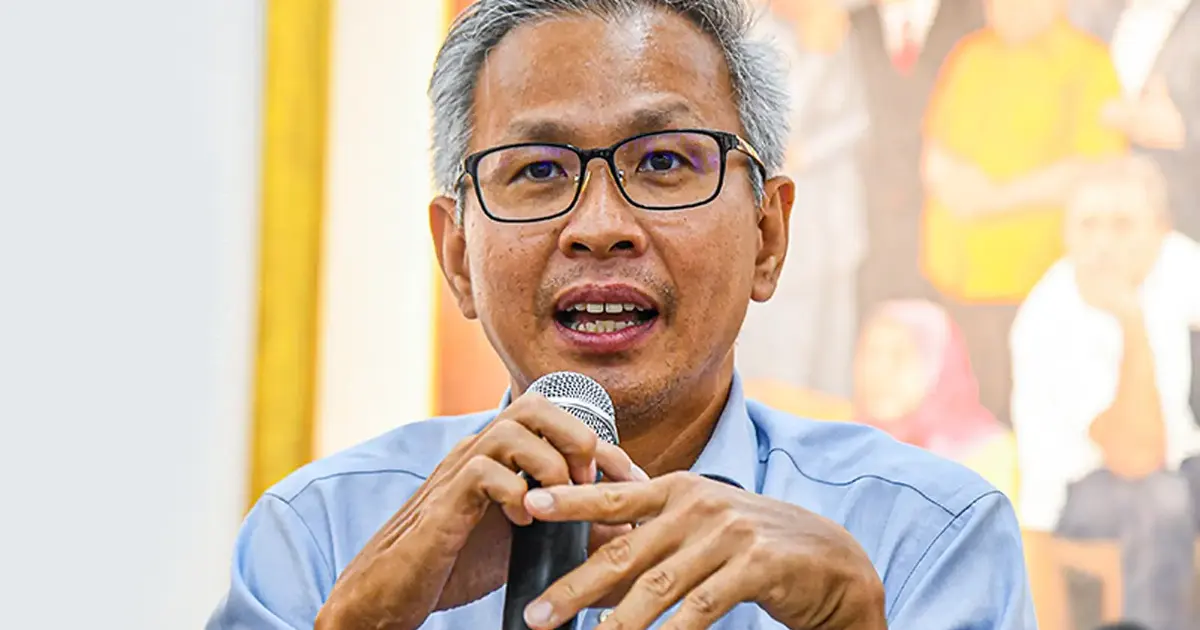
Former Prime Minister Najib Razak's defence counsel, led by prominent lawyer Muhammad Shafee Abdullah, has mounted a formal objection to the admissibility of large sections of DAP politician Tony Pua's witness statement in the ongoing 1MDB civil trial, marking another critical juncture in the protracted legal battle surrounding the misappropriation of state investment fund assets.
Shafee's challenge targets the scope and nature of Pua's testimony, arguing that material portions fall outside the bounds of what should be permissible evidence in civil proceedings. The objection signals the defence team's concern that allowing Pua's full statement could prejudice Najib's case by introducing inadmissible or improperly formulated evidence. This tactical move reflects the meticulous legal strategy being deployed by the former premier's representatives as they navigate the complex civil litigation.
Tony Pua, the Petaling Jaya Member of Parliament and long-standing critic of the 1MDB scandal, has been a prominent voice questioning the fund's operations and alleged misuse. His involvement as a witness speaks to the broader political dimension of the 1MDB affair, which has consumed Malaysian politics for nearly a decade. Pua's statement likely contains observations and conclusions about the fund's governance and financial irregularities, but defence counsel contends that certain assertions exceed what an ordinary witness should testify about or contain matters of legal opinion rather than factual testimony.
The admissibility dispute touches on fundamental principles of evidence law in Malaysian civil proceedings. Courts generally restrict witness testimony to matters of fact within the witness's personal knowledge, excluding speculative commentary, legal conclusions, or hearsay information. Defence lawyers often object when statements appear to stray into these prohibited territories, particularly in high-profile cases where the evidentiary record becomes crucial for appellate scrutiny. Shafee's objection suggests the defence identifies passages that arguably violate these conventional boundaries.
This development occurs within the broader context of the 1MDB scandal, which has resulted in multiple criminal prosecutions, civil lawsuits, and international investigations. The civil action against Najib represents one avenue through which authorities seek accountability for the alleged misappropriation of billions from the sovereign wealth fund. Unlike criminal proceedings, which require proof beyond reasonable doubt, civil cases operate on the balance of probabilities standard, yet evidentiary rules remain stringent to ensure fair proceedings.
For Malaysian legal observers, the admissibility question carries significance beyond this particular case. How courts handle witness statements in complex financial litigation sets precedents affecting future cases involving allegations of grand-scale financial irregularity. The ruling on Shafee's objection will provide guidance on the permissible scope of expert and lay witness testimony in matters touching on corporate governance, fund management, and alleged fraud.
Tony Pua's role as an opposition politician who has consistently scrutinised the government's handling of 1MDB adds a political dimension to his testimony. While this background does not disqualify his evidence, defence counsel may argue it colours his statement or renders certain portions opinion-based rather than factually grounded. The intersection of political criticism and courtroom testimony occasionally creates contentious evidentiary questions, particularly when witnesses hold strong public positions on matters central to litigation.
The judge's ruling on Shafee's objection will determine whether Pua's statement appears in the trial record in its entirety or whether excised portions will be excluded from consideration. This procedural outcome directly affects the plaintiff's case strategy, potentially requiring reformulation of evidence or supplementary witness testimony if critical material is deemed inadmissible. It also reflects the judge's interpretation of how broadly witness statements may range in civil proceedings addressing financial impropriety.
From a Malaysian perspective, the 1MDB civil trial represents an important accountability mechanism. Even as criminal proceedings have progressed through various judicial iterations, the civil action pursues financial recovery and establishes the factual record regarding fund misappropriation. The evidentiary rulings made during this trial contribute to the comprehensive legal assessment of what transpired at the fund and who bears responsibility.
The challenge to Pua's statement underscores how rigorous adversarial processes function in substantial litigation. Defence teams routinely object to evidence they regard as inadmissible or prejudicial, and courts must weigh these objections against the plaintiff's need to present comprehensive factual support for their claims. This back-and-forth interaction shapes the evidentiary foundation upon which the court will ultimately render judgment.
Shafee's legal approach reflects conventional defence strategy in defending against allegations of serious financial wrongdoing. By challenging the admissibility of witness statements, defence counsel aims to strengthen their client's position and ensure that any judgment rests on properly admitted evidence capable of withstanding appellate scrutiny. The 1MDB case, given its complexity and political resonance, has attracted intense public and legal attention, making procedural rigour particularly important.
As the 1MDB civil trial progresses through its various stages, such evidentiary disputes will likely recur. The outcome of this particular objection may establish patterns for how subsequent witness statements are received and evaluated. Both the plaintiff's team and Najib's defence will calibrate their evidence presentation strategies based on judicial rulings on admissibility questions.

