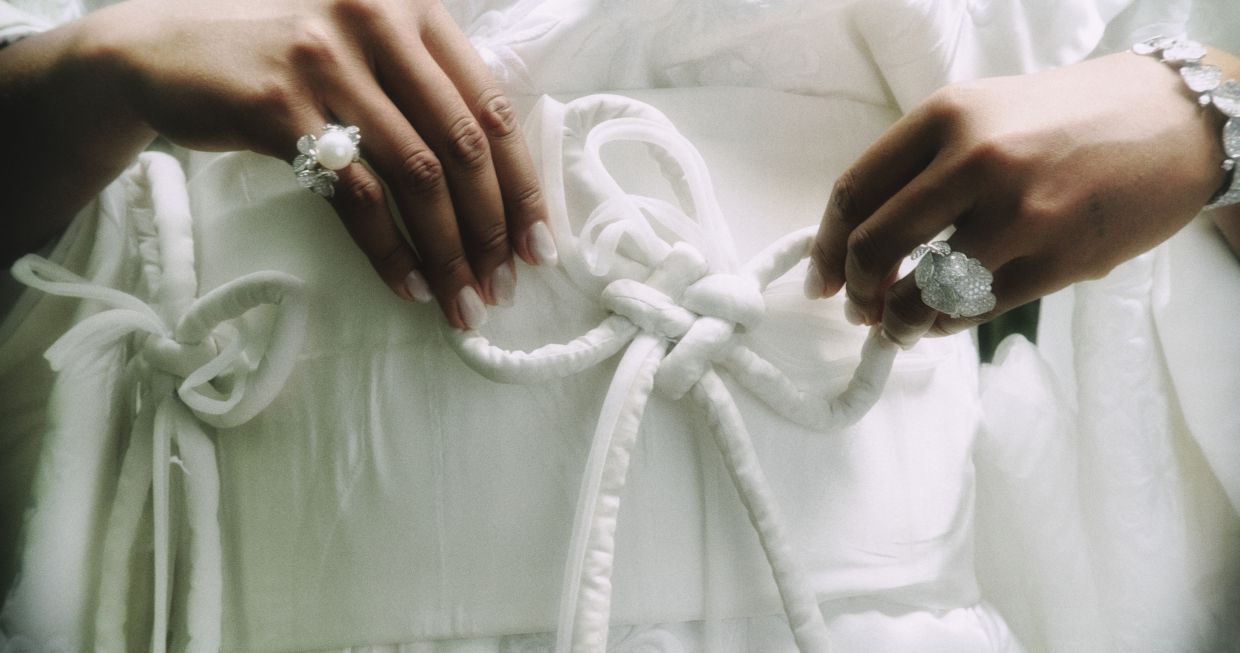
Naomi Osaka's appearance at Wimbledon on June 29 demonstrated once again that the 14th-seeded former world number one has fundamentally reimagined what it means to make a fashion statement in professional tennis. Despite concerns over a foot injury threatening her participation, Osaka emerged in an all-white ensemble by independent Japanese designer Hana Yagi titled "Evolving Ceremony," a creation that drew inspiration from traditional Japanese garments including the kimono and the junihitoe, the elaborate 12-layer ceremonial dress worn by noblewomen during Japan's Heian period between 794 and 1185. The designer crafted the gown from seven different textiles salvaged from vintage kimonos, a traditional shiromuku wedding dress, and a deconstructed modern wedding dress, creating a narrative of cultural preservation within a contemporary design framework.
This latest tournament entrance represents the culmination of a strategic fashion arc that began at the Australian Open earlier this year, where Osaka wore a Robert Wun creation resembling a jellyfish complete with a butterfly hat symbolizing transformation and her identity as a young mother. The French Open followed with a black corset and ballgown skirt by Kevin Germanier, crafted as a tribute to the Eiffel Tower and repurposed from her own vintage Nike kits. Viewed collectively, these three appearances reveal a calculated approach to sports fashion that extends far beyond aesthetic preference and instead operates as a statement about values, identity, and industry change.
Three interconnected themes animate Osaka's methodology. The first emphasizes environmental responsibility through deliberate upcycling and sustainable material sourcing across all three designs. The second leverages her global platform to support emerging independent designers and smaller creative voices, a conscious choice articulated by her stylist Marty Harper as a commitment to "give voices to new kids on the block." Hana Yagi exemplifies this strategy—the designer, still in her twenties, founded her Tokyo-based company after becoming a finalist in the International Talent Support competition in Italy in 2019, representing precisely the kind of emerging talent Osaka seeks to champion.
The third dimension involves weaponizing fashion as a branding tool with unprecedented sophistication in professional tennis. While established players like Serena Williams have long utilized competition wear to express personality, and ambassadors such as Jannik Sinner leverage designer relationships, Osaka's approach combines personal expression with deliberate creative partnerships and sustainability messaging in a manner that transcends typical athlete endorsements. Each tunnel walk now functions as a carefully choreographed performance that captures audience attention before any competitive action begins, effectively winning what Osaka has termed the "attention championship" regardless of tournament outcomes.
The technical execution underlying these fashion statements demands complexity that belies their apparent spontaneity. Custom couture garments must satisfy contradictory requirements: each piece must project sufficient visual impact to register clearly from the highest stadium seats while remaining quick-release compatible with tournament timelines. Most players remove warm-up gear in seconds; Osaka's stylist must accomplish complete ensemble changes within ninety seconds before match commencement. This constraint necessitates innovative engineering solutions that challenge conventional couture design principles.
Yagi's solution demonstrated ingenious problem-solving that transformed design constraints into creative opportunities. The Wimbledon gown comprised nine individually detachable segments, each secured with Velcro fastenings that enabled rapid disassembly while allowing segment recombination in varied configurations as the tournament progressed. This modularity embedded Yagi's conceptual framework—the idea that the look would "evolve as Naomi progresses"—directly into the garment's physical structure. The designer experimented extensively to ensure the disassembly process appeared natural and elegant rather than functional and rushed, prioritizing artistic integrity alongside practical necessity.
Additional logistical considerations extended beyond speed mechanics. The gown featured an adjustable train measuring nearly ten feet, calibrated for deployment variations depending on which court Osaka would occupy during any given match. This precision mattered considerably because Wimbledon's outer courts sit at sufficient distance from the players' lounge that lengthy walks could damage delicate fabrics. Harper's preparation encompassed not merely aesthetic vision but material science, movement mechanics, and institutional knowledge of specific tournament venues—understanding that fashion strategy must account for the physical environments in which these garments would function.
For Malaysian and Southeast Asian audiences, Osaka's approach carries particular relevance given the region's growing fashion industry and increasing emphasis on sustainable practices. Her strategy demonstrates how individual athletes can leverage global visibility to support regional designers and advance environmental credentials simultaneously. The embrace of Japanese heritage elements also reflects broader Asian cultural confidence in global fashion discourse, challenging historical patterns where Western design houses dominated prestige conversations. Independent designers throughout Southeast Asia might recognize in Yagi's trajectory a template for accessing international visibility through strategic partnership with high-profile athletes.
The sustainability dimension warrants deeper examination. By systematically sourcing materials from existing garments and vintage collections rather than commissioning new fabric production, Osaka's fashion strategy contributes to reduced environmental footprint while creating compelling narratives around material reuse and circularity. This approach aligns with growing consumer awareness regarding fashion's environmental impact, positioning athletic fashion leadership alongside competitive performance as equally important dimensions of Osaka's public identity.
Oska's fashion decisions also reflect sophisticated understanding of how modern athletes build personal brands distinct from traditional endorsement relationships. Rather than simply wearing designer clothing, she collaborates in conceptual development, contributing thematic input that transforms garments into extensions of her own narrative. This partnership model elevates designers from service providers to creative collaborators, a relationship that benefits both parties while generating authentic storytelling that resonates more powerfully than conventional advertisements.
The competitive results themselves become almost secondary to this broader cultural contribution. Whether Osaka advances deep within tournaments or exits early, her entrance looks guarantee that she has already captured significant attention and media coverage, fundamentally altering the economics of athletic fashion visibility. Photographers and journalists must document these garments; social media amplifies images globally; fashion publications analyze design choices and cultural references. This expanded audience reach extends far beyond typical sports coverage into cultural and fashion discourse, positioning Osaka as an innovator whose influence transcends competitive tennis entirely.
Looking forward, Osaka's fashion strategy establishes a new template that other athletes might emulate, particularly those seeking to build brands that operate across sports, culture, design, and environmental consciousness simultaneously. Her willingness to invest considerable time, resources, and creative energy into these entrances suggests a conviction that cultural impact and brand building merit comparable dedication to athletic training. As professional sports increasingly recognize that player appeal encompasses lifestyle, values, and cultural contribution alongside on-court performance, Osaka's approach may represent the emerging standard against which athletic fashion leadership will be measured.

