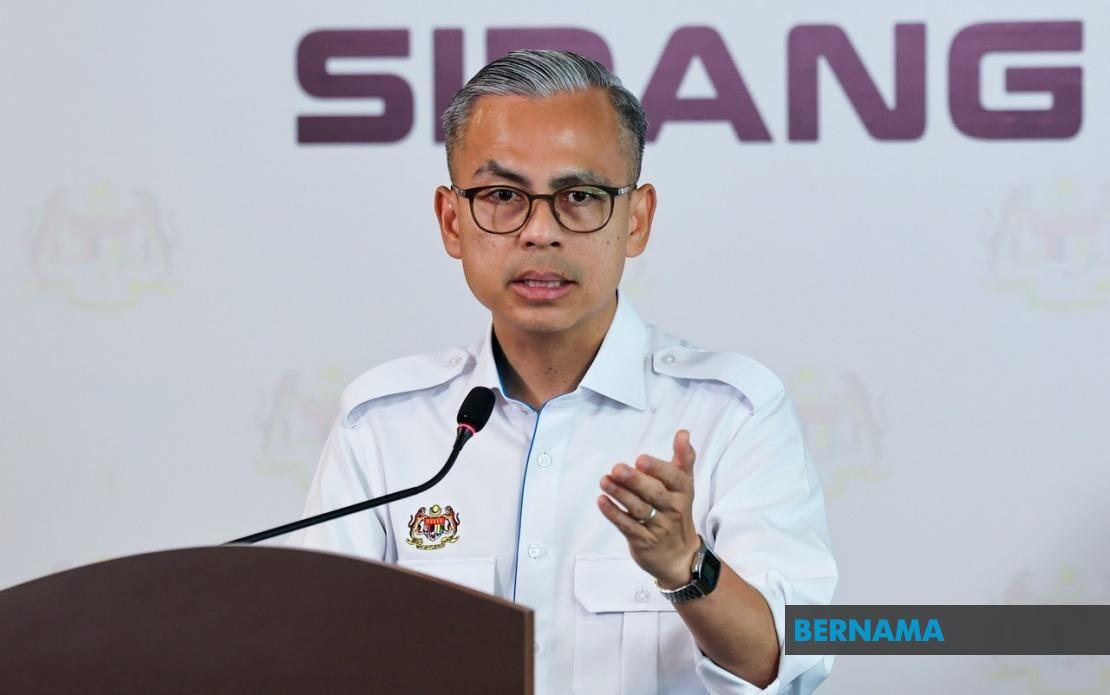
Malaysia's 2026 National Day celebrations are on track to achieve near-complete readiness by tomorrow's full dress rehearsal, according to Communications Minister Datuk Seri Fahmi Fadzil, who chairs the National Day and Malaysia Day Main Committee. Following an inspection of today's preliminary rehearsal at Dataran Putrajaya, Fahmi indicated that organisers have successfully addressed most major logistical challenges, leaving only fine-tuning requirements in the final preparation phase. The minister's confidence stems from tangible progress demonstrated during today's run-through, which involved hundreds of participants spanning security personnel, school students from three states, and military contingents.
The primary focus for the impending full rehearsal centres on spacing adjustments between parade contingents. Fahmi explained that several military and civilian units were positioned at distances that exceeded the intended spacing intervals, creating visual irregularities in the procession formation. Organisers plan to compress these intervals to achieve tighter, more uniform movement patterns throughout the parade route. This orchestration of spacing is fundamental to the overall aesthetic impact and disciplined presentation expected of a national celebration. The adjustments reflect meticulous attention to detail that characterises large-scale public ceremonies in Malaysia, where precision in formation movements carries symbolic weight representing national unity and organisation.
Weather cooperation has significantly aided preparation timelines, with favourable atmospheric conditions enabling the team to conduct uninterrupted rehearsals. Beyond logistical achievements, Fahmi highlighted the exceptional morale and commitment demonstrated by all participating groups, from uniformed personnel to the young students involved in the intricate human graphics performance component. This human element proves crucial for successful execution, as fatigue or reduced motivation among participants could compromise choreography and visual synchronisation. The enthusiasm observed during today's rehearsal suggests participants understand the significance of contributing to a major national event watched by dignitaries and broadcast to audiences across Malaysia and internationally.
Among the 2026 parade's notable innovations is the inaugural participation of the Johor Military Force, expanding the military representation beyond traditional federal units. Additionally, a specially designed maritime vessel—the Ibrahim-class boat created under the direction of His Majesty Sultan Ibrahim, King of Malaysia—will feature as a centrepiece attraction. These additions represent deliberate efforts to diversify the parade's composition while incorporating contemporary elements that reflect Malaysia's evolving defence and maritime capabilities. Such inclusions signal an intent to refresh the annual celebration while maintaining its core purpose of celebrating national identity and achievement.
A significant component of this year's ceremony involves a human graphics performance staged on a multi-level structure designed to accommodate 1,500 student participants. This reduction from the previous 2,000 participants reflects logistical refinements and safety considerations. Fahmi assured observers that Putrajaya Corporation has conducted thorough structural safety assessments, certifying that the platform meets all engineering standards. The slight movement visible during performance execution falls within permitted tolerance thresholds necessary to accommodate the rhythmic movements of hundreds of coordinated performers. The structure has been utilised twice previously without safety incidents, providing empirical reassurance regarding its integrity.
The structural platform's slightly asymmetrical visual alignment has prompted minor scrutiny, though Fahmi provided technical explanations for this positioning. The parade route's geometric relationship with the Putrajaya Corporation building, combined with adjusted participant numbers, necessitated the current configuration. Nevertheless, the minister acknowledged that perception matters in public ceremony presentation and has directed the organising secretariat to explore technical refinements for future editions. This responsiveness to visual and aesthetic feedback demonstrates administrative willingness to improve the ceremony's presentation quality year-on-year, balancing practical constraints with aspirations for a visually harmonious celebration.
The comprehensive scale of preparation visible in these rehearsals underscores the complexity inherent in orchestrating national celebrations attended by thousands and viewed by millions. Coordinating military units, civilian contingents, student performers, security arrangements, and logistical support systems requires months of planning and multiple rehearsal iterations. Malaysia's track record of successfully executing large-scale national ceremonies reflects institutional capacity and organisational discipline that have developed through decades of experience. The 2026 celebration benefits from accumulated knowledge while incorporating fresh elements that maintain public interest and engagement.
Regional observers note that Southeast Asian nations frequently utilise national day celebrations as platforms for projecting national capabilities and cultural pride. Malaysia's approach, incorporating military assets alongside educational and civic participation, demonstrates balanced messaging that emphasises both security competence and social cohesion. The inclusion of innovative maritime platforms and expanded military representation signals confidence in national institutions while celebrating collaborative achievements across multiple sectors. This multifaceted approach resonates with Malaysia's diverse, multicultural demographic.
As final preparations proceed toward tomorrow's dress rehearsal, attention focuses on whether spacing refinements can be executed smoothly and whether all contingents can maintain the discipline and coordination demonstrated during today's run-through. Successfully completing the final rehearsal would essentially confirm readiness for the actual celebration, allowing organisers to address any last-minute technical issues rather than fundamental logistical problems. Fahmi's statement of near-completion suggests confidence that the intensive preparation period has successfully resolved major challenges, leaving only the customary final adjustments that characterise all complex organised events approaching their execution dates.

