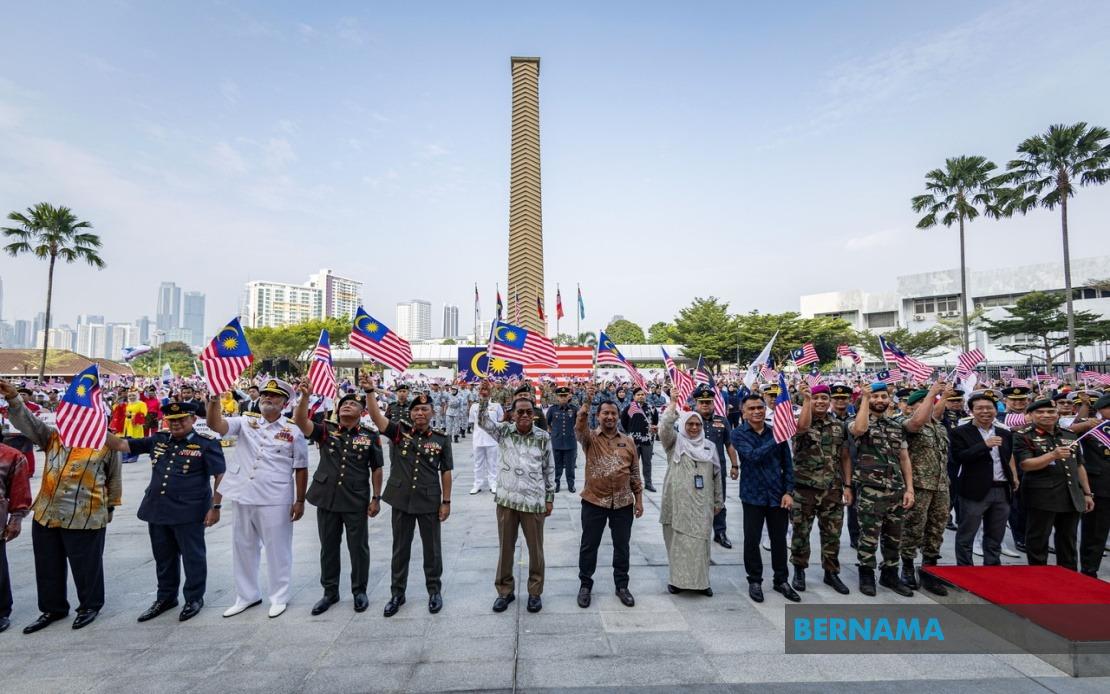
Defence Minister Datuk Seri Mohamed Khaled Nordin has issued a pointed reminder that Malaysia's National Day and Malaysia Day observances must transcend divisive emotions and political posturing, instead serving as occasions for citizens to reaffirm their connection to the nation. Speaking during the Defence Ministry's National Month launch and Jalur Gemilang flag campaign on August 27, Mohamed Khaled cautioned against turning these significant commemorations into platforms for airing grievances or advancing partisan agendas, regardless of the underlying sentiments that may motivate such calls.
The minister's comments appear directed at recent appeals for boycotts of National Day festivities by various groups citing humanitarian concerns. Mohamed Khaled specifically referenced disagreement with those proposing to shun the celebrations over issues such as the Rohingya crisis, arguing that channelling dissatisfaction through boycotts fundamentally misuses occasions intended for national reflection. His intervention signals the government's determination to maintain these celebrations as unifying moments rather than allowing them to become flashpoints for competing political narratives or international controversies.
Underscoring his message, Mohamed Khaled framed the National Day period as an opportunity for Malaysians to demonstrate their collective commitment to the nation's foundational principles. He urged citizens to harness this moment to strengthen patriotic sentiment and prove to both domestic and international audiences that Malaysians remain unwilling to allow their country to become a contested battleground for political manoeuvring or external commentary. This framing suggests growing concern within the Defence Ministry about the potential for these commemorative occasions to be weaponised by various interest groups pursuing their own agendas.
The minister's emphasis on Malaysia's status as an independent, peaceful, and sovereign state reflects the government's broader narrative around national resilience and stability. By invoking the country's established foundation based on mutual understanding and harmony across its diverse racial and religious communities, Mohamed Khaled positioned National Day celebrations as affirmations of this foundational social contract. He stressed that maintaining these values represents not merely a cultural preference but an essential requirement for preserving the nation's peace and territorial integrity.
Mohamed Khaled's call for all segments of Malaysian society to embrace, appreciate, and uphold these unifying principles carries implicit weight in a nation where intercommunal tensions occasionally surface and political divisions frequently align along ethnic and religious lines. By connecting the National Day message directly to the preservation of social harmony, the Defence Ministry is attempting to reframe the celebrations as occasions when all Malaysians must recommit themselves to the compact that holds their diverse society together. This approach seeks to counter narratives suggesting that particular groups have legitimate grievances warranting public protest or boycott during these patriotic occasions.
The Defence Ministry's emphasis on the Jalur Gemilang flag campaign as part of the National Month activities reflects an effort to make patriotic expression tangible and visible across Malaysian society. Mohamed Khaled specifically encouraged all Malaysians to display the national flag with pride and gratitude, transforming what might otherwise be a symbolic gesture into an active demonstration of national attachment. This grassroots mobilisation of patriotic symbolism suggests the government views widespread, visible expression of flag-flying as both a practical assertion of national unity and a counterweight to boycott movements that might otherwise dominate public discourse.
An often-overlooked dimension of Mohamed Khaled's message involves his invocation of gratitude toward military and security personnel serving at Malaysia's borders. By directing Malaysians to remember and pray for the safety and sacrifices of those protecting national sovereignty, the Defence Minister attempted to shift the conversation away from humanitarian debates surrounding refugee populations and toward the perspective of those charged with maintaining border security and national defence. This rhetorical move effectively positioned those expressing concern about refugee issues as potentially indifferent to the sacrifices made by Malaysian security forces.
The broader context of these remarks reveals tensions within Malaysian civil society regarding how the nation should balance its commitments to humanitarian principles with its assertions of national sovereignty and security. Various civil society organisations have increasingly used significant national occasions to highlight Malaysia's humanitarian obligations, particularly regarding the protracted Rohingya refugee situation. The Defence Minister's public pushback suggests that the government perceives these efforts as illegitimate intrusions of external moral claims into domestic patriotic celebrations, viewing them as attempts to weaponise national occasions for purposes beyond their intended scope.
For Malaysian readers navigating these competing narratives, Mohamed Khaled's intervention underscores an important dynamic shaping contemporary Malaysian politics: the tension between expressions of national pride and legitimate policy criticism. The Defence Minister's argument essentially contends that National Day represents a separate category of occasion, governed by different norms than ordinary political debate. Yet this position raises questions about whether drawing such boundaries might inadvertently diminish citizens' right to express dissent or raise concerns during what are, after all, occasions celebrating a nation theoretically built on democratic principles and pluralistic values.
Regionally, Malaysia's approach to managing National Day celebrations reflects broader Southeast Asian patterns of governments attempting to maintain tight control over patriotic narratives. As other nations in the region navigate similar tensions between nationalism and transnational humanitarian concerns, Malaysia's experience offers both lessons and cautionary examples. The effectiveness of Mohamed Khaled's appeal ultimately depends on whether Malaysians accept the government's framing that National Day exists in a separate political space, or whether substantial segments of society continue insisting on the right to voice concerns and dissent even during occasions traditionally reserved for patriotic affirmation.

