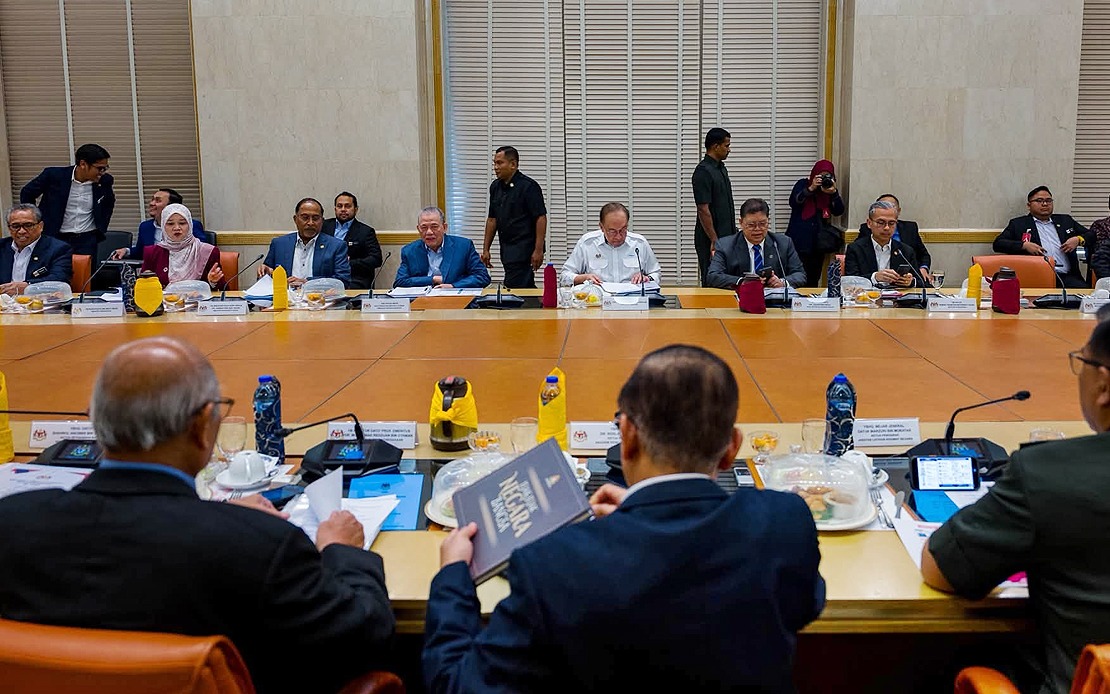
Prime Minister Datuk Seri Anwar Ibrahim has called for a renewed commitment to fostering nationhood values as a cornerstone of Malaysia's development agenda, arguing that such efforts are critical to producing citizens with unwavering character and dedication to their country. Speaking after chairing a Dewan Kenegaraan Board of Governance Meeting, Anwar stressed that deliberate cultivation of these values would forge individuals whose identity transcends ethnic, religious and socioeconomic boundaries, thereby strengthening the nation's cohesion and international standing.
The Prime Minister's remarks reflect growing concern among policymakers about the need to counter fragmentation and reinforce shared national purpose at a time when Malaysia faces competing pressures from globalisation, social polarisation and rapid technological change. By emphasising nationhood values as a unifying force, Anwar is positioning these principles as foundational to long-term stability and prosperity, positioning them alongside more conventional economic and security strategies. This philosophical approach suggests recognition that material advancement alone cannot sustain a functioning, harmonious society without deep-rooted civic commitment.
Central to Anwar's agenda is the National Service Training Programme, or PLKN, which he highlighted as having delivered encouraging early results and won approval from participants and their families alike. The initiative, which brings together young Malaysians from diverse backgrounds for structured training, serves dual purposes: imparting discipline and resilience while simultaneously exposing recruits to peers from different communities. This cross-cultural immersion addresses a persistent challenge in Malaysian society—the tendency towards community-based clustering that can limit mutual understanding and reinforce stereotypes.
Anwar characterised PLKN as more than a military or quasi-military exercise, instead framing it as an instrument of social cohesion and personal development. The programme's reported success suggests that structured, inclusive mechanisms for national service can achieve measurable buy-in from both young people and parents, indicating appetite among Malaysians for platforms that foster genuine connection to the nation-state. For a country where civic engagement sometimes takes backseat to communal or commercial concerns, PLKN represents a deliberate attempt to reverse that trend.
Another pillar of the nation-building effort discussed at the meeting involves the Nationhood Fellows initiative, a mechanism designed to harness the intellectual and moral capital of prominent figures and leaders from various walks of life. By bringing together individuals of established standing from different sectors—business, academia, civil society, religion and politics—the Fellows programme aims to generate substantive discourse and actionable proposals that advance national cohesion. This approach recognises that nation-building cannot be the preserve of government alone; it requires buy-in and leadership from respected voices across society who can model the values being promoted and lend credibility to nation-building efforts.
The emphasis on cultivating love for country through structured programmes and thought leadership reflects international experience showing that patriotism cannot be legislated or imposed, but must be nurtured through multiple channels simultaneously. Malaysia's experience with earlier nation-building initiatives, from Rukun Negara to various youth and community programmes, suggests that sustained, multi-faceted approaches yield better results than one-off campaigns. Anwar's framing positions his administration as building on these foundations rather than abandoning them, suggesting policy continuity even as new mechanisms like PLKN are refined and expanded.
For Malaysian readers and regional observers, the significance of these initiatives extends beyond rhetoric. The focus on strengthening national identity and integrity carries particular salience in Southeast Asia, where multiple countries wrestle with questions of national cohesion amid rapid change. Thailand's recurrent instability, Myanmar's protracted conflict and Indonesia's ongoing struggle to balance centralised authority with regional diversity all underscore why Malaysia's relative stability and institutional continuity merit attention. Anwar's emphasis on values-based nation-building suggests awareness that economic performance and security measures, while necessary, prove insufficient without deeper civic foundations.
The timing of these statements also warrants consideration. Malaysia enters a period of significant transition with generational shifts in population, evolving global economic patterns and technological disruption reshaping employment and social structures. Against this backdrop, investing in programmes and initiatives that anchor young people to shared national identity and values offers insurance against fragmentation or radicalisation. The reported positive reception of PLKN among participants and parents suggests that many Malaysians recognise value in such efforts, even if public discourse sometimes emphasises grievances or divisions.
Critically, the success of nationhood-building efforts ultimately depends on consistent implementation and genuine inclusivity. Programmes and initiatives risk becoming window-dressing if they fail to address underlying grievances or if they appear to privilege certain communities or narratives over others. Anwar's emphasis on bringing together figures from "various backgrounds" to contribute to nation-building suggests awareness of this risk, indicating an attempt to ensure that nationhood values reflect Malaysian diversity rather than imposing a singular or majoritarian vision.
Looking ahead, the Prime Minister's focus on nationhood values signals that his administration views social cohesion and civic engagement as core components of governance, not peripheral concerns. This positioning could shape policy priorities ranging from education curriculum to media regulation to resource allocation for community programmes. For Malaysia and the region, the success of these efforts will offer valuable lessons about how diverse, plural societies can maintain unity and forward momentum amid pressure and change.

