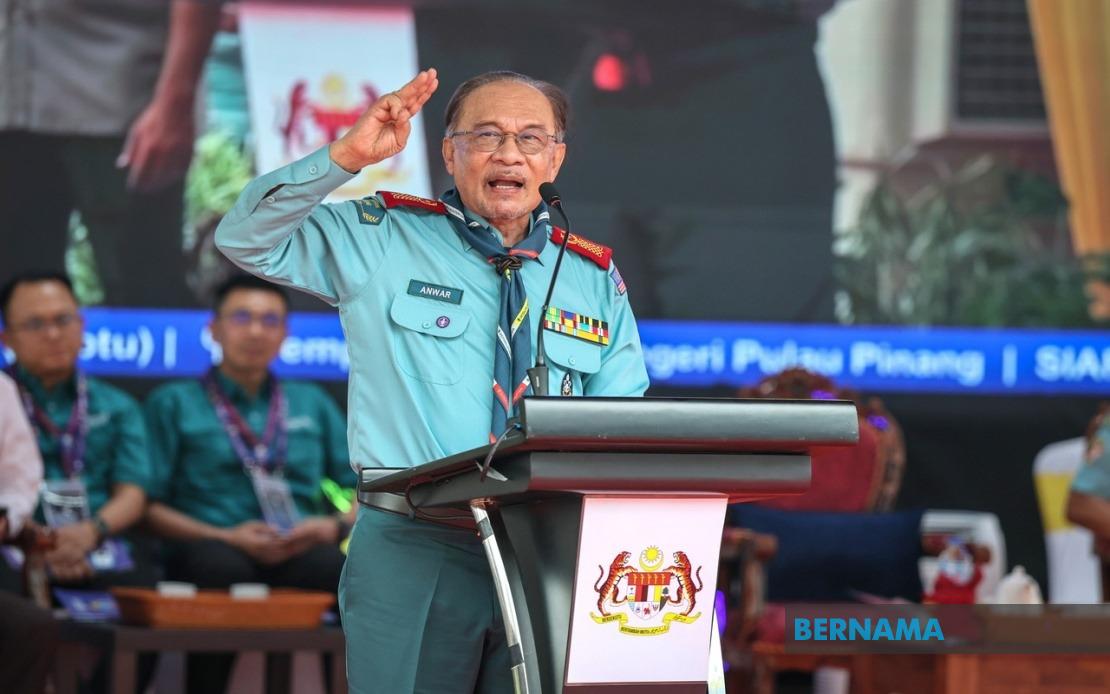
Prime Minister Datuk Seri Anwar Ibrahim has articulated a vision of national success that transcends conventional measures of progress, arguing that Malaysia's future depends fundamentally on cultivating a generation grounded in both knowledge and moral discipline. Speaking at the 15th Malaysian Scouts Jamboree (MYJAM15) at Penang State Stadium, Anwar challenged the prevailing narrative that development can be assessed purely through economic indicators and technological advancement. His remarks signal a deliberate pivot towards emphasising character formation and civic values alongside conventional educational outcomes—a positioning that reflects broader regional anxieties about rapid modernisation's social costs.
The Prime Minister's argument centres on the proposition that educational institutions must operate as vehicles for moral and ethical development, not merely as conduits for technical skills. Anwar contended that schools, colleges and universities should instil in students a robust sense of responsibility extending outward from family units to encompass community and national welfare. This framework reflects a traditional understanding of education as formative—concerned with shaping citizens rather than simply producing workers. The emphasis resonates with ongoing debates across Southeast Asia about balancing globalisation's demands with the preservation of cultural and social cohesion, a concern that has gained prominence as technological disruption accelerates.
Central to Anwar's message is the concern that rapid technological change, particularly artificial intelligence and digital transformation, risks detaching younger Malaysians from their cultural moorings. He articulated the view that technological adoption must remain tethered to foundational values and heritage rather than proceeding as an autonomous process of innovation. This framing acknowledges legitimate concerns about the destabilising effects of unchecked technological change on social structures, particularly in multicultural societies where shared values provide essential ballast. For Malaysian policymakers, the challenge lies in articulating how contemporary skills acquisition can coexist with the transmission of cultural knowledge and ethical frameworks.
The Prime Minister's emphasis on unity in diversity carries particular significance for Malaysia, where demographic composition and historical experience with communal tensions have shaped national identity. Anwar positioned the younger generation as custodians of this delicate social balance, suggesting that their preparation for leadership roles must include grounding in principles of interfaith understanding and inclusive citizenship. This framing addresses legitimate apprehensions that rapid social change and generational cohort shifts could undermine Malaysia's carefully constructed multicultural consensus. The timing of these remarks, delivered approximately two years before the 2026 National Day celebrations, indicates an intentional effort to frame patriotism and social responsibility as core components of youth identity.
The MYJAM15 jamboree itself provides substantive context for Anwar's remarks. The event brought together more than 5,450 scouts—both domestic and international participants from eleven countries including South Korea, Indonesia, Singapore and Sri Lanka. This gathering represents practical embodiment of the values Anwar emphasised: structured character development, service orientation, and cross-cultural engagement. The international participation dimension is particularly noteworthy, as it positions Malaysian scouts alongside peers from across the region, creating peer networks that can reinforce values-based leadership. For Malaysia, such initiatives offer concrete mechanisms through which abstract principles about citizenship and responsibility become embedded in experience.
The historic significance of Penang hosting MYJAM15 after a sixty-year interval adds another layer of meaning to the occasion. The state previously hosted the jamboree in Teluk Bahang during 1966, positioning the contemporary event within a continuum of Malaysian scouting tradition stretching across more than half a century. This historical arc allows for reflection on how youth development approaches have evolved whilst potentially maintaining certain enduring principles. The choice of venue and timing suggests deliberate efforts to anchor contemporary discussions about youth development within narratives of Malaysian institutional continuity and progress.
Anwar's remarks also implicitly acknowledge challenges facing Malaysia's education system, which has faced periodic criticism regarding both academic standards and character formation. International assessments have highlighted concerns about student engagement, pedagogical effectiveness and the integration of values education into curricula. By elevating this issue at a high-profile national event, the Prime Minister signals receptiveness to a broader reckoning with how educational institutions approach their social mission. This positioning may carry implications for resource allocation and curricular priorities, potentially shifting investment patterns towards initiatives emphasising character development alongside conventional academic achievement.
The emphasis on disciplined behaviour deserves particular attention within Malaysia's contemporary social context. Rising concerns about youth mental health, social media-related problems and behavioural challenges among younger Malaysians have generated public discourse about what constitutes appropriate moral formation. Anwar's invocation of discipline signals alignment with more traditional approaches to youth development, though without explicitly rejecting contemporary methods. This balancing act reflects ongoing tensions within Malaysian society between modernising impulses and conservative preferences regarding social order and generational transmission of values.
For regional observers, Anwar's framework presents an alternative model to purely technocratic approaches to development that dominate policy discussions across Southeast Asia. By insisting that economic and technological metrics cannot capture full dimensions of societal progress, the Prime Minister articulates concerns shared across the region about whether rapid modernisation adequately addresses deeper questions about social coherence and intergenerational responsibility. This positioning may resonate in neighbouring countries grappling with similar anxieties about balancing growth objectives with cultural preservation and social stability. Malaysian policymakers watching this framing may interpret it as signalling the government's willingness to invest in initiatives emphasising values and character alongside more conventional development priorities.
The invocation of patriotism and national identity in the context of youth development also warrants scrutiny. By connecting character formation to patriotic sentiment, Anwar positions national loyalty as an outcome of effective moral education. This framing carries implications for how Malaysia conceptualises citizenship and the relationship between individual development and collective national interest. It suggests a model wherein personal virtue and national commitment reinforce one another—a vision that contrasts with more individualistic approaches emphasising personal autonomy and self-actualisation as primary educational objectives. Understanding this distinction illuminates broader ideological contours of Malaysian governance approaches to social development.

