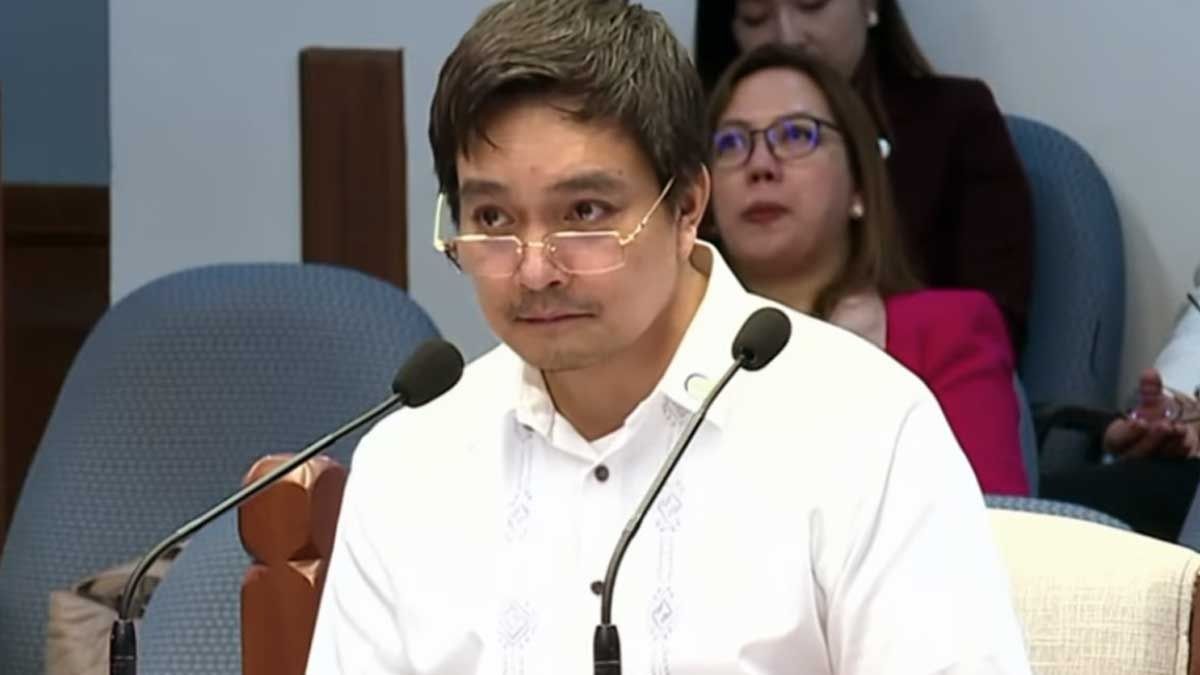
The Philippine National Bureau of Investigation's Regional Director Jeremy Lotoc delivered controversial testimony on Tuesday during Vice President Sara Duterte's impeachment proceedings, asserting that investigative evidence substantiates a belief that she had engaged someone to carry out assassination threats against President Ferdinand Marcos Jr., despite acknowledging he possessed no firsthand knowledge of such a contract. Lotoc's statements marked a significant moment in what has become one of the Philippines' most politically contentious legal proceedings, raising fundamental questions about the distinction between circumstantial evidence and direct proof in cases involving high-ranking government officials.
During cross-examination conducted by Duterte's defence counsel Mark Vinluan, the distinction between what investigators believed based on their findings and what they could personally verify became the central point of contention. When pressed directly about whether he had personally witnessed or confirmed that the Vice President had contracted an assassin, Lotoc conceded the absence of such direct knowledge. However, he consistently returned to the investigative conclusions his team had reached, suggesting that the documentary and circumstantial materials they had compiled painted a coherent picture implicating Duterte in the alleged conspiracy.
The testimony centred on Duterte's remarks made during an online media briefing on November 23, 2024, when she made statements widely interpreted as threatening the lives of President Marcos, First Lady Liza Araneta-Marcos, and former House Speaker Martin Romualdez. These statements subsequently formed the basis of the fourth article of impeachment filed against the Vice President, transforming what might have been dismissed as inflammatory rhetoric into a formal accusation requiring detailed legal scrutiny.
As the former head of the NBI's Crime Division, Lotoc had overseen the investigation into those threats and was positioned as a key witness regarding the agency's findings. The proceedings revealed deep methodological challenges when translating investigative suspicions into courtroom evidence, a distinction that both the defence and prosecution appeared to navigate with considerable difficulty throughout the session.
The cross-examination frequently became contentious, with Senate Presiding Officer Francis "Chiz" Escudero repeatedly intervening to restore procedural order. At one juncture, when the defence and prosecution engaged in heated exchanges over the interpretation of Duterte's allegations against various individuals mentioned in the same video, Escudero cautioned that the proceedings were not a "college debate," reminding all parties of the gravity and formality required in an impeachment trial.
Vinluan's strategy appeared aimed at highlighting the logical gap between Lotoc's admission of lacking personal knowledge regarding Duterte's engagement of an assassin and the investigative conclusions being presented as evidence. When Lotoc initially attempted to point toward Duterte's own statements in the video as justification for the NBI's belief in her involvement, Vinluan objected and demanded a simple yes-or-no response, ultimately extracting an affirmation that Lotoc indeed lacked personal knowledge of the alleged contract.
When Senate President Sherwin Gatchalian subsequently probed the evidentiary foundation for assessing Duterte's capability to execute such threats, Lotoc initially offered a somewhat circular argument: her position as Vice President itself demonstrated such capability. Gatchalian, however, quickly challenged this reasoning, noting that holding high office does not automatically establish the means or intent to carry out violent acts, pressing Lotoc to provide more substantive evidence of her capacity to orchestrate assassination.
In response, Lotoc shifted focus to her family history, referencing the international legal proceedings initiated against her father, former President Rodrigo Duterte, before the International Criminal Court regarding alleged extrajudicial killings perpetrated during his administration's controversial war on drugs. The witness suggested that her background and family association with such measures demonstrated her capability to contemplate and execute violent actions against political opponents, a line of reasoning that drew implicit connections between paternal conduct and filial capacity without establishing direct evidence of the Vice President's personal involvement in assassination planning.
For Malaysian observers and Southeast Asian analysts, these proceedings illuminate the complex political dynamics within the Philippines' government and the increasingly adversarial relationship between President Marcos Jr. and his own Vice President. The case reflects broader regional tensions regarding democratic institutions' robustness when confronting allegations against sitting officials, particularly when formal mechanisms like impeachment become weaponised as instruments of political struggle rather than constitutional safeguards against genuine misconduct.
The testimony also raises questions about evidentiary standards in impeachment proceedings across Asia-Pacific democracies, where courts and legislative bodies must balance the seriousness of accusations involving potential violence against constitutional protections for the accused. The distinction Lotoc struggled to articulate—between investigative suspicion and courtroom-quality proof—remains central to whether impeachment functions as a legitimate check on executive overreach or becomes merely a political tool available to parliamentary majorities.
Additionally, the proceedings underscore the Philippines' unusual constitutional arrangement wherein the Vice President may be from a different political coalition than the President, creating inherent structural tensions. Duterte's apparent alignment with opposition forces, contrasted with Marcos's administration, has transformed what might otherwise be a straightforward assassination threat investigation into a high-stakes political confrontation with implications extending far beyond the immediate parties involved.
As the impeachment trial continues with further testimonies and cross-examinations scheduled, the central challenge facing the Senate will involve determining whether the NBI's investigative conclusions—however well-founded in documentary evidence and circumstantial analysis—meet the constitutional threshold required for removing a sitting Vice President from office. The case may ultimately establish precedent regarding how Philippine institutions evaluate allegations of presidential violence, a question that carries significance throughout a region where democratic safeguards remain perpetually contested.

