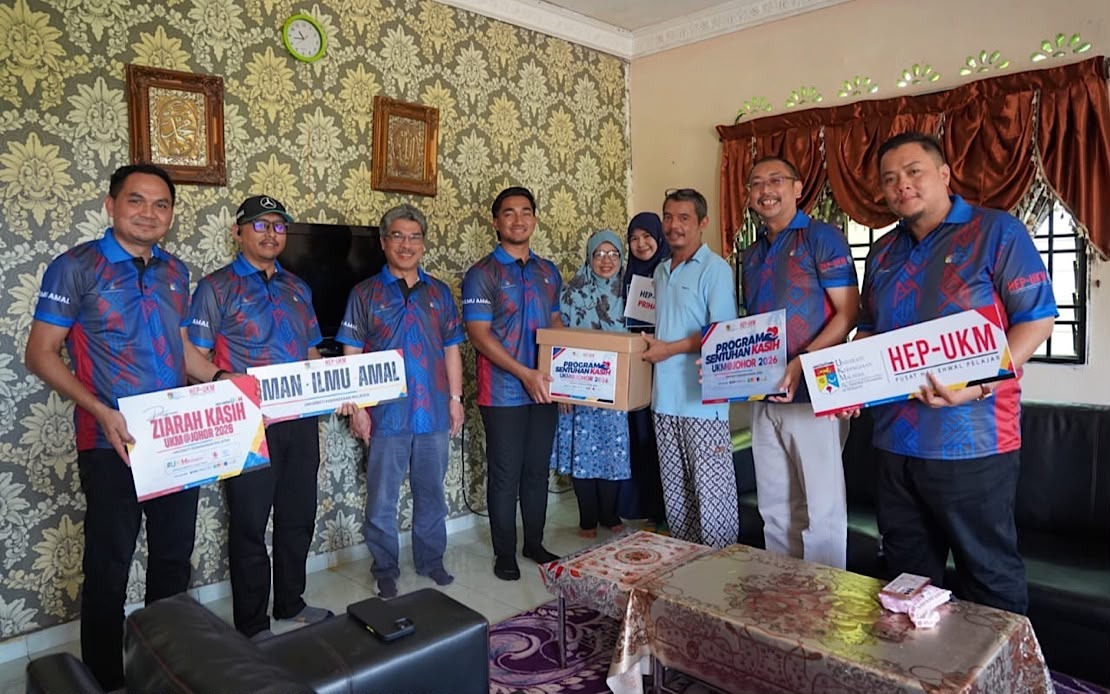
Universiti Kebangsaan Malaysia (UKM) has demonstrated its commitment to deepening connections with Malaysian communities through an ambitious outreach initiative that mobilised nearly 1,000 local residents across Johor. The Sentuhan Kasih UKM@Johor programme, executed over a weekend through the university's Student Affairs Centre (HEP-UKM), brought university staff and students into direct contact with residents in multiple neighbourhoods, marking a significant investment in what university leaders describe as essential social responsibility.
The programme unfolded across four distinct locations in Johor: Kota Masai and Pasir Gudang in the industrial heartland, alongside Kampung Baru Sri Aman and Taman Jaringan in Skudai. Operating under the thematic banner "Dari Kampus ke Komuniti, Menyebar Kasih dan Bakti" (From Campus to Community, Spreading Love and Service), the initiative drew 78 participants from UKM itself, including students and staff who engaged in sustained interaction with residents rather than conducting a superficial single visit. This ratio of institutional participants to community members reflects an approach that prioritises substantive engagement over large-scale demonstration effects.
The activities undertaken during the outreach were multifaceted and addressed concrete community needs rather than symbolic gestures. Beyond conventional goodwill demonstrations, UKM organised gotong-royong programmes in which students and residents worked together on local improvement projects, conducted personal welfare visits under the "ziarah kasih" framework, administered mental health screening services—a particularly valuable resource in communities often underserved by such initiatives—and facilitated sports activities that created informal spaces for interaction. This diversity of programming acknowledges that community engagement functions most effectively when it responds to actual resident priorities rather than institutionally predetermined activities.
Associate Professor Dr Darfizzi Derawi, who chairs both the Student Affairs Centre and the Sentuhan Kasih programme, articulated a philosophical position increasingly gaining traction among Malaysian universities. He contended that higher education institutions cannot fulfil their societal mandate if they remain intellectually and physically insulated from the communities they inhabit. His assertion that universities "should not be confined within campus walls" challenges a persistent notion that academic excellence operates independently from social embeddedness. More significantly, he identified specific pedagogical value in community engagement, emphasising that students develop adaptive capacity, communication competence and interpersonal capabilities through real-world interaction that classroom instruction cannot replicate. This framing positions outreach as integral to curriculum outcomes rather than peripheral charitable activity.
The programme's geographic focus on Johor's industrial zones carries particular significance for understanding how Malaysian universities might engage with working-class communities. Zone leader Herman Ismadi Ismail noted that approximately 80 percent of residents in participating areas work within the industrial sector, creating scheduling constraints that might ordinarily suppress participation. That community leaders nonetheless reported encouraging turnout and robust engagement suggests the initiative addressed a genuine hunger for institutional visibility and accessible educational information among populations who might otherwise experience universities as distant and irrelevant to their circumstances. Ismadi's emphasis on residents gaining "exposure to the university's initiatives and opportunities" implies that community outreach functions simultaneously as recruitment and relationship-building.
Higher Education Minister Datuk Seri Dr Zambry Abd Kadir's attendance signalled official recognition of the programme's alignment with national higher education policy priorities. While the minister's presence might be interpreted as ceremonial, it reflects broader government interest in positioning universities as agents of social cohesion rather than purely academic institutions. This ministerial endorsement potentially influences how other Malaysian universities conceptualise their community engagement obligations and resource allocation toward such programmes.
Beyond the weekend activities, UKM extended its outreach to individual student families through visits to seven households in Tiram and Puteri Wangsa areas. This personalised component addressed a different dimension of university engagement—direct support for student welfare through contact with families who may lack institutional understanding or face undisclosed hardships affecting student performance. By visiting homes rather than summoning families to campus, UKM reversed conventional institutional geography and demonstrated willingness to operate on terms accessible to families potentially facing transportation or time constraints.
UKM Vice-Chancellor Prof Datuk Dr Sufian Jusoh positioned the initiative within a comprehensive institutional philosophy prioritising student welfare as foundational to academic excellence. His statement that the university "aims to produce academically excellent graduates" while placing "strong emphasis on student well-being" addresses a frequent tension in Malaysian higher education between competitive academic metrics and holistic human development. Critically, Jusoh framed welfare support not as financial aid supplementation but as investment in student capacity to engage fully with their studies. This reframing potentially influences institutional budgeting priorities by positioning such programmes as academic enablers rather than supplementary social services.
The programme's framing emphasises development of "holistic human capital," a concept gaining currency across Malaysian policy discourse. By integrating community service components with student welfare support, UKM articulates a vision of university-enabled development that encompasses both individual student flourishing and community benefit. This differs markedly from narrower employability-focused approaches that dominate some Malaysian higher education discourse, suggesting a deliberate institutional choice to prioritise values such as compassion and social responsibility alongside technical competence.
The stated intention to expand Sentuhan Kasih periodically to other Malaysian states indicates UKM's ambition to operationalise community engagement as systematic institutional practice rather than ad hoc initiative. This geographic expansion strategy, if realised, would establish the university as a consistent presence in communities beyond its campus boundaries, potentially reshaping how populations in various states perceive and interact with higher education institutions. The model potentially influences expectations other Malaysian universities face regarding their own community integration responsibilities.
For Malaysian readers, the Sentuhan Kasih programme exemplifies how universities might better integrate with surrounding societies rather than operate as isolated intellectual sanctuaries. The initiative's emphasis on genuine two-way engagement—where students develop skills while communities gain tangible benefits—suggests institutional models increasingly recognising that education's social value extends far beyond individual credential acquisition. As Malaysia continues navigating questions about higher education's role in national development, programmes like UKM's Sentuhan Kasih offer practical demonstrations of universities functioning as community anchors invested in social wellbeing alongside academic excellence.

