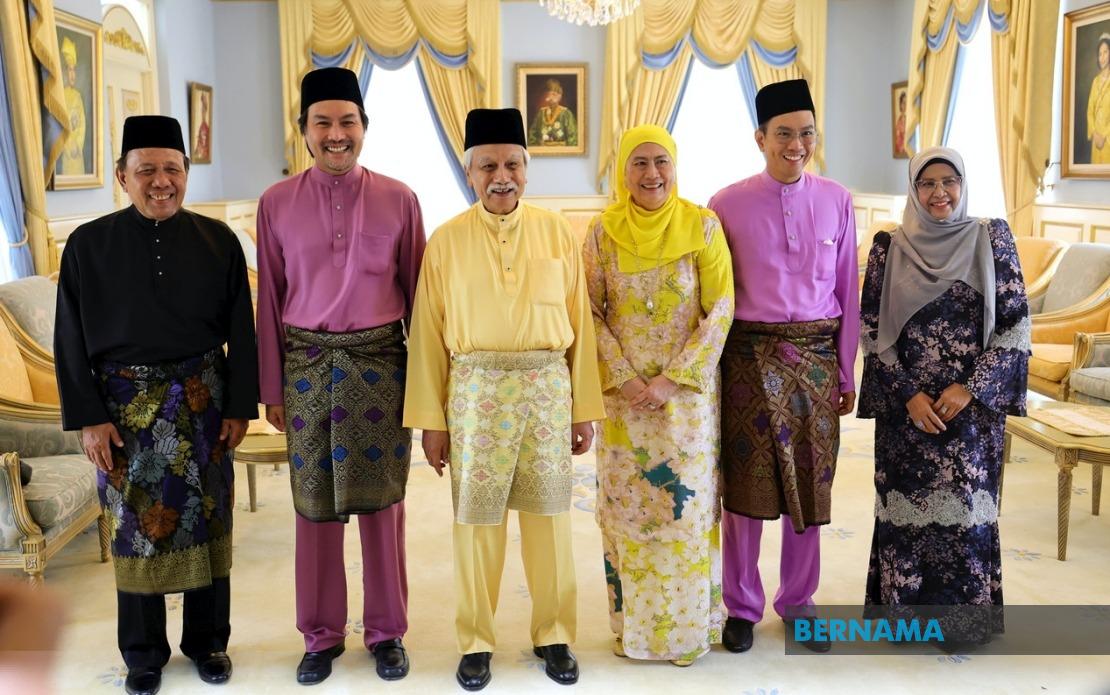
Negeri Sembilan has a new political administration, and its shape is taking form quickly. Datuk Ismail Lasim, who was sworn in today as Menteri Besar at Istana Besar Seri Menanti following Barisan Nasional's decisive election victory, has signalled that the state's executive council lineup will be completed by Friday at the latest. The rapid timeline reflects both the urgency felt by the new leadership and pressure from Tuanku Muhriz Tuanku Munawir, the Yang Dipertuan Besar of Negeri Sembilan, who prefers swift resolution of the government formation process.
The formation of a state cabinet is rarely straightforward, and Negeri Sembilan's situation underscores the complexities that arise when multiple political players must be accommodated. Ismail has pledged to consult extensively with Barisan Nasional's national leadership before presenting any proposed lineup to the Ruler for approval. He intends to meet UMNO president Datuk Seri Dr Ahmad Zahid Hamidi soon to discuss the composition of the executive council, with particular attention to the sensitive question of whether state assemblymen from the coalition partner Perikatan Nasional should be included in ministerial positions.
This inter-coalition dynamic proves crucial to understanding the political landscape Ismail must navigate. The August 1 state election delivered Barisan Nasional 18 of the 36 seats contested, while Perikatan Nasional secured seven seats. Together, the two coalitions command a commanding two-thirds majority in the State Legislative Assembly, a comfortable buffer that removes any immediate threat to governmental stability. However, this arithmetic also means that Perikatan Nasional, despite its minority position within the coalition arrangement, wields sufficient numbers to demand consideration in cabinet allocation. How generously these seats are distributed will signal the strength of BN's commitment to its broader political partnership with PN.
The Juasseh assemblyman has already outlined his thinking on the structural dimensions of the new cabinet. He suggested that maintaining the existing ten-member executive council structure would be most appropriate for the state's administration, implying continuity with past practice rather than ambitious expansion. This measured approach reflects both fiscal prudence and the practical reality that governing a state of Negeri Sembilan's size and economic profile does not require an unwieldy cabinet apparatus. The final size remains technically open for discussion, however, pending further deliberations with party leadership.
Portfolio distribution presents another layer of complexity that requires careful negotiation. Ismail indicated that decisions on which assemblymen receive which ministerial posts will only proceed after consultations with party hierarchies are completed. This consultation-first approach acknowledges the reality that in Malaysian politics, component parties within coalitions maintain expectations about their representation in government. The Menteri Besar must balance UMNO's dominance as the primary coalition partner, the secondary claims of MCA and MIC as longtime BN constituents, and PN's demands as a newly integrated coalition member. Each decision reverberates through internal party politics and affects the broader stability of the state government.
Ismail's appointment itself carries historical significance for Malaysian federalism. As Menteri Besar, he inherits a state administration with substantial responsibilities across education, healthcare, agriculture, and local government. Negeri Sembilan, though smaller than some Malaysian states, serves as an important component of the national economy and a bellwether for coalition politics. The state's administration operates under constitutionally circumscribed authority, with many policy domains falling under federal purview, yet state governments remain critical for service delivery and local development initiatives that directly affect citizens' quality of life.
The welfare and well-being of the population emerge as the declared priority of the incoming administration. In his inaugural press conference, Ismail emphasised that these considerations form the primary pillar and long-term focus of his government's operations. This rhetorical commitment—common across Malaysian political transitions—must now be translated into concrete policy initiatives and budgetary allocations. The extent to which Negeri Sembilan's state government delivers tangible improvements in public services, infrastructure development, and economic opportunity will ultimately determine how voters assess the new administration's performance.
The election results themselves provide context for understanding both the mandate and the constraints Ismail faces. With 103 candidates contesting across 36 seats, the electoral battle was genuinely competitive, and the resulting coalition represents the people's choice rather than an inevitable outcome. The decisive margin gives the government considerable legitimacy to pursue its agenda without constantly second-guessing its mandate. Simultaneously, the presence of opposition assemblymen ensures continued scrutiny of executive decisions and provides alternative perspectives in legislative debates.
The timeline Ismail has announced—completion by Friday—appears ambitious given the number of stakeholders requiring consultation. Barisan Nasional's national leadership structure, UMNO party machinery, and the secondary coalition arrangements with MCA and MIC all need to align before any proposals can be tabled to the Ruler. Perikatan Nasional's expectations regarding executive positions must also be accommodated within this negotiation framework. The fact that Ismail has publicly committed to this deadline suggests either exceptional confidence in his coalition partners' willingness to move quickly, or a determination to establish his authority by demonstrating decisive action immediately upon taking office.
For Malaysian and Southeast Asian observers, the Negeri Sembilan transition exemplifies how complex multiparty systems function when coalitions must govern together. The state's management of BN-PN coordination will offer insights into whether these two major coalitions can sustain a productive partnership, or whether underlying tensions will emerge over portfolio allocation, policy direction, and resource distribution. Malaysia's political stability depends partly on such state-level experiments in coalition governance working smoothly. The cabinet announcements expected within days will reveal whether the new Menteri Besar has succeeded in crafting an executive council that satisfies all coalition partners while positioning the state government to address genuine public concerns.

