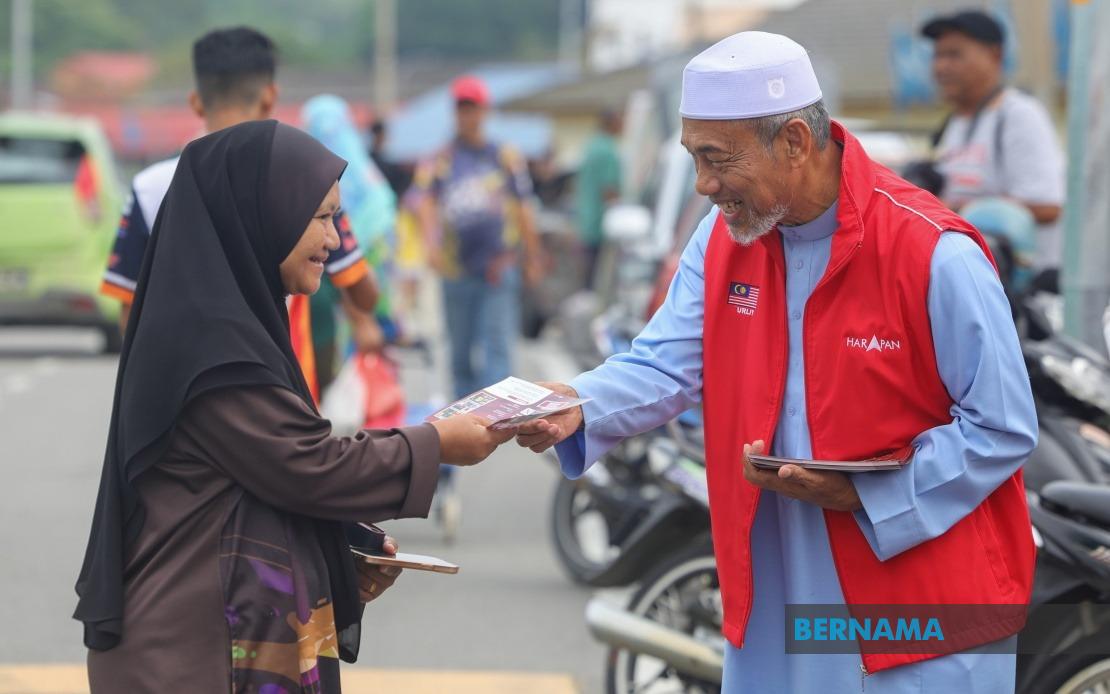
The race to win voter support in Negeri Sembilan has entered a more frenetic phase, with candidates from both ruling and opposition coalitions ramping up their engagement efforts across constituencies. On the second day of the official campaign period, contenders deployed a time-tested strategy of early morning prayers, market visits and walkabouts to build personal connections with residents ahead of the August 1 polling day. This aggressive outreach reflects the competitive nature of the 16th Negeri Sembilan State Election, where holding ground or gaining seats remains crucial for all participating parties.
With the campaign clock showing 12 days remaining, political operatives have calculated that frequency and visibility are essential to winning hearts and minds. Many candidates have structured their daily itineraries to include as many as nine separate engagements, transforming the campaign period into a marathon of community encounters rather than a series of formal rallies. This grassroots-focused approach acknowledges that Malaysian voters, particularly in state elections, often respond more favourably to direct personal interaction than to large-scale political theatre. The intensity of these schedules underscores how seriously contenders view the stakes, particularly given that Negeri Sembilan has emerged as a genuinely competitive political battleground.
Menteri Besar Datuk Seri Aminuddin Harun, contesting the Linggi seat, exemplified this strategy by beginning his campaign day at dawn with congregational prayers at Masjid Jamek Pasir Panjang, establishing the tone for religious engagement that appeals to Muslim-majority constituencies. His subsequent movement through multiple residential areas—from Pasir Panjang town through various residential enclaves to Kampung Telok Pelandok—followed a deliberate geographic logic designed to maximise coverage while maintaining the appearance of a leader intimately connected to community concerns. His inclusion of a separate meet-and-greet with the Indian community demonstrated awareness that modern electoral success requires targeted outreach to distinct demographic groups within constituencies, a lesson learned from previous campaigns across Malaysia.
Aminaddin's messaging during these encounters centred on the theme of continued public service and inclusive development, framing his candidacy as fundamentally about listening to resident needs rather than imposing predetermined political agendas. As the PKR vice-president and Negeri Sembilan Pakatan Harapan chairman, he carries significant symbolic weight as an incumbent leader seeking renewal of the mandate. His dual identity as both Menteri Besar and Port Dickson Member of Parliament also illustrates the interconnected nature of Malaysian politics, where state and federal platforms often reinforce each other.
The opposition Democratic Action Party made its presence felt through DAP secretary-general Anthony Loke, who is defending the Chennah seat against potential challengers. Loke's campaign composition of morning market walkabouts followed by evening community dinners reflects a strategy of maintaining visibility throughout the day while creating social occasions that encourage voter participation. For DAP, defending existing seats while attempting to expand representation remains the central objective, making intensified grassroots work particularly critical in constituencies where the party holds incumbent advantage.
Pakatan Harapan's candidate roster revealed considerable variation in campaign intensity and methodology. Kamarul Ariffin Wafa, contesting Seri Menanti, structured his day around eight distinct programmes including marketplace visits and geographical mobility across the constituency, while Yaacob Mahmood, standing in Serting, emphasised informal engagement in Felda settlements and commercial districts. These candidates recognised that Malaysian voters in rural and semi-rural constituencies often prefer direct conversation over formal political discourse, and that informal settings frequently generate more honest exchanges about local grievances and expectations.
Barisan Nasional's campaign apparatus demonstrated comparable energy through incumbent Rantau assemblyman Datuk Seri Mohamad Hasan, popularly known as Tok Mat, who spent his campaign day at grassroots organisational infrastructure including the BN Polling District Centre. This approach reflected BN's strategy of leveraging existing party machinery and community organisation networks. Mohamad Hasan's position as BN deputy chairman added weight to his campaign efforts, signalling the coalition's commitment to retaining Negeri Sembilan after the previous election altered the state's political complexion.
UMNO's Negeri Sembilan leadership, represented by Jalaluddin Alias, integrated multiple community engagement styles including youth sports events and Orang Asli village visits. The deliberate inclusion of Felda settlements and indigenous communities in campaign schedules reflected awareness that electoral coalitions must maintain support across diverse socioeconomic and ethnic groups. For rural-based constituencies particularly, these community categories represent significant voter blocs whose support can determine election outcomes.
The electoral arithmetic underlying these campaigns remains substantial. With 889,490 registered voters eligible to participate—comprising ordinary voters, military personnel and their families, and police officers—the state election involves a significant cross-section of Malaysian citizens. The inclusion of early voting for security force members recognised the practical reality that military and police personnel require separate voting arrangements, a feature that has become standard in Malaysian elections since relevant amendments were implemented.
The dissolution of the Negeri Sembilan State Legislative Assembly on June 5 initiated a formal 57-day election cycle, with July 28 designated for early voting and August 1 for general polling. This timeframe creates psychological pressure on candidates, whose campaign windows remain fixed and immutable. The concentration of campaign activity into this limited period explains the acceleration observed in daily programmes—candidates operate under the clear understanding that their window for direct voter contact is strictly bounded.
From a broader Malaysian political perspective, the Negeri Sembilan campaign illustrates how state elections have become increasingly competitive arenas where both governing and opposition coalitions commit substantial resources and leadership attention. The participation of senior figures like Aminuddin and Loke indicates that these contests carry implications beyond local state governance, affecting the relative positioning of coalition components and offering testing grounds for electoral strategies that may later be deployed federally. The grassroots intensity evident in July 2023 reflected this heightened competition and the recognition among political operatives that modern elections are won through systematic voter engagement rather than incumbency assumptions or brand loyalty alone.

