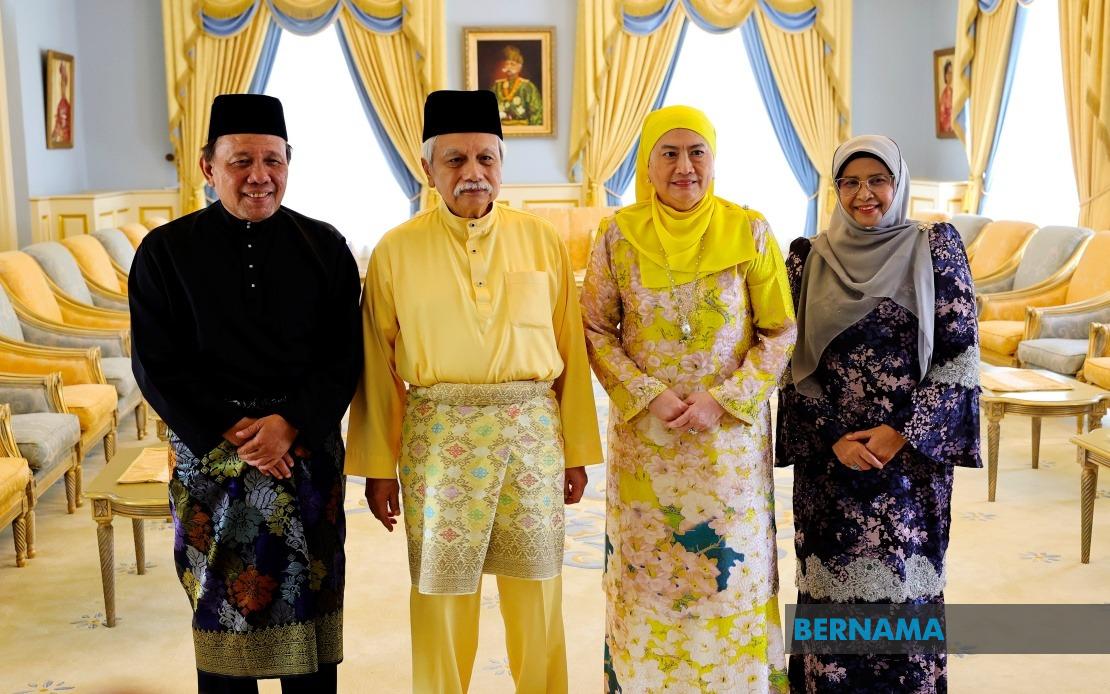
Negeri Sembilan's incoming Menteri Besar Datuk Ismail Lasim has made clear that his administration will place the preservation of the royal institution at the centre of governance, framing it as essential to both social cohesion and political stability in the northern peninsular state. Speaking shortly after being sworn in before Yang Dipertuan Besar Tuanku Muhriz Tuanku Munawir at Istana Besar Seri Menanti, Ismail underscored that upholding the monarchy and the state's cultural heritage would form the bedrock of his government's operational framework.
The Juasseh assemblyman characterised the protection of Negeri Sembilan's royal institution as a shared civic responsibility rather than merely a governmental function. He argued that every citizen bore an obligation to understand and respect the state's established customs and traditions, viewing this collective commitment as foundational to preventing social friction and maintaining constructive relations between the sultanate and the executive branch. This framing reflects a broader concern in Malaysian politics about the role of traditional institutions in an era of rapid social change and increasing demands for institutional accountability.
Ismail's emphasis on minimising conflicts related to the monarchy and customs suggests an awareness of tensions that have periodically surfaced in various states concerning the boundaries of royal prerogative and constitutional governance. By explicitly committing to finding "the most appropriate ways" to address such issues, he appears to be signalling an intention to navigate these sensitivities carefully, balancing respect for tradition with practical administrative requirements. This measured approach may prove significant as Negeri Sembilan, like other Malaysian states, grapples with questions about how hereditary institutions function in contemporary democracies.
Beyond matters of protocol and tradition, Ismail has reaffirmed that his government will pursue close coordination with the federal administration. He emphasised that Barisan Nasional's continued role in Negeri Sembilan's state government, coupled with its participation in the broader Unity Government coalition at the federal level, creates natural synergies that should be leveraged for public benefit. This coordination reflects the practical realities of Malaysia's federal system, where state and national governments must align on key policy areas including infrastructure, economic development, and public services.
The new Menteri Besar's position on federal cooperation carries particular weight given the complexity of Malaysia's contemporary political landscape. The Unity Government arrangement has involved sustained efforts to maintain stability and cross-party consensus on critical issues, and Ismail's commitment to continue this partnership signals that Negeri Sembilan intends to contribute constructively to that broader coalition's sustainability. For Malaysian readers accustomed to frequent political volatility, such assurances of continuity in interstate cooperation may carry reassuring implications for economic planning and development initiatives that depend on stable, predictable governance.
On the question of inherited policies from his predecessor, Ismail has adopted a pragmatic stance, indicating that effective programmes should be retained and improved rather than abandoned for the sake of demonstrating change. This conservative approach to institutional continuity suggests an administration less inclined toward wholesale restructuring and more focused on consolidating gains already achieved. Such positioning may appeal to civil servants and ordinary citizens who value predictability, though it could also invite criticism from those seeking more transformative policy shifts.
The new Menteri Besar's emphasis on people-centred governance as the guiding principle for retaining or discarding policies provides an evaluative framework that appears straightforward in theory but often proves contentious in practice. Different constituencies will inevitably disagree about which programmes genuinely serve public interests, and how success should be measured. Ismail's invocation of this standard, however, at least establishes an explicit accountability metric against which his administration's decisions can be assessed by voters and observers.
For Negeri Sembilan specifically, the swearing-in of Ismail represents a moment of institutional continuity combined with the leadership transition inherent in any change of Menteri Besar. The state has faced various economic and developmental challenges in recent years, competing with more economically dynamic neighbours like Kuala Lumpur and Selangor for investment and talent. Ismail's administration will need to translate its stated commitment to stability and sound governance into concrete outcomes in job creation, infrastructure development, and service delivery.
The broader significance of Ismail's remarks extends to the question of how Malaysian states navigate the tension between honouring constitutional monarchies and responding to citizen expectations for accountable, efficient governance. His framing of the royal institution as a pillar of administration rather than merely a ceremonial fixture reflects a view common among BN-affiliated politicians, yet one that increasingly draws scrutiny from those questioning the costs and benefits of extensive royal prerogatives. Ismail's careful language attempting to balance respect with practical governance may presage the kinds of calibrations that Malaysian state governments will need to manage in coming years.
Looking forward, observers will watch whether Ismail's proclaimed commitment to royal institution preservation extends to concrete respect for established protocols and whether his pragmatic approach to inherited policies translates into visible improvements in state services. The measure of his administration will ultimately rest not on ceremonial declarations but on tangible outcomes in economic development, education, healthcare, and public infrastructure. His inauguration marks the beginning of what promises to be a test of whether stability in governance relationships can coexist with the transformative change that Negeri Sembilan's citizens may increasingly demand.

