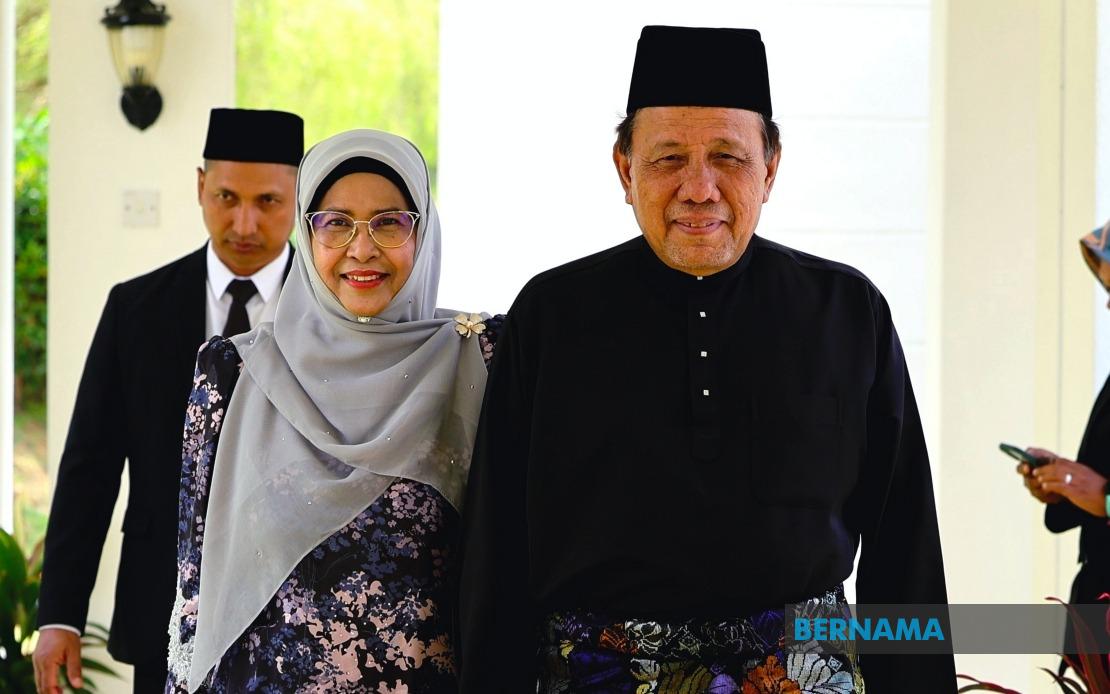
Negeri Sembilan has been granted a day of rest on August 3 as the state government celebrates the conclusion of its 16th legislative election, with Menteri Besar Datuk Ismail Lasim announcing the one-off public holiday at his first official press conference following his swearing-in ceremony on August 2 in Kuala Pilah.
The declaration, which received formal approval from Tuanku Muhriz Tuanku Munawir, the Yang Dipertuan Besar of Negeri Sembilan, serves as the newly-sworn Menteri Besar's inaugural gesture of goodwill towards the state's residents and all stakeholders involved in organizing the electoral process. Datuk Ismail, 67, emphasized the importance of acknowledging public participation in the democratic exercise, noting that many citizens remained physically and mentally fatigued following the election day activities.
The Menteri Besar took particular care during his remarks to express formal gratitude to the royal household, underscoring the monarchical approval required for such state-level decisions. He attributed the holiday announcement to a desire to grant residents an opportunity to recover and reflect on the electoral outcome, recognizing that election days place considerable strain on both voters and administrative personnel involved in conducting polling operations across the state.
The August 2 swearing-in ceremony at Istana Besar Seri Menanti marked the culmination of political negotiations following the August 1 election results, which delivered a decisive mandate to the combined Barisan Nasional and Perikatan Nasional alliance. The election involved a competitive contest across 36 state assembly constituencies, with 103 candidates from various political parties vying for representation. This multi-party competition ensured robust democratic engagement across Negeri Sembilan's electoral divisions.
Barisan Nasional's performance proved substantial, securing 18 seats in the State Legislative Assembly and establishing itself as the dominant coalition partner in the new administration. Perikatan Nasional's seven seats complemented the government's parliamentary strength, and together the two coalitions achieved a two-thirds supermajority—a significant threshold that grants the administration considerable legislative flexibility for implementing policy initiatives without requiring opposition support.
For Malaysian readers particularly invested in peninsular state politics, the Negeri Sembilan outcome reflects broader national trends in coalition dynamics and voter preferences. The alliance between Barisan Nasional and Perikatan Nasional demonstrates how these two major political blocs have increasingly gravitated towards cooperation at state level, diverging from their adversarial relationship during the 2022 federal election period. The state's electoral result therefore provides insight into evolving political alignments within UMNO and PAS, the dominant parties within their respective coalitions.
The decision to declare a public holiday, while symbolic, carries practical implications for the state economy and public administration. Businesses, government offices, and schools will close, providing restoration time for election workers and enabling citizens to engage in civic reflection. In Southeast Asia's broader context, where election fatigue occasionally impacts voter enthusiasm in subsequent electoral cycles, such recovery periods may prove valuable for maintaining public confidence in democratic institutions.
Datuk Ismail's inaugural press conference also functioned as an opportunity to establish the new administration's tone and priorities. By prioritizing acknowledgment of public contribution and royal patronage in his opening remarks, he signaled respect for constitutional monarchy and inclusive governance approaches. These early messaging choices shape public perception of his leadership and set expectations for the Negeri Sembilan state government's trajectory over the coming years.
The election itself proceeded smoothly by Malaysian standards, with no reported major irregularities affecting the credibility of results across the 36 constituencies. The scale of candidate participation—103 individuals contesting state seats—indicates robust democratic competition and multiple viable political alternatives for voters. This diversity of electoral choice reflects Negeri Sembilan's position as a relatively politically competitive state within Malaysia's federal structure.
For Malaysian investors and business interests operating within Negeri Sembilan, the clear electoral outcome and swift formation of government provides valuable political stability. The two-thirds majority eliminates concerns about razor-thin parliamentary margins that might destabilize policy implementation. Businesses can proceed with reasonable confidence regarding regulatory consistency and developmental planning over the administrative term.
The public holiday announcement also carries subtle messaging about Datuk Ismail's administration style. His explicit deference to royal approval and emphasis on public recognition suggest a leader aligned with constitutional traditions and consensus-building approaches. These early signals may influence how opposition parties calibrate their engagement with the new government and how federal authorities perceive state-level governance dynamics.

