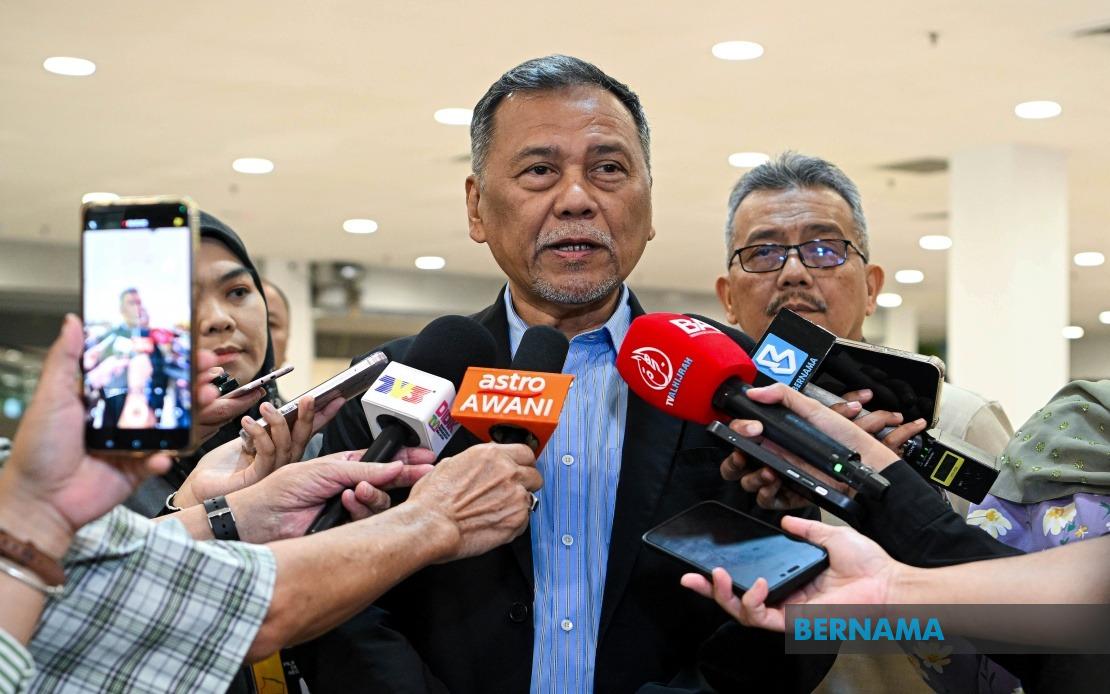
As Negeri Sembilan prepares for its state election tomorrow, the Election Commission has distributed 464 nomination forms to interested contenders, though only 70 have so far committed by submitting their deposits, according to EC chairman Datuk Seri Ramlan Harun. Speaking in Seremban on Wednesday after inspecting nomination centre arrangements, Ramlan urged remaining candidates to complete their deposit payments without delay, cautioning that tomorrow's deadline would otherwise create unnecessary time pressure for both aspirants and election officials.
The commission has significantly restructured its approach compared to recent state elections in the region. Unlike Johor's recent polls, which organised nomination centres by individual state constituencies, Negeri Sembilan's 36 constituencies will funnel all nominations through eight centralised hubs corresponding to parliamentary boundaries. This consolidated model, the EC determined, better accommodates local logistics while streamlining coordination across the state, reducing potential bottlenecks during the intensive nomination period.
Operational readiness appears comprehensive. Ramlan disclosed that the commission deployed full-scale rehearsal sessions across all nomination centres during the morning, validating procedures and identifying any procedural gaps before the actual nomination process begins at 9 am tomorrow. A workforce of 761 EC personnel will be stationed at nomination centres statewide, a deployment underscoring the administrative scale required to process candidacies across the state's competitive electoral landscape within a single hour's window.
The eligible voter pool extends to 889,490 registered electors, encompassing 867,151 ordinary voters alongside 16,884 military personnel and their families and 5,455 police officers designated for early voting. This electorate will determine which party or coalition controls the 36 assembly seats when polling day arrives on August 1, with early voting scheduled five days prior on July 28. The dates mark the culmination of a process initiated when the state assembly was formally dissolved in June following the Yang Dipertuan Besar's consent.
Security and conduct remain paramount concerns as nomination day approaches. Ramlan explicitly requested that all political parties maintain discipline among their supporters, emphasising that provocative conduct or regulatory violations could undermine the election's integrity. Candidates themselves were advised to arrive ahead of schedule, forestalling congestion that could compromise the nomination process's orderly progression. These precautions reflect the commission's determination to prevent the sporadic incidents that occasionally mar Malaysian electoral processes.
The 2023 state election established the current political baseline from which this contest diverges. Pakatan Harapan secured 17 seats across the 36-member assembly, while Barisan Nasional captured 14 and Perikatan Nasional five. This distribution created a coalition government dependent on securing additional support beyond its primary component, a configuration potentially vulnerable to defections or shifting allegiances—factors that typically intensify competition during subsequent electoral contests.
The nomination deadline's proximity underscores the compressed timeline characteristic of Malaysian elections. Candidates have effectively days to finalise paperwork and deposit submissions before the nomination process closes, necessitating rapid internal decision-making within political parties regarding endorsement and fielding strategies. For independent aspirants, this window demands equally swift action, effectively filtering out those unprepared for the election's demanding pace.
The EC's emphasis on advance candidate arrival and early payment reflects lessons learned from previous electoral cycles when technical delays or administrative congestion complicated the process. By signalling these requirements clearly, the commission aims to prevent tomorrow's nomination from becoming a chaotic compression of activity, which could disadvantage candidates and strain electoral officials managing simultaneous documentation and verification tasks.
For Malaysian observers tracking electoral developments, the N9 election holds significance beyond state-level governance. Results could signal evolving voter preferences within a state historically competitive between Pakatan Harapan and Barisan Nasional, potentially foreshadowing similar dynamics in future federal or other state contests. The nomination figures themselves—relatively modest at 70 confirmed candidates across 36 constituencies—suggest a field that, while not extraordinarily crowded, remains contested enough to prevent any predetermined outcomes.
The commission's logistical preparations and regulatory messaging reflect institutional maturation in managing Malaysia's increasingly complex electoral environment. With nomination proceedings tomorrow and the campaign period commencing immediately thereafter, Negeri Sembilan enters a decisive phase that will reshape the state's political trajectory for the next election cycle. The actual quality and competitiveness of the candidate roster will become apparent only when nominations formally close and returning officers announce eligible contenders, a moment that simultaneously concludes the administrative phase and inaugurates the intensely contested campaign period ahead.

