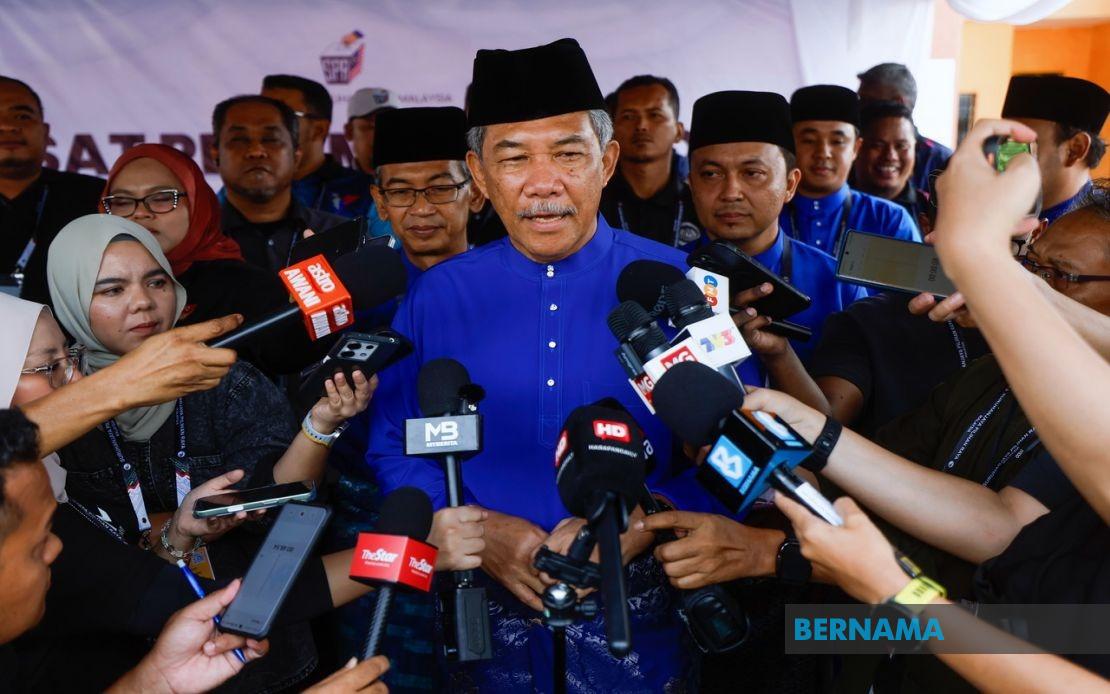
Barisan Nasional deputy chairman Datuk Seri Mohamad Hasan has made a forceful appeal to party operatives to refrain from instrumentalising Negeri Sembilan's adat customs as electoral ammunition in the forthcoming 16th state election, stressing that such conduct would undermine the cohesion essential to a healthy democratic process. The UMNO deputy president conveyed his warning during the nomination proceedings at Dewan Seri Rembau in Rembau on July 18, speaking to journalists after the nomination process concluded for the contest scheduled for August 1.
Mohamad's intervention reflects sensitivity around the intersection of tradition and politics in Negeri Sembilan, where adat institutions occupy a distinctive constitutional and cultural position. The state's adat framework, rooted in historical governance structures and community practices, carries significant weight among constituents and administrators alike. By cautioning against the politicisation of these institutions, the BN leadership appears cognisant that electoral arguments touching on customary authority could fracture social bonds and provoke community divisions that outlast the campaign season itself.
The experienced politician articulated his position with unmistakable clarity, emphasising that adat matters warrant protection from partisan manipulation. He stressed that traditional customs institutions should remain autonomous from electoral calculations and that blending adat with campaign messaging risked creating destabilising friction within Negeri Sembilan society. His framing of the issue suggests concern that candidates or party machinery might be tempted to leverage traditional authority structures or customary grievances to mobilise voter bases, a tactic he deemed counterproductive to the state's political stability.
Crucially, Mohamad's warning targets his own coalition's machinery as much as external competitors, indicating internal discipline challenges within BN's election preparation. His explicit reminders suggest that reminders have been necessary, pointing to instances where campaign operators may have tested the boundaries of appropriate discourse. The directive underscores BN's investment in maintaining its institutional reputation and avoiding the reputational damage that could follow from allegations of adat politicisation.
The electoral landscape in Negeri Sembilan carries particular complexity given the established understanding between BN and Perikatan Nasional. Rather than contesting all 36 seats as direct adversaries, the two coalitions have negotiated an electoral arrangement whereby they concentrate their efforts strategically. Mohamad distinguished this arrangement from the formal coalition structure that governed Johor's political mechanics, describing the Negeri Sembilan arrangement instead as a targeted understanding focused on specific constituencies. Under this framework, BN effectively cedes certain contests to PN candidates while PN does likewise in other seats, theoretically enabling both coalitions to concentrate resources where they maintain competitive advantages.
This strategic cooperation reflects pragmatic recognition that splitting the non-PH vote across too many contested seats invites defeats neither coalition desires. By concentrating electoral battles in winnable territories and withdrawing from others, both formations aim to maximise their aggregate seat totals. The arrangement exemplifies the shifting dynamics of Malaysian electoral politics, where formal coalition structures coexist uneasily with looser understandings and strategic non-competition pacts.
The dissolution of the Negeri Sembilan Legislative Assembly on June 5 set events in motion, with the Election Commission establishing July 28 as the early voting date and August 1 for the general poll. The condensed campaign period between nomination and polling day means that parties possess limited time to establish messaging themes and mobilise ground operations. Within this compressed timeframe, Mohamad's directive attempting to ring-fence adat issues gains additional significance, as it attempts to establish red lines before campaign momentum builds.
For Malaysian observers, Mohamad's emphasis on protecting adat institutions from electoral contestation holds broader relevance. Across the peninsula and Sabah, adat frameworks interweave with governance, land rights, community identity, and customary authority in varied but consequential ways. The principle that traditional institutions merit protection from partisan weaponisation could resonate beyond Negeri Sembilan, offering a template for political restraint that other state and federal campaigns might emulate or reject.
The timing and framing of Mohamad's intervention also illuminates internal BN calculations regarding its competitive standing in Negeri Sembilan. By emphasising restraint on sensitive cultural matters, BN leadership may be attempting to position the coalition as the custodian of institutional stability and social harmony—a positioning that could appeal to voters exhausted by confrontational politics. Conversely, by establishing this marker publicly, BN creates benchmarks against which its own members' behaviour will be judged, potentially constraining its own campaign flexibility.
The election itself occurs within Malaysia's broader political context, where coalition dynamics remain fluid and state-level contests frequently foreshadow or reflect shifting federal political alignments. Negeri Sembilan's outcome could influence calculations regarding BN's broader viability and the sustainability of arrangements with PN across multiple electoral theatres. Mohamad's intervention, ostensibly focused on preserving campaign decorum, subtly reinforces BN's strategic interests by attempting to constrain the scope of electoral contestation to terrain where the coalition believes it retains advantages.

