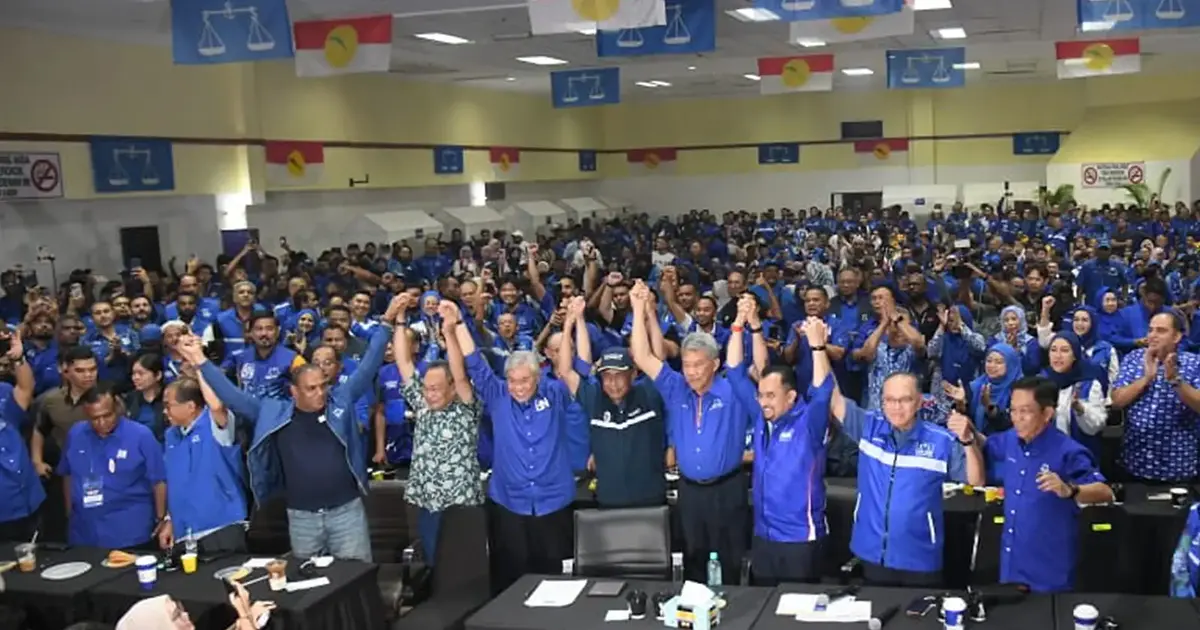
The Negeri Sembilan state election has produced a decisive outcome that extends Barisan Nasional's consolidation of power while simultaneously exposing fractures in the opposition camp that threaten to reshape Malaysia's political competitive landscape. The results represent a significant turning point for both major coalitions, with implications that extend well beyond this one state and into the broader struggle for influence at the federal level.
Barisan Nasional emerged as the unambiguous victor from the contest, substantially strengthening its already commanding position in the state assembly. The coalition's success in Negeri Sembilan reflects a broader pattern of electoral recovery that has unfolded across the country since 2022, reversing years of decline that had prompted serious questions about the organisation's viability as a political force. For an outfit that faced existential challenges in the aftermath of the 2018 general election, this trajectory represents a remarkable rehabilitation that senior leaders are unlikely to underestimate in their strategic calculations going forward.
The victory in Negeri Sembilan carries particular significance because it consolidates BN's control over another state government at a time when the coalition is already in ascendancy at the federal level. This concentration of power allows the coalition to shape policy implementation, patronage networks, and administrative capacity across multiple territories simultaneously, creating compounding advantages in resource allocation and institutional influence. For opposition parties observing from the sidelines, the implications are sobering: BN is not merely winning individual elections but systematically entrenching itself across Malaysian governance structures in ways that will prove extraordinarily difficult to dislodge.
Pakatan Harapan's performance in the election starkly underscores a fundamental challenge that has haunted the coalition since it first came to power in 2018. Despite presiding over federal government during that period, the opposition alliance has consistently struggled to translate national-level governance into sustained electoral momentum at the state level. Negeri Sembilan represents another painful data point in a lengthening series of disappointments that suggest the coalition's appeal has failed to deepen or broaden significantly, even as various component parties have attempted strategic repositioning and messaging adjustments.
The specific geography of PH's struggles deserves careful examination, as it reveals the coalition's persistent structural vulnerabilities. Across multiple states and districts, the coalition has found itself unable to consolidate support among critical demographic groups or to build robust ground organisations capable of competing effectively against entrenched rivals. This weakness is particularly damaging when considering that PH depends on mobilising diverse constituencies who might otherwise drift toward other political alternatives, whether within Perikatan Nasional or toward independent candidates promoting purely local interests.
The election results have simultaneously triggered fresh scrutiny of Bersatu's position within the Perikatan Nasional coalition, forcing uncomfortable questions about the party's long-term strategic direction and electoral viability. Bersatu entered PN amid considerable fanfare and with significant internal reserves of political capital, yet the party's performance across a series of recent contests has suggested it may be struggling to secure the kind of results necessary to justify its prominent position within the coalition structure. This dynamic creates tension within PN because the coalition's delicate internal balance requires all major components to be perceived as pulling their weight electorally.
For Bersatu specifically, the Negeri Sembilan outcome poses particular challenges because the party's leadership has heavily invested in the PN arrangement as the vehicle through which it can compete for power at both state and federal levels. If the party cannot demonstrate consistent electoral success, its bargaining position within the coalition inevitably weakens, potentially translating into reduced allocation of winnable seats in future contests and diminished influence over coalition policy directions. The trajectory of Bersatu's fortunes within PN will substantially influence how the opposition coalition evolves in coming years and whether the party retains meaningful leverage in national politics.
The broader implications of the Negeri Sembilan election extend to how Malaysian voters are reassessing the coalition alternatives available to them. The election outcome suggests a hardening of electoral preferences in which BN's rehabilitation has progressed far enough to attract swing voters who had previously flirted with supporting opposition alternatives. This pattern indicates that voters may be reverting to more traditional partisan alignments, potentially at the expense of the experiment with alternating power that briefly energised Malaysian politics in 2018. Understanding this recalibration is essential for opposition strategists planning for future campaigns.
The state election also illuminates deeper questions about organisational capacity and party machinery that often receive insufficient attention in post-election analysis. BN's performance reflects not merely voter sentiment but also the coalition's substantial advantages in deploying experienced administrators, accessing financial resources, and mobilising ground organisations that have operated continuously across many decades. These institutional assets provide BN with cumulative advantages that opposition parties, operating with fewer resources and less institutional continuity, struggle to overcome.
Looking ahead, the Negeri Sembilan results will likely embolden BN strategists who are already considering the optimal timing for a federal election. A coalition that can consistently demonstrate electoral strength across multiple state contests positions itself to enter a national campaign with genuine momentum and the ability to project an image of inevitability. For opposition parties, meanwhile, the results underscore the urgency of fundamental strategic reassessment regarding how to articulate a compelling alternative vision and rebuild the ground-level organisations necessary to compete effectively.

