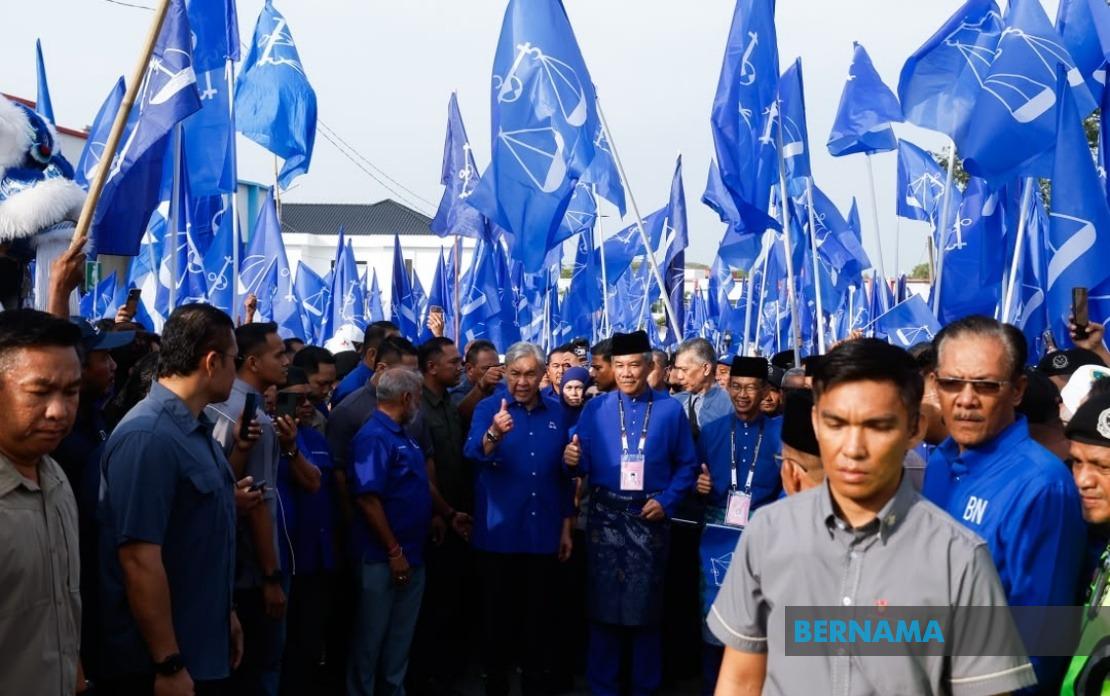
High-profile participation from Malaysia's political establishment underscored the significance of the 16th Negeri Sembilan state election as senior leaders from Barisan Nasional and the opposition personally accompanied candidates filing nomination papers on Thursday. The visible show of support from party hierarchies reflects the competitive nature of the contest and the strategic importance of the state assembly seats being contested across the central region.
Barisan Nasional chairman and UMNO president Datuk Seri Dr Ahmad Zahid Hamidi arrived at the Dewan Seri Rembau nomination centre at 8.40 am alongside his deputy Datuk Seri Mohamad Hasan, who is seeking to retain the Rantau state seat he has represented since 2004. The coordinated presence of the coalition's top two figures at one of the most prominent filings sent a clear message about the importance placed on maintaining BN's grip on the state legislature, particularly in defending incumbent strongholds in the Rembau area.
Election officials opened all eight nomination centres simultaneously at 9 am, providing a compressed two-hour window for candidates to submit their candidacy papers before the midday closure. This standardised procedure ensures simultaneous processing across multiple constituencies and prevents any single nomination from receiving disproportionate official attention. The strict timeline underscores the Election Commission's commitment to maintaining impartiality throughout the nomination process.
Throughout the central districts, other senior BN figures demonstrated similar engagement with the nomination exercise. Datuk Seri Dr Zambry Abd Kadir, who serves as secretary-general of the coalition, personally escorted Datuk Mohd Faizal Ramli to file papers for the Linggi state seat in Port Dickson. This level of direct involvement from coalition headquarters signals confidence in the candidate and reinforces party discipline among the rank and file who observe their leaders' priorities.
UMNO vice-president Datuk Seri Johari Ghani accompanied Suhaimizan Bizar's nomination filing for the Gemencheh state seat in Tampin parliamentary constituency, while party secretary-general Datuk Dr Asyraf Wajdi Dusuki oversaw the submissions of three BN candidates contesting seats in Jempol—Datuk Mustapha Nagoor (Palong), Datuk Mohd Zaidy Abdul Kadir (Jeram Padang) and Chong Fui Ming (Bahau). The distribution of senior party officials across different nomination centres demonstrates the breadth of BN's leadership engagement and the resources the coalition is mobilising for this contest.
Opposition parties also fielded prominent figures to support their candidates, indicating that the Negeri Sembilan election holds significance beyond state-level politics. PAS president Tan Sri Abdul Hadi Awang accompanied Mohd Fairuz Mohd Isa to file nomination papers for the Serting state seat, signalling the party's intention to contest seriously in the state. Such participation from party presidents reflects the heightened stakes surrounding state assembly elections, which have increasingly become proxy contests reflecting broader national political dynamics and coalition strategies.
Smaller parties also made their presence felt. Parti Orang Asli Malaysia (ASLI) president Rashid Ka accompanied Dayana Dal's nomination filing for the Jeram Padang state seat, demonstrating how even niche political entities are positioning themselves within the competitive landscape of Negeri Sembilan politics. The participation of diverse parties and candidates across eight nomination centres highlights the pluralistic nature of Malaysia's electoral system and the varied pathways through which political representation is sought at state level.
The Negeri Sembilan State Legislative Assembly was formally dissolved on June 5 following the constitutional approval of Tuanku Muhriz Tuanku Munawir, the Yang Dipertuan Besar of Negeri Sembilan. This dissolution set the election machinery in motion, with the nomination filing on July 18 representing the first formal hurdle in the campaign process. The sequence of events follows Malaysia's standard electoral calendar, allowing adequate preparation time between nominations and the scheduled polling day.
With August 1 confirmed as election day and early voting already scheduled for July 28, the nomination phase marks a critical juncture where candidates become officially registered contenders in the public record. The two-week interval between nominations and polling day provides sufficient time for campaigning while maintaining the momentum generated by candidate registrations. Early voting provisions, increasingly common in Malaysian elections, are designed to accommodate voters who may face logistical constraints on the main election day, thereby broadening electoral participation.
For Negeri Sembilan specifically, this election carries significance as a barometer of electoral sentiment in a state that has historically tilted toward Barisan Nasional, though with varying margins. The central location of the state within Peninsular Malaysia and its diverse socioeconomic composition make electoral outcomes here potentially indicative of broader trends affecting other states with similar demographics. Senior leaders' visible involvement in the nomination process suggests that both BN and opposition parties view the results as consequential for their national positioning and coalition calculus.
The personal accompaniment of candidates by party presidents and senior officials serves multiple purposes within Malaysia's political culture. It demonstrates organisational capacity, signals candidate viability and party confidence, and creates photo opportunities that feed into campaign narratives about momentum and support. For voters and party members observing these proceedings, such visible hierarchy engagement often translates into perceptions about which candidates possess genuine backing and resources for effective constituency service.
The staggered presence of various leaders across multiple nomination centres also reflects the practical realities of managing simultaneous filings across a state with dispersed population centres. Rather than attempting to concentrate all senior figures at a single location, parties strategically deployed their hierarchies to maximise visibility across different regions and voter demographics. This distribution approach allows parties to maintain symbolic presence in multiple constituencies while efficiently utilising their leadership resources.

