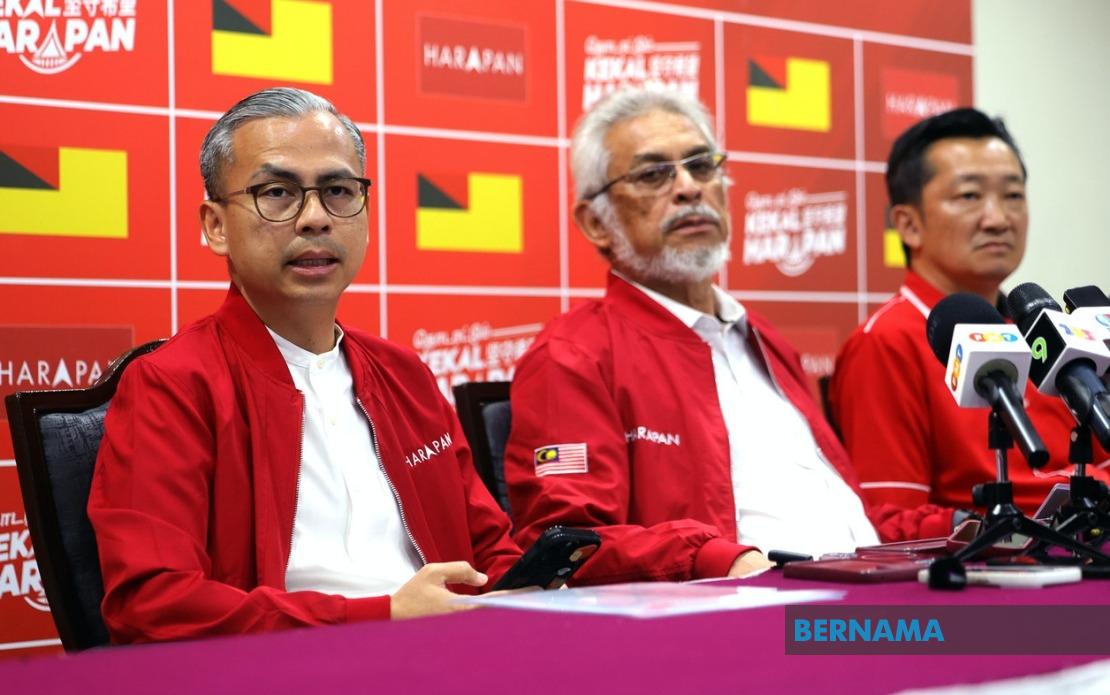
The Negeri Sembilan government has firmly disputed allegations circulating on social media that it took no action against unauthorised occupation of state land in villages near Seremban, including Kampung Pasir. Speaking at a press conference in the state capital on July 23, Pakatan Harapan Communications Director Datuk Seri Fahmi Fadzil countered the narrative by detailing the administration's response to earlier complaints about encroachment on government property.
The controversy centres on a letter dated around July 2022 that first raised concerns about state land being occupied without authorisation across several residential areas in the Seremban district. These allegations subsequently gained traction through online channels, prompting the Menteri Besar's office to publicly address the matter. According to Fahmi, who also serves as Communications Minister and PKR Information Chief, the state leadership took the complaints seriously and initiated a systematic review process immediately upon receiving notification of the problem.
Detailing the government's response, Fahmi explained that Menteri Besar Datuk Seri Aminuddin Harun's office had requested a formal report from the Seremban District and Land Office to properly assess the scale and nature of the encroachment. This investigation identified 12 households occupying state government land without authorisation. Rather than pursuing immediate enforcement action, the state government adopted a more compassionate approach toward affected residents, recognising that many were likely low-income families seeking shelter.
Of the 12 encroaching households identified, five have already been offered alternative affordable housing provided by the state government, with relocation efforts currently progressing. This proactive housing solution demonstrates an attempt to resolve the encroachment problem while addressing the underlying housing needs that may have driven residents to occupy state land in the first place. The availability of government-subsidised housing represents a meaningful intervention beyond simple removal or demolition.
Regarding the remaining seven households, Fahmi stated that the Seremban District and Land Office had completed a comprehensive report outlining proposed courses of action. This documentation was prepared for submission to the State Executive Council for formal consideration and decision-making by May of this year. However, the timeline for addressing these cases became complicated by broader political developments at the state level.
The unexpected dissolution of the Negeri Sembilan State Legislative Assembly in early June created an administrative hiatus that affected multiple government operations. When a state assembly is dissolved ahead of elections, the incumbent administration enters a caretaker phase where major policy decisions and expenditures are typically deferred until a new government is constituted and gains a fresh mandate. This constitutional requirement, while necessary for democratic integrity, inevitably delays the progression of pending matters through the formal approval process.
Fahmi emphasised that attributing government inaction to the state assembly dissolution represents a fundamental misunderstanding of how the administrative system functions. Rather than evidence of negligence or unwillingness to address the issue, the deferral of remaining decisions reflected standard constitutional practice. The groundwork had been completed, investigations concluded, and recommendations prepared well before the assembly was dissolved, positioning the matter for swift resolution once a new state administration was established.
The press conference included support from coalition partners, with Amanah Communications Director Khalid Abdul Samad and Negeri Sembilan DAP secretary Cha Kee Chin also in attendance. This unified front underscored Pakatan Harapan's commitment to presenting a coordinated response to the encroachment allegations and demonstrating that the coalition government had approached the matter with seriousness and proper procedure.
For Malaysian readers, this dispute illustrates the tension between the pace of government action that the public expects and the constitutional constraints that govern state administrations. While social media allegations can spread rapidly and create perceptions of governmental inertia, the actual sequence of events often reveals a more methodical approach to sensitive issues involving displaced persons. The Negeri Sembilan case demonstrates how housing-related land encroachment requires balancing enforcement responsibilities with humanitarian considerations.
The situation also highlights how state assembly dissolutions, while necessary democratic procedures, can complicate the resolution of pending administrative matters. The timing of the June dissolution meant that critical decisions on the remaining five households were frozen in limbo, even though the underlying investigation and recommendations were complete. This gap between preparation and implementation can easily fuel public perception of government sluggishness.
Looking forward, the newly formed state government faces the opportunity to move swiftly on the recommendations prepared by the Seremban District and Land Office. With five households already in the relocation pipeline and comprehensive proposals developed for the remainder, the encroachment matter is positioned for relatively quick resolution. The approach taken by the outgoing administration—combining enforcement with social housing solutions—establishes a constructive framework for handling similar cases across the state.
This episode underscores the importance of government communications in clarifying administrative timelines and the reasons behind apparent delays. The public's understanding of government processes often depends on proactive explanation rather than reactive denial. By detailing the specific steps taken and the reasons for deferment, officials can better shape public perception and maintain confidence in the institutional response to land and housing issues.

