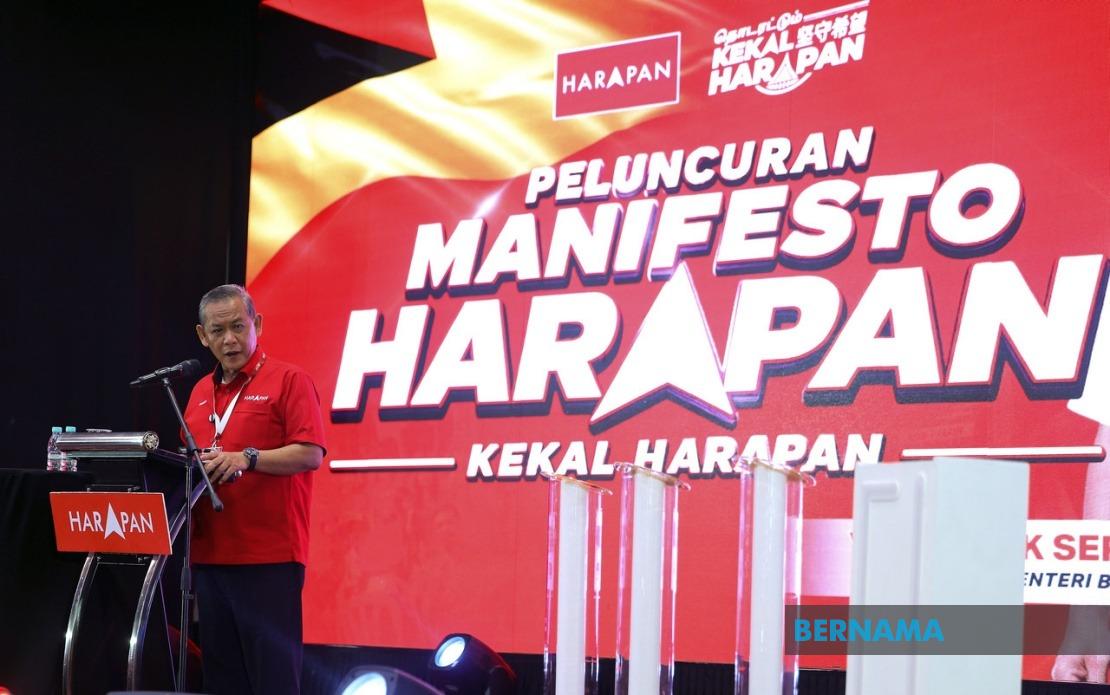
Pakatan Harapan launched its campaign platform for the 16th Negeri Sembilan state election in Seremban on July 20, presenting a manifesto centred on retaining public confidence through what the coalition brands as 'Negeri Sembilan Kekal Harapan' (Negeri Sembilan Stays With Harapan). The political coalition, led in the state by Menteri Besar Datuk Seri Aminuddin Harun, framed the document as a social contract with voters, outlining ten major policy directions intended to guide governance should the coalition secure another mandate.
At the heart of PH's platform lies a commitment to transparent, accountable administration coupled with an overhaul of the People's Wellbeing Scheme (Skim Sejahtera Rakyat or SSR). This dual emphasis reflects the coalition's strategy to address both institutional trust and household economic security—two perennial concerns among Malaysian voters. By positioning itself as a guardian of clean governance, PH seeks to differentiate itself from competitors while simultaneously signalling intent to deepen social safety nets that protect ordinary families from economic shocks.
The manifesto dedicates substantial focus to employment generation, pledging to create 30,000 high-income jobs as part of a broader vision for building a competitive state economy. This target speaks to the growing concern among younger Malaysians about wage stagnation and career prospects. For Negeri Sembilan specifically, which has historically relied on palm oil, manufacturing and tourism, the promise of higher-wage employment suggests PH intends to diversify the economic base and reduce dependence on lower-skilled sectors. The feasibility and timeline for such job creation will likely become focal points of electoral debate.
Housing emerges as another pillar, with PH committing to construct 20,000 affordable units while simultaneously resolving longstanding land disputes that have plagued the state. The housing shortage remains acute across Malaysia, and Negeri Sembilan is no exception. Rising property prices have priced out middle-income earners and first-time buyers, making this pledge potentially attractive to younger demographics and growing families. However, the manifesto offers limited detail on funding mechanisms or the specific price points these homes would target, leaving critical implementation questions unanswered.
Education features prominently in the platform, with PH pledging to ensure quality schooling access for all residents. This commitment extends beyond infrastructure to presumably encompassing teacher training, curriculum development and equitable resource distribution across urban and rural areas. Given Malaysia's ongoing concerns about learning outcomes and the uneven quality of state schools, this pledge resonates with parents and educators alike. The coalition positions education not merely as a social good but as foundational to economic competitiveness and social mobility.
The manifesto also addresses healthcare delivery, promising strategic infrastructure investment and quality medical services. Negeri Sembilan, like many Malaysian states, faces challenges in healthcare accessibility, particularly in rural districts. The pledge reflects growing public concern over long waiting times, specialist shortages and the rising costs of private healthcare. For a state government, healthcare commitments require coordination with federal bodies and sustained budgetary commitment, adding complexity to implementation.
Youth empowerment, women's advancement and family support form a third thematic cluster. These commitments acknowledge demographic shifts and changing social expectations, particularly among voters under 40. By explicitly prioritising gender equality and youth opportunity, PH signals openness to progressive values, though the manifesto remains general on specific programmes or budget allocations. This vagueness invites scrutiny from advocacy groups and opposition parties.
Tourism and cultural heritage development represents PH's economic diversification strategy. Negeri Sembilan possesses significant historical sites, natural attractions and cultural traditions that remain underexploited compared to neighbouring Selangor or Penang. Investment in this sector could generate employment, boost state revenue and enhance Negeri Sembilan's profile regionally. However, sustainable tourism development requires careful planning to avoid environmental degradation or cultural commodification.
The manifesto pledges to modernise agriculture and strengthen food security, a commitment particularly relevant given Malaysia's vulnerability to global commodity price volatility and import dependence. Negeri Sembilan has agricultural heritage, particularly in smallholder farming, and revitalising this sector through technology adoption and market access improvements could improve rural livelihoods. The manifesto's inclusion of the Federal Land Development Authority (Felda) Development Plan suggests coordination with federal initiatives, though the details of this partnership remain unclear.
Promoting interfaith unity appears as a final commitment, reflecting Malaysia's multiethnic, multireligious composition and Negeri Sembilan's diverse population. This pledge, while appearing generic, addresses ongoing concerns about communal tensions and the need for proactive social cohesion efforts. For a state seeking to position itself as investment-friendly and stable, this commitment carries both symbolic and practical weight.
The 10-point manifesto represents PH's attempt to present a comprehensive governance agenda balancing immediate material concerns—jobs, housing, healthcare—with longer-term institutional and social priorities. Whether these commitments prove credible will depend partly on PH's track record in implementing similar pledges in other states and at federal level. Malaysian voters increasingly scrutinise manifestos against actual performance, making transparent progress tracking essential to maintaining political capital. The opposition will likely challenge specific targets and implementation pathways, sharpening electoral debate around feasibility and resource allocation.

