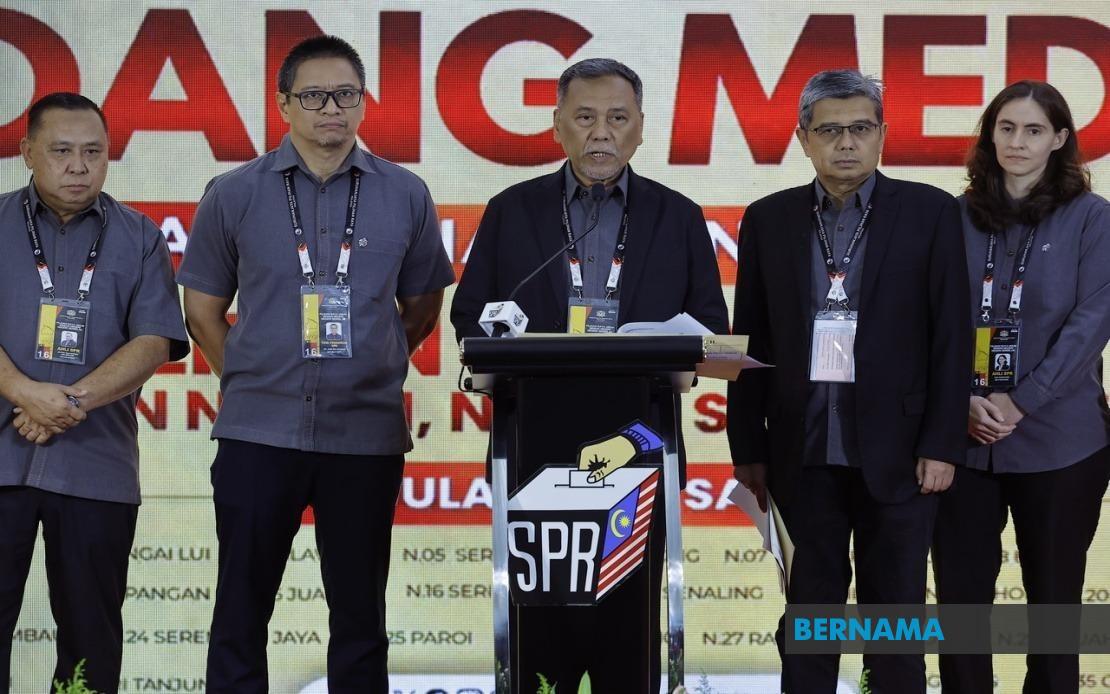
Malaysia's Negeri Sembilan state is gearing up for a competitive electoral showdown on August 1 following the Election Commission's confirmation that 103 candidates have been cleared to contest across all 36 assembly seats. The confirmation came after nomination day on July 18, when EC chairman Datuk Seri Ramlan Harun verified submissions from eight nomination centres across the state, setting the stage for what promises to be one of the more fragmented state elections in recent memory.
The candidate field reveals a striking fragmentation of the political landscape, with Pakatan Harapan establishing itself as the frontrunner by fielding 36 contenders across the 36 available seats. Barisan Nasional, the longstanding establishment coalition, has adopted a more selective strategy by nominating 25 candidates, suggesting a tactical withdrawal from some battlegrounds. The newer player Bersatu, which has aligned with Perikatan Nasional, has surprisingly committed substantial resources by putting forward 24 candidates, demonstrating significant ambitions in the state despite its relative newness to Negeri Sembilan politics. Perikatan Nasional itself fielded 11 candidates, completing what amounts to a four-way tussle for voter support.
Beyond the major coalitions and parties, several smaller political entities have thrown their hats into the ring, adding texture to the contest. Barisan Jemaah Islamiah Se-Malaysia, the Malaysian Orang Asli Party, and the Socialist Party of Malaysia each nominated a single candidate, while four independent contenders will also appear on ballot papers. This distribution underscores how Negeri Sembilan's election will not be a simple two-coalition affair but rather a fragmented battle where vote-splitting could prove decisive in numerous constituencies.
The battle configuration across the 36 seats paints a picture of intense multi-way competition. Twenty-one seats will host three-cornered contests, representing 58 per cent of all constituencies and indicating that voters in more than half the state will face a genuine three-way choice at the ballot box. This high proportion of triangular fights significantly elevates unpredictability, as winning margins may contract and strategic voting becomes more complex. Only 11 seats are designated for straight one-on-one contests between two candidates, a relatively small number suggesting widespread field fragmentation. Additionally, Nilai and Sri Tanjung will witness five-cornered battles, while Jeram Padang and Rahang are set for four-way clashes, further complicating the electoral mathematics.
Demographic patterns among the candidate pool reveal interesting trends about representation in the state. Of the 103 candidates, 94 are male and nine are female, reflecting a persistent gender imbalance in Malaysian electoral politics despite ongoing advocacy for greater female participation. The age spectrum ranges from the youngest candidate at just 23 years old, representing Bersatu in Sri Tanjung, to a 70-year-old Pakatan Harapan contender in Gemencheh, demonstrating political opportunities spanning generations even as younger entrants remain relatively rare in electoral contests.
The electorate that will determine outcomes comprises 889,490 eligible voters, a substantial constituency by Malaysian standards. This total includes 867,151 ordinary voters registered across the state, supplemented by 16,884 military personnel and their spouses, and 5,455 police officers who constitute a distinct voting segment. The military and police constituencies can occasionally prove decisive in tight races, particularly in constituencies where overall margins are slim. The election calendar has been carefully structured to allow early voting on July 28, a week before the main polling day on August 1, providing flexibility for service personnel and others unable to vote on the primary date.
The Negeri Sembilan state assembly itself comprises 36 seats, all of which will be contested in this election following the dissolution of the previous assembly on June 5. This dissolution triggered the entire electoral process that led to July 18's nomination day. The timing suggests a carefully planned political calendar by the state government, though the motivations behind selecting this particular window for elections remain subject to political speculation and analysis.
From a broader Malaysian perspective, the Negeri Sembilan election carries significance beyond the state itself. The contest will provide an early indicator of voter sentiment in the crucial post-2022 political era, following the formation of the Madani coalition government at federal level. Negeri Sembilan's result could influence political momentum ahead of any potential general elections, as Pakatan Harapan seeks to consolidate its position and Barisan Nasional attempts to remain relevant after its reduced parliamentary presence. The strong performance by Bersatu in fielding candidates also signals the party's ambitions to establish meaningful presence in state assemblies as it navigates its complex political positioning.
The high incidence of three-cornered contests in particular will test voter behaviour patterns in Malaysian electoral politics. Historically, such fragmented contests have rewarded parties with strong grassroots mobilisation and clear local narratives, while punishing those that fail to communicate effectively with their target constituencies. For Pakatan Harapan, the challenge lies in converting its numerical advantage in seat nominations into actual victories despite facing split opposition. Barisan Nasional must leverage its traditional organisational strengths in the constituencies where it has chosen to stand. Bersatu's participation adds unpredictability, particularly given its role in national politics and its appeal to specific voter demographics, while Perikatan Nasional's limited candidate numbers suggest a focus on winnable seats rather than comprehensive state coverage.

