The 16th Negeri Sembilan State Election, scheduled for August 1, is shaping up as a contest that will test Malaysia's fractionalised political landscape in new ways, with the number and complexity of electoral contests undergoing significant transformation compared to the previous polls held in 2023.
Of the 36 state legislative assembly seats contested, the composition of races reveals a strikingly different electoral terrain. Straight fights between two candidates will shrink to just 11 constituencies, a dramatic reversal from the 27 such contests in the previous election. This decline reflects a broader political fragmentation affecting Malaysia's state-level politics, where the traditional two-party confrontation between ruling coalitions and opposition has given way to multi-party competition across numerous fronts.
Most striking is the tripling of three-cornered contests, which will occur in 21 seats compared to merely seven in 2023. This surge suggests that smaller political forces—particularly Bersatu and fringe parties—have successfully carved out space for themselves in the state's electoral calculations, forcing both Pakatan Harapan and Barisan Nasional to contend with additional challengers in many constituencies. Additionally, two constituencies will experience four-way contests, while Nilai and Sri Tanjung will witness five-cornered battles, a phenomenon that did not occur in the previous election.
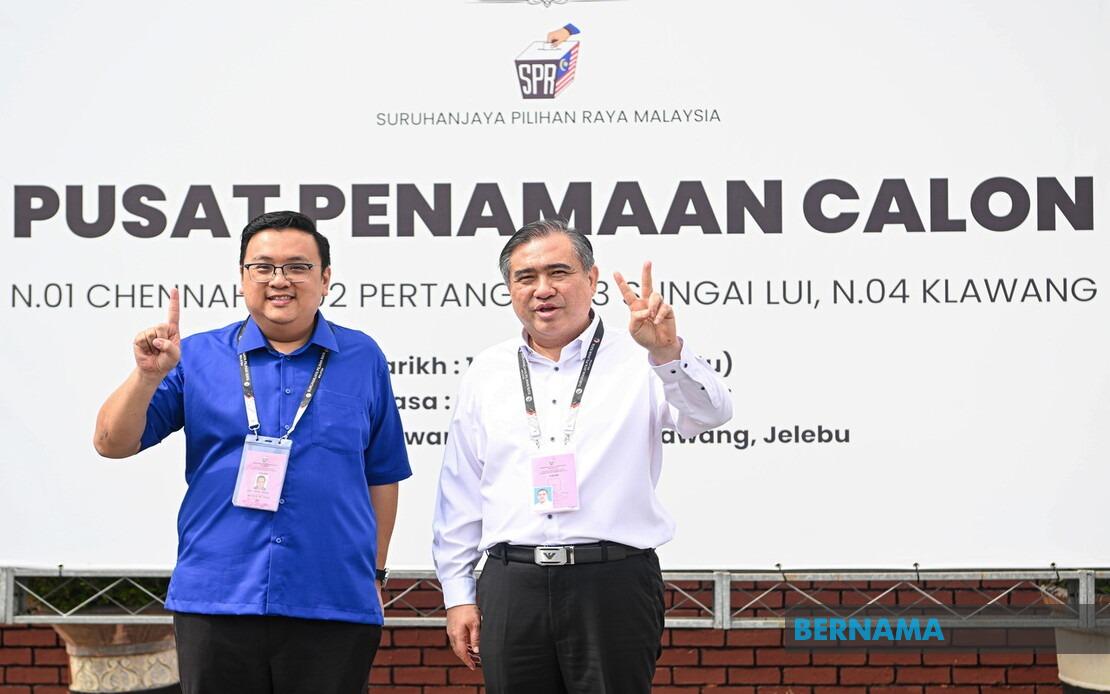
The straight fights will feature several prominent national figures. DAP secretary-general and Transport Minister Anthony Loke will represent Pakatan Harapan in the Chennah constituency against BN's Siow Kong Choon. Meanwhile, UMNO deputy president and Foreign Minister Datuk Seri Mohamad Hasan will defend the Rantau seat for Barisan Nasional against PH candidate Dr Azizul Hakim Mahdi. These contests underscore how state elections continue to attract high-profile personalities, turning regional battles into proxies for national political positioning.
The three-cornered contests introduce additional complexity. Negeri Sembilan Menteri Besar Datuk Seri Aminuddin Harun, leading Pakatan Harapan as PKR vice-president, will defend his Linggi seat while contending with both Barisan Nasional's Datuk Mohd Faizal Ramli and Bersatu's Zamri Md Said. Similarly, the Pertang constituency will pit UMNO's Datuk Seri Jalaluddin Alias against PH's Mohd Umry Abdul Khois and Bersatu's Mohd Faizal Fadli Mohd Idrus. These races carry particular significance because they pit ruling coalition members against intra-opposition rivalries, where the split opposition vote could benefit incumbents or vice versa.
The Klawang seat presents an intriguing dynamic with Danni Rais, son of veteran politician Tan Sri Rais Yatim and now representing Perikatan Nasional, squaring off against incumbent Datuk Bakri Sawir of PH and Bersatu's Muhammad Adib Musa. This constellation reflects how dynastic politics continues to intersect with coalition allegiances, with newcomers leveraging family political credentials to challenge established incumbents within fragmented electoral contests.
The four-way contests in Jeram Padang and Rahang introduce further complications into candidate calculations. In Jeram Padang, BN's incumbent Datuk Mohd Zaidy Abdul Kadir faces challenges from PH's G. Manivannan, Bersatu's R. Sri Sanjeevan, and Parti Orang Asli Malaysia's Dayana Dal. The Rahang seat, meanwhile, will see PH incumbent Siaw Meow Keong confronted by BN's Yap Siok Moy, Parti Sosialis Malaysia's S. Thinagaran, and Bersatu's Tang Jay San. The presence of fringe parties in these contests suggests they have identified specific constituencies where they can mobilise support, even if their statewide performance remains limited.
The two five-cornered battles in Nilai and Sri Tanjung mark a qualitative shift in Malaysia's electoral competition. In Nilai, incumbent J. Arul Kumar of PH will face BN's Lai Chien Kong, Bersatu's Datuk V. Saravana Kumar, Berjasa's Zamani Ibrahim, and independent Omar Mohd Isa. The Sri Tanjung contest pits incumbent Datuk Dr G. Rajasekaran against BN's A. Achuthan, Bersatu's M. Leevineshwaraan, and two independent candidates, Datuk A. Saravanan and Islah Wahyudi Zainudin. These unprecedented five-way battles suggest both that smaller political movements have achieved sufficient organisational reach to field candidates statewide and that independent candidates are gaining traction as viable electoral alternatives.
The proliferation of multi-cornered contests raises crucial questions about vote-splitting mechanics and eventual coalition dynamics. When contests fragment across multiple candidates, the winning margins often narrow, potentially bringing into power legislators with minority vote shares. This phenomenon may complicate post-election state government formation, particularly if no single coalition achieves a clear majority or if swing constituencies shift unexpectedly due to fractured voting patterns.
The electoral commission has facilitated voter participation by setting July 28 for early voting, with the main poll occurring on August 1. A total of 889,490 electors are eligible to participate, comprising 867,151 ordinary voters alongside 16,884 military personnel and their spouses and 5,455 police personnel. This voter base remains relatively substantial for a state election, though turnout patterns in multi-cornered contests often differ from traditional two-party competitions, as voters may feel their choices carry reduced impact when faced with numerous candidates.
For Southeast Asian and Malaysian observers, the Negeri Sembilan contest exemplifies broader regional trends toward political fragmentation, particularly in countries where previously dominant two-party systems have fractured under pressure from internal coalition tensions and the rise of personality-driven or issue-specific political movements. The shift toward multi-cornered contests signals that Malaysian voters increasingly enjoy—or are burdened with—genuine choice across multiple political options, though whether this translates to improved governance or merely complicates electoral accountability remains contested.

