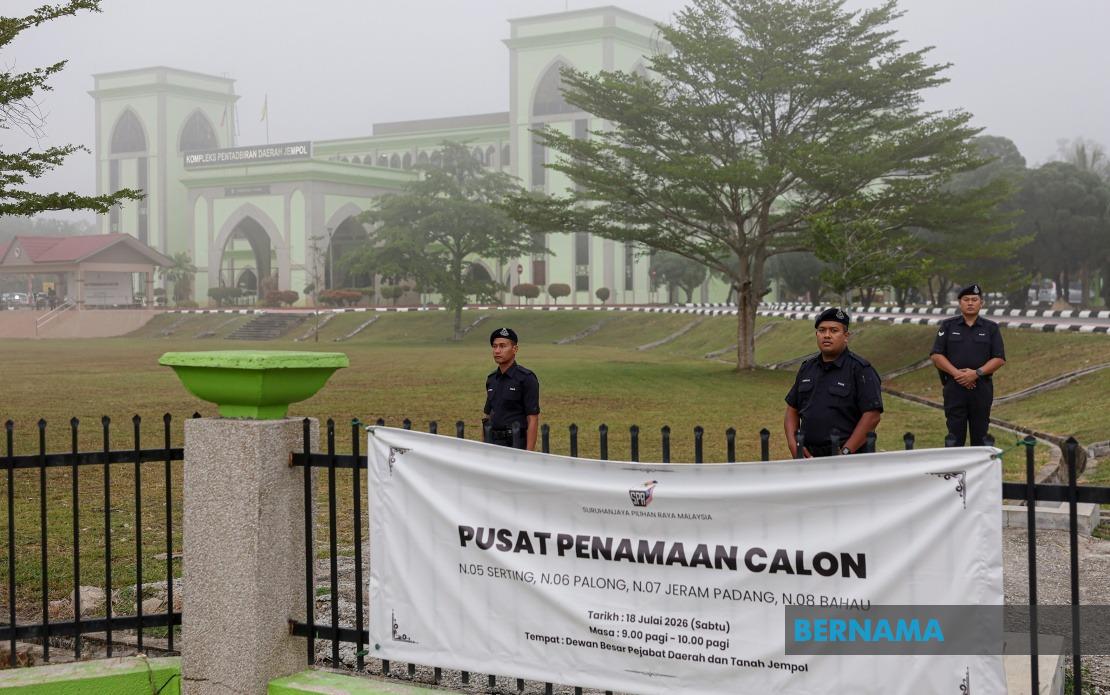
The 16th Negeri Sembilan state election moved into its formal candidate registration phase today as all eight nomination centres commenced operations at 9am across the state. This marks the official start of the electoral machinery for what will be a significant political contest in the peninsula's central region. The simultaneous opening of these nomination processing centres, distributed across Negeri Sembilan's seven districts, represents the culmination of months of planning by the Election Commission and represents the point at which the political landscape begins to crystallise around specific candidates and party strategies.
Candidate registration will continue for precisely one hour, concluding at 10am. During this narrow window, returning officers will process submissions from all parties seeking to contest the 36 available state seats. The brevity of the nomination period reflects standard electoral procedures designed to concentrate the logistical effort and allow swift verification of candidate eligibility. Once the deadline passes, returning officers will immediately compile and announce the verified list of qualified candidates, setting the stage for the campaign period that follows.
The Election Commission has structured the campaign timeline across a compressed 14-day window, commencing immediately after official candidate announcements and concluding at 11.59pm on July 31. This campaign duration will see candidates, party machinery, and grassroots organisations mobilise their resources to reach voters in what promises to be an intense period of political activity across the state. The tight schedule requires parties to have prepared their campaign infrastructure well in advance, with messaging, transport, and volunteer coordination already in place before nominations even closed.
Weather monitoring conducted across all seven districts has yielded favourable conditions for today's nomination process, eliminating potential complications from adverse weather that might have disrupted candidate movements or voter sentiment. Such logistical considerations, while sometimes overlooked, prove significant in state elections where transportation infrastructure and public accessibility to nomination centres can prove decisive factors in determining which candidates successfully register.
Security arrangements have been substantially elevated for the nomination proceedings. Negeri Sembilan police chief Datuk Alzafny Ahmad confirmed that 2,393 police personnel have been strategically deployed across all eight nomination centres to maintain peace, order, and security throughout the registration process. This deployment reflects the Electoral Commission's assessment of potential flashpoints and the need to ensure orderly, unimpeded access for candidates and party representatives. The police presence, while primarily preventative, signals the seriousness with which authorities treat the electoral process and the protection of democratic procedures.
The current election was triggered by the official dissolution of the Negeri Sembilan State Legislative Assembly on June 5, following consent from Tuanku Muhriz Tuanku Munawir, the Yang Dipertuan Besar of Negeri Sembilan. This dissolution initiated the constitutional countdown toward today's nomination process and the subsequent August 1 polling date. The decision to hold fresh elections came after the previous administration's tenure and reflects the state-level political dynamics that have shaped Negeri Sembilan's governance trajectory.
The performance of major coalitions in the previous 2023 election established the competitive landscape for today's contest. Pakatan Harapan secured 17 of the 36 seats, positioning them as the incumbent administration defending their legislative majority. Barisan Nasional captured 14 seats, maintaining their presence as a significant opposition force, while Perikatan Nasional's five seats underscored the emergence of that coalition as a tertiary political player at the state level. How these three blocs have repositioned themselves, and whether independent candidates or smaller parties will contest, will become clearer once returning officers release the verified candidate lists later today.
The electoral roll underpinning this election reflects significant voter participation potential. The Election Commission's updated register as of June 4, 2026, identifies 889,490 registered voters eligible to participate, comprising 867,151 ordinary voters alongside 16,884 military personnel and their spouses and 5,455 police personnel eligible for early voting. This total electorate demonstrates the substantial democratic exercise underway in Negeri Sembilan and the scale of mobilisation required by competing parties to maximise voter turnout.
Early voting has been scheduled for July 28, providing members of the security forces and their families with the opportunity to cast ballots before the general polling day. This advance voting mechanism recognises the operational requirements of military and police deployments and ensures that uniformed personnel can participate in the democratic process without compromising national security operations. The availability of early voting typically generates modest participation rates but remains significant for the inclusive nature of electoral participation.
August 1 emerges as the decisive polling date when Negeri Sembilan voters will determine the composition of the 16th state legislative assembly. The interval between today's nomination and that polling date compresses the campaign season, forcing parties to execute their strategies with maximum efficiency. For Malaysian political observers and the state's electorate, this compressed timeline intensifies political activity and raises questions about whether adequate time exists for voters to meaningfully evaluate candidates and party platforms before casting decisive votes.
The nomination process today represents the formal entry point for candidates who have spent preceding weeks securing party endorsement and preparing campaign infrastructure. For smaller parties and independent candidates, today marks their opportunity to officially declare their electoral intent and become recognised participants in the contest. The challenge for election officials and security forces involves managing what can become crowded and emotionally charged environments as supporters accompany candidates to nomination centres, while simultaneously preserving the orderly processing required for proper verification procedures.

