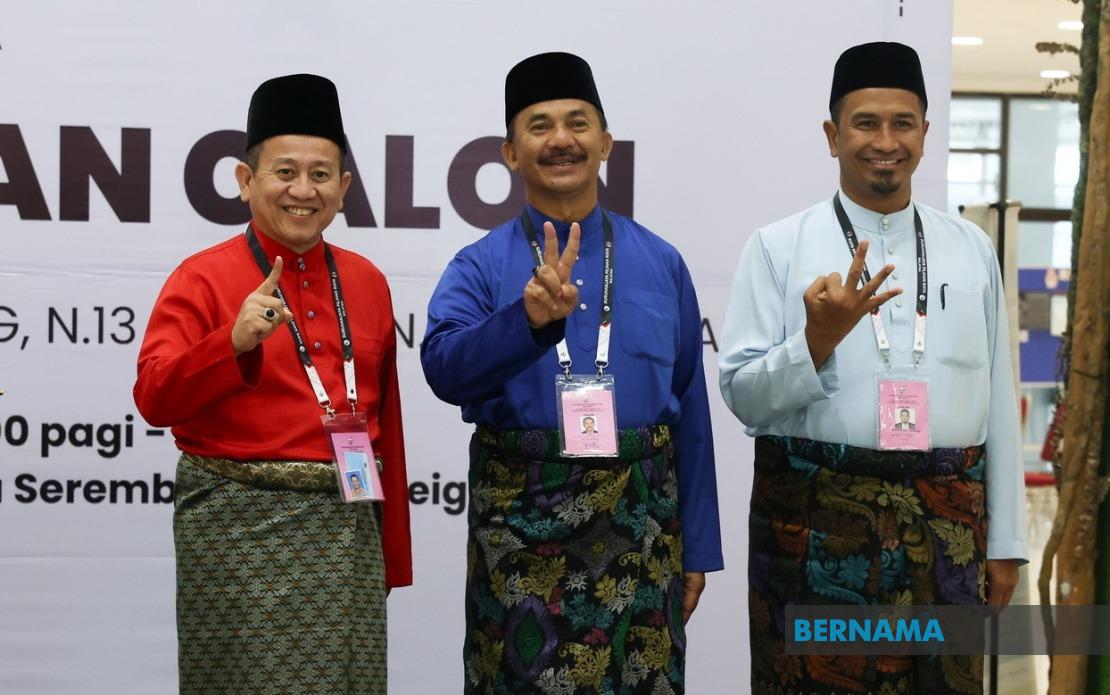
The upcoming 16th Negeri Sembilan State Election on August 1 will present voters with an unusually high proportion of fresh political faces competing alongside established figures, marking a significant departure from the typical dominance of veteran candidates that has long characterised Malaysian state polls. The nomination period's closure on July 18 revealed a total of 103 candidates representing various parties and independent hopefuls, a composition that underscores attempts by major political coalitions to balance organisational experience with electoral vitality.
Pakatan Harapan's decision to field candidates across all 36 State Legislative Assembly seats demonstrates the coalition's determination to contest every available seat, yet its selection strategy reveals calculated pragmatism. Among its 36 candidates, 24 represent entirely new faces to state-level politics, while the remaining 12 are established figures including party heavyweights with ministerial portfolios and state leadership positions. This deliberate mixing reflects PH's recognition that while new candidates can energise voter interest and broaden appeal, retaining proven performers remains essential for maintaining credibility and governance capacity.
The positioning of Datuk Seri Aminuddin Harun exemplifies how established politicians navigate electoral strategy. As Negeri Sembilan PH Chairman, his decision to vacate the Sekamat seat he previously held and instead contest the Linggi seat signals tactical ground-shifting rather than retreat from electoral competition. Similarly, DAP Secretary-General and Transport Minister Anthony Loke's continued contestation of the Chennah DUN seat represents the coalition's determination to retain senior federal representatives within state legislative frameworks, ensuring policy alignment and resource accessibility between state and national levels.
Barisan Nasional approaches the election with proportionally fewer newcomers than its opposition counterpart, selecting 13 fresh candidates from its 25-candidate slate. This more conservative approach reflects BN's traditional reliance on established party machinery and experienced representatives, yet the inclusion of nearly half new faces suggests recognition that electoral fatigue affects long-serving incumbents. The configuration places greater weight on recognisable names and proven organisational networks, a strategy suited to BN's historical voter base but potentially vulnerable to anti-incumbency sentiment.
The repositioning of senior BN figures demonstrates internal adjustments within the coalition's hierarchy. Mohamad Hasan's defence of the Rantau DUN seat as UMNO Deputy President and Federal Foreign Minister carries substantial symbolic weight, signalling BN's commitment to competitive representation at state level despite federal responsibilities. Conversely, Datuk Ismail Lasim's shift from Senaling to Juasseh reflects either perceived electoral vulnerability or strategic reallocation of party resources to contested constituencies. State BN Chairman Datuk Seri Jalaluddin Alias's retention of the Pertang seat he won in 2023 anchors party leadership continuity within legislative bodies.
Perikatan Nasional's presence through 11 contested seats, distributed across PAS, Gerakan, Wawasan, and MIPP, presents a fragmented alternative to the two dominant coalitions. This multi-party structure, while theoretically offering ideological diversity, historically struggles to project unified messaging and coordinated governance. The inclusion of veteran and new candidates across multiple component parties complicates campaign narrative coherence, potentially limiting PN's capacity to mobilise undecided voters around clear policy platforms.
Bersatu's departure from the 2023 Perikatan Nasional framework to contest using its own organisational logo represents a significant factional shift in Malaysian coalition politics. The inclusion of 24 candidates, led by Information Chief Datuk Tun Faisal Ismail Aziz as a newcomer, suggests internal strategic recalibration and potential competitive repositioning within Malay-Muslim political space. The retention of figures like state chairman Hanifah Abu Bakar on the Labu DUN seat maintains organisational anchors, but the schism from PN structures raises questions about viability in fragmented electoral environments.
The presence of fringe parties and independent candidates—including Parti Berjasa, ASLI, PSM, and four independents—reflects Malaysia's increasingly permissive electoral landscape for non-mainstream political participation. While individually insignificant, collectively these 8 candidates expand voter choice beyond traditional two-coalition frameworks, potentially benefiting from localised grievances or community-specific representation desires.
The age spectrum among candidates reveals generational tensions within Malaysian political culture. The youngest contender, Bersatu's Leevineshwaraan Murugan at 23 years old, represents the frontier of youth political mobilisation, while PH's Datuk Abd Latiff A Tambi at 70 embodies the continued influence of senior political figures. This 47-year age gap illustrates Malaysian politics' simultaneous efforts toward rejuvenation and reliance on established hierarchies, a tension that will likely manifest in campaign messaging and voter reception.
For Malaysian voters, particularly in Negeri Sembilan, the elevated proportion of new candidates introduces both opportunity and uncertainty. Fresh faces potentially bring untested policy perspectives and reduced entanglement in past political controversies, appealing to anti-establishment sentiment. Conversely, political inexperience risks inadequate constituent service delivery and reduced legislative effectiveness. The pairing of new candidates with experienced running-mates within party structures attempts to mitigate these risks, though actual governance competence remains unknowable until electoral outcomes materialise.
The early voting period beginning July 28, followed by August 1 polling, compresses the campaign timeline substantially compared to historical patterns. This abbreviated window particularly advantages established parties with existing voter databases and mobilisation infrastructure—a consideration that may inadvertently favour BN's traditionally stronger organisational networks despite PH's numerical candidate advantage. For new candidates relying on grassroots campaigning and personal credibility-building, the compressed timeline presents genuine logistical challenges.
The Negeri Sembilan election outcomes will carry disproportionate significance for Malaysian coalition dynamics beyond state boundaries. With federal government composition remaining contested and state legislative chambers serving as training grounds for national politicians, the electoral viability of new faces versus established figures will inform broader coalition strategies for approaching the next general election. Should new candidates perform unexpectedly well, major parties may accelerate generational transitions; conversely, poor newcomer performance would validate incumbent-focused strategies and entrench existing hierarchies within Malaysian political structures.

