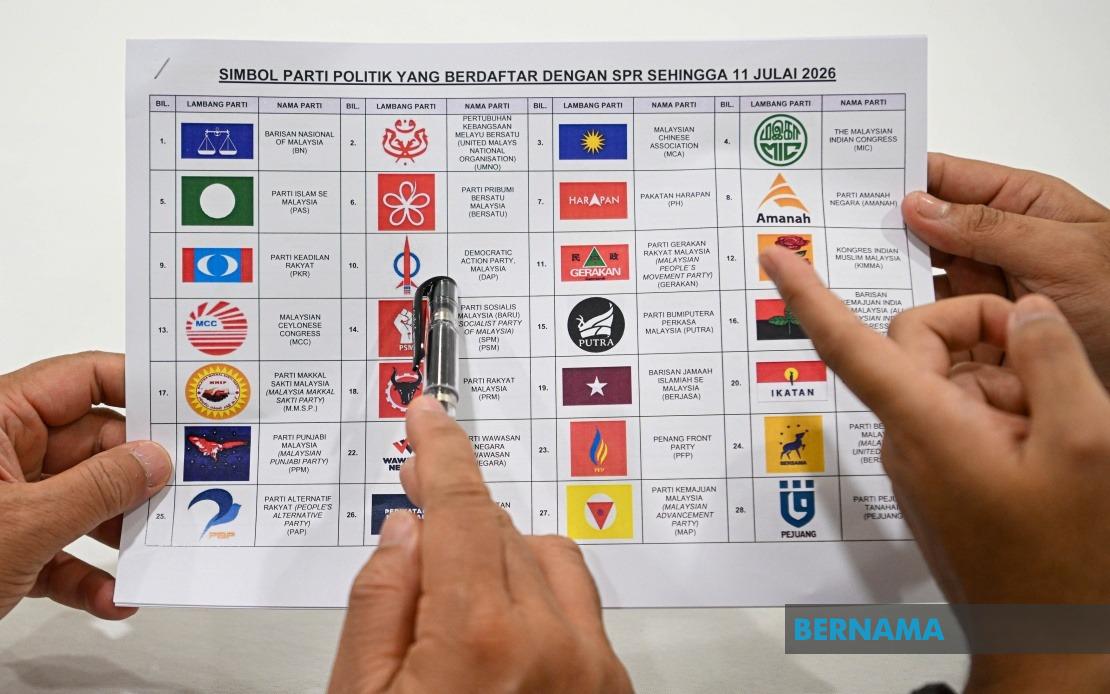
The 16th Negeri Sembilan state election commenced formally on July 18 with nomination day proceedings running simultaneously across eight registration centres throughout the state from nine in the morning. Prospective candidates faced a tight deadline, required to lodge their nomination documents by ten o'clock to secure eligibility for the contest ahead. The Election Commission will subsequently release the official roster of qualified candidates, after which the formal campaign phase begins in earnest.
The campaign period itself spans fourteen days, concluding at 11:59 pm on July 31, giving political parties and independent contenders a defined window to persuade voters across the 36 state constituencies. This timeline was established by the Election Commission following the state assembly's dissolution in early June, which occurred with the blessing of Tuanku Muhriz Tuanku Munawir, the Yang Dipertuan Besar of Negeri Sembilan. Early voting is scheduled for July 28, while the main election takes place on August 1.
Interest in contesting the state polls has been substantial, with the Election Commission reporting that 464 nomination forms had been distributed by the day before proceedings began. Seventy prospective candidates had already paid their required election deposits, signalling serious intent to participate in the electoral contest. The exact number of candidates who ultimately filed nomination papers would become clearer once the official eligible candidates list is released following the morning's submission deadline.
The electoral franchise for Negeri Sembilan encompasses nearly 890,000 individuals spread across three voter categories. Approximately 867,000 ordinary voters form the bulk of the electorate, whilst military personnel and their spouses account for just under 17,000 registered voters, and police personnel and their families comprise another 5,500. This expanded voter base reflects evolving demographics and the inclusion of uniformed service members in state electoral processes.
Pakatan Harapan has mounted a comprehensive challenge by fielding candidates across all thirty-six constituencies, seeking to build on its performance in the previous 2023 election when it secured seventeen seats. Barisan Nasional has opted for a more selective approach, contesting twenty-five seats, whilst Perikatan Nasional is fielding candidates in eleven constituencies. These decisions by major coalitions reflect their respective strategic calculations about where they possess competitive advantages.
Smaller political movements have also entered the fray, adding to the competitive texture of the contest. Parti Orang Asli Malaysia, the Socialist Party of Malaysia, and Parti Barisan Jemaah Islamiah Se-Malaysia each plan to field single candidates across the state. Parti Pribumi Bersatu Malaysia is contesting twenty-four seats under the PN umbrella, including two constituencies where it is running candidates from Parti Bersepakat Hak Rakyat Malaysia using the Bersatu party symbol, reflecting the coalition's internal arrangements.
The previous state election in 2023 established the political baseline from which this contest begins. Pakatan Harapan's seventeen-seat tally gave it the largest bloc in the assembly, whilst Barisan Nasional captured fourteen seats and Perikatan Nasional won five, leaving the house evenly divided with potential for political manoeuvring. Changes in voter sentiment, candidate quality, and local issues could significantly alter this mathematical foundation in the coming weeks.
Securing the electoral environment during nomination day itself requires substantial security resources. Negeri Sembilan police have mobilized 4,800 officers and personnel for the occasion, augmented by an additional 1,373 personnel deployed from Bukit Aman headquarters in Kuala Lumpur. This deployment reflects authorities' determination to maintain order and prevent disruptions during what is traditionally a boisterous occasion when party supporters converge on nomination centres to cheer their candidates.
The Election Commission has explicitly cautioned all candidates and their supporters to respect procedural rules and refrain from provocative conduct that might compromise the nomination process's integrity. Such reminders are standard but carry particular weight in Malaysian electoral contexts where emotional investment in party politics runs high and past nomination days have occasionally witnessed heated confrontations. Compliance with these guidelines will be essential to maintaining public confidence in the electoral machinery.
Weather conditions have the potential to influence crowd sizes and the general atmosphere surrounding nomination day. The Malaysian Meteorological Department forecast generally clear skies across most of Negeri Sembilan during morning hours, with rain specifically expected in Port Dickson and Seremban. Afternoon thunderstorms are anticipated statewide, which could dampen enthusiasm for celebratory gatherings outside nomination centres but is unlikely to deter candidates and their core supporters from completing submission formalities.
For Malaysia's political landscape, this Negeri Sembilan contest carries significance beyond the state's boundaries. The 2023 results indicated a potential shift in voter preferences away from the previously dominant Barisan Nasional, with Pakatan Harapan gaining ground. Whether that trend consolidates, accelerates, or reverses will provide data points for national political strategists contemplating the next general election. The state's relatively manageable thirty-six-seat assembly makes electoral outcomes easier to analyze than larger states, lending the contest analytical value for understanding broader Malaysian electoral dynamics.
The coming fourteen days will see intensive campaigning as the three major contenders attempt to maximize their support. Incumbent holders of state seats will defend their records, whilst challengers will highlight perceived shortcomings and offer alternative visions. Local issues such as infrastructure development, education quality, healthcare accessibility, and economic opportunities will feature prominently in party messaging. The eventual outcome on August 1 will reshape Negeri Sembilan's political configuration and provide early indicators of how Malaysian voters are assessing their political options heading towards future national elections.

