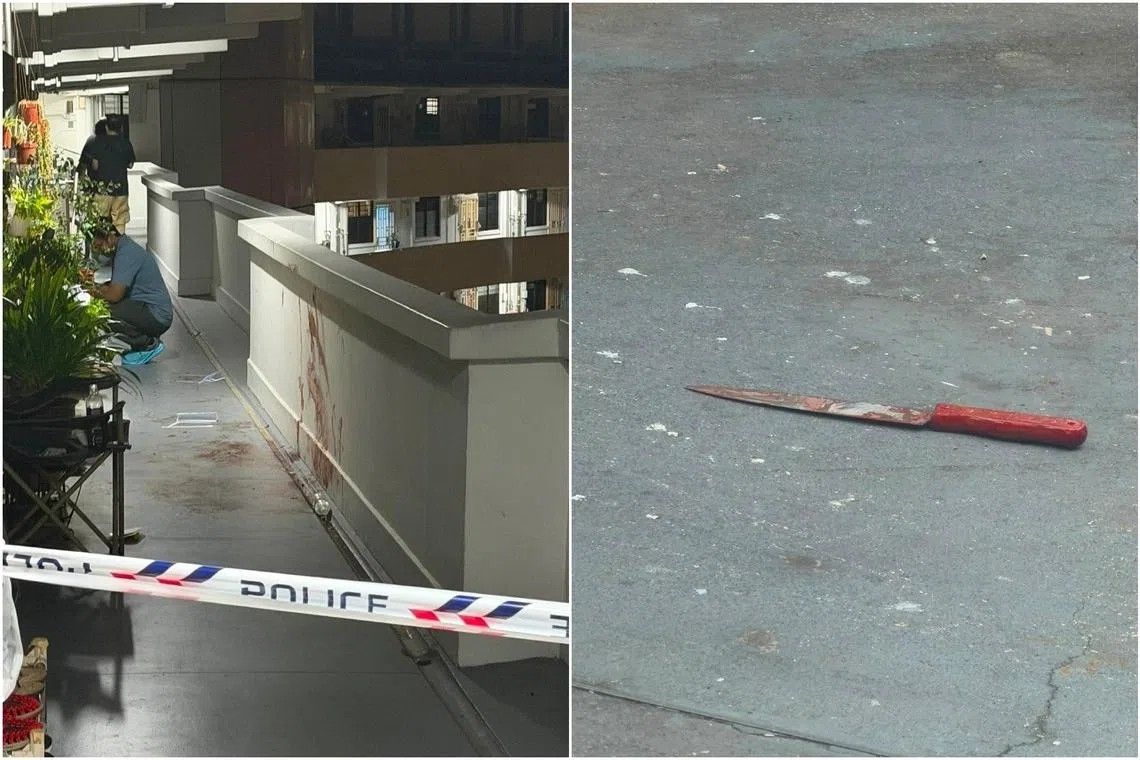
A 59-year-old man appeared in Singapore's district court on July 22 to face a murder charge stemming from the death of his neighbour at a residential block in the Redhill area. Ng Swee Seng, the accused, is alleged to have killed Thiyagarajan Karunakaran, also 59, at Block 55 Lengkok Bahru near Redhill Road on July 20. The case marks another instance of lethal violence erupting within Singapore's densely populated public housing estates, where neighbours living in close proximity occasionally clash with fatal consequences.
Police received multiple emergency calls shortly before 5pm on July 20 regarding the incident at the residential block. Upon arrival, officers discovered Thiyagarajan lying motionless in the lift lobby on the 16th floor. The victim was immediately transported to the National University Hospital, where he was pronounced dead. The circumstances surrounding the confrontation between the two men remain under investigation, though the seriousness of the charge indicates authorities believe the killing was unlawful and not committed in self-defence.
Witnesses to the violence were evident in the physical evidence left behind. Journalists visiting the block the following day observed bloodstains and a bloody footprint scattered along the 16th-floor corridor, indicating a violent struggle had taken place in the common areas of the building. Such visible remnants of the incident would have left residents deeply unsettled, as many live with the expectation that public housing blocks are generally safe communal spaces despite their high density.
According to residents interviewed at the scene, Ng Swee Seng and Thiyagarajan occupied separate units several doors apart on the same floor. The physical proximity of their homes suggests that any underlying tension or dispute between them would have been difficult to avoid in the confines of a public housing environment. One resident who had lived in the block for approximately four years observed that such arrangements inevitably bring neighbours into frequent contact through shared corridors, lifts, and common areas, occasionally creating friction that can escalate unexpectedly.
The incident underscores the particular pressures that can build in Singapore's high-rise public housing estates, where thousands of residents from diverse backgrounds live stacked vertically with minimal sound insulation and shared facilities. Disputes over noise, parking, rubbish disposal, or other minor irritants in such environments can sometimes fester without resolution, particularly if residents lack effective channels for mediation or conflict resolution. The transition from dispute to violence, however, remains rare in Singapore's tightly regulated and generally orderly society.
The court appearance via video link suggests standard procedure for serious criminal cases in Singapore's judicial system. Ng Swee Seng's preliminary appearance would have focused on confirming the charges and determining bail conditions, with the substantive trial expected to proceed in subsequent hearings. Murder charges in Singapore carry severe penalties, including potential capital punishment in certain circumstances, making the accused's legal representation and court proceedings matters of significant gravity.
For Malaysian readers and observers across Southeast Asia, such incidents in Singapore serve as reminders that densely populated urban environments can create social pressures regardless of a nation's development level or governance quality. While Singapore maintains one of the world's lowest violent crime rates, the occasional eruption of lethal conflict within its housing estates demonstrates that no society is entirely immune to interpersonal violence. The incident also highlights the challenges authorities face in preventing escalation when neighbourhood disputes arise in high-density residential settings where personal space is extremely limited.
The investigation into the circumstances preceding the killing will likely reveal whether the two men had a history of conflict, whether alcohol or other substances played a role, and what specific trigger caused the situation to turn fatal. Such details are particularly important in understanding whether this represents an isolated act or part of a pattern of escalating tension. Residents of Block 55 Lengkok Bahru and neighbouring buildings will undoubtedly be concerned about their own safety and the adequacy of security measures in their residential complex.
This case will proceed through Singapore's criminal justice system with characteristic efficiency and transparency. The evidence gathered, witness statements, and autopsy findings will form the basis of prosecution arguments, while the accused's legal team will present their defence. The outcome will likely reinforce or challenge existing understandings of how neighbourhood conflicts should be managed in Singapore's public housing sector, potentially informing community outreach and mediation programmes designed to prevent similar tragedies.

