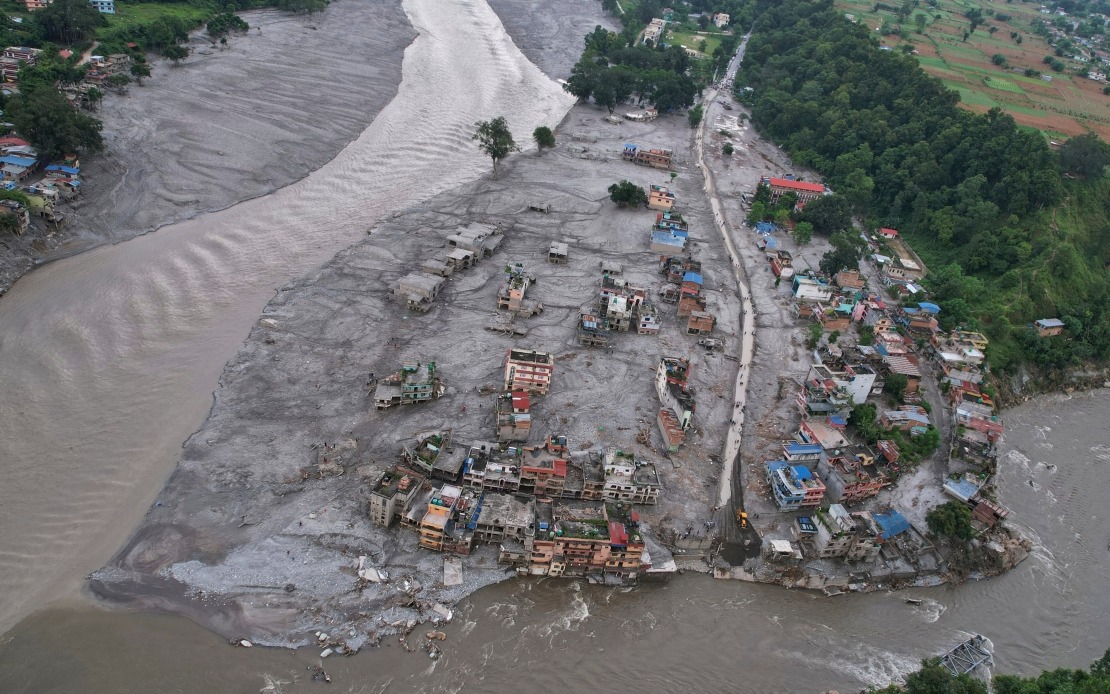
Nepal is proceeding with caution in accepting further international search and rescue assistance, choosing instead to first comprehensively assess the evolving situation in flood-affected areas. The decision reflects the scale and complexity of the crisis unfolding across the nation's central and northern territories following Wednesday's catastrophic flooding in the Bhote Koshi and Trishuli river systems, which inundated the Rasuwa district and surrounding regions with little warning.
Currently, Nepal has already approved SAR operations from four nations—Australia, China, India, and South Korea—a selective approach tied directly to their nationals' involvement at hydropower facilities affected by the deluge. The presence of foreign workers at these critical infrastructure sites created an immediate imperative for rapid international coordination. However, Nepal's cautious stance on additional offers signals recognition that accepting too many rescue teams simultaneously could complicate ground operations, strain logistics, and potentially hinder rather than help recovery efforts in remote mountainous terrain.
Malaysia stands among numerous nations offering humanitarian assistance to Nepal, with Prime Minister Datuk Seri Anwar Ibrahim having previously announced Malaysia's readiness to provide aid coordination and potentially deploy the Malaysian Special Search and Rescue Team (SMART). The charge d'affaires of the Malaysian Embassy in Kathmandu, Mohd Firdaus Azman, conveyed Nepal's position during weekend communications, indicating that Kathmandu intends to complete its assessment before extending SAR invitations further. This measured response underscores the diplomatic complexity surrounding emergency response in the aftermath of major disasters.
The urgency driving Nepal's deliberation cannot be overstated. More than 900 workers employed across 11 hydropower projects—many still under active construction—remain trapped within tunnel networks and underground powerhouses. These facilities, located in challenging high-altitude terrain, present extraordinary rescue difficulties. Underground workers in powerhouse complexes represent one of the most vulnerable categories of disaster victims, as access routes can be blocked by debris, water flows can be unpredictable, and oxygen depletion poses immediate life-threatening risks. The scale of potentially trapped workers vastly exceeds conventional disaster response capacity in a nation of Nepal's development level.
The human cost of Wednesday's flooding has climbed dramatically. Preliminary reports indicate that at least 633 deaths have been recorded across Nepal and neighboring China, with the toll expected to rise significantly as rescue teams access more remote areas. The figure becomes even more alarming when considering that nearly 3,000 individuals remain unaccounted for, including hundreds of foreign nationals working across the region. For context, this single event rivals some of the deadliest natural disasters recorded in the Himalayan region in recent decades, and the true scope may not be fully known for weeks.
The Malaysian Foreign Ministry reported on Saturday evening that 55 Malaysians in Nepal and 36 Malaysians in China had become uncontactable following the disaster. While this number is manageable compared to some nations' losses, it still represents genuine concern for affected families and underscores Malaysia's stake in the regional crisis. The involvement of Malaysian nationals in the region—whether as workers, travelers, or business professionals—creates both a humanitarian imperative and a diplomatic consideration for Kuala Lumpur's engagement with Kathmandu during this critical period.
Nepal's decision-making framework reflects practical realities often overlooked in initial emergency responses. The nation's mountainous geography, limited transportation infrastructure, and developing emergency management systems mean that coordinating multiple international teams, each with different equipment standards, communication protocols, and operational procedures, presents genuine organizational challenges. Deploying rescue teams without proper coordination can lead to duplication of efforts, resource competition, or even increased danger to both rescuers and potential survivors. Nepal's deliberate approach suggests its government understands these complexities.
The strategic selection of Australia, China, India, and South Korea as initial SAR partners reflects both diplomatic relationships and practical employment patterns. China's involvement is particularly significant given that Chinese nationals were among those trapped and that hydropower development in Nepal increasingly features Chinese investment and personnel. India's participation aligns with its regional security interests and established bilateral cooperation frameworks. Australia and South Korea's contributions relate specifically to their citizens' employment at affected facilities, creating direct national interests driving their rapid mobilization.
For Malaysia and other nations in the region, Nepal's cautious stance offers important lessons about disaster diplomacy. The impulse to contribute assistance is genuine and commendable, yet unbridled offers of help can paradoxically complicate rescue operations. Malaysia's position as a developed nation with sophisticated rescue capabilities means that when Nepal eventually determines it requires additional SAR support, Malaysian teams would likely prove immediately deployable and effective. The current waiting period allows Malaysia to maintain readiness while respecting Nepalese sovereignty over response coordination.
The broader regional implications extend beyond immediate rescue operations to questions about infrastructure resilience and climate change adaptation. Nepal's hydropower sector, increasingly vital to the nation's energy security and economic development, faces exposure to extreme weather events intensified by climate change. The flooding demonstrates how rapid precipitation in mountainous terrain can generate catastrophic flows, threatening both the facilities themselves and workers operating deep underground. Regional governments, including Malaysia, must recognize that climate-related disasters in the Himalayas create transnational consequences through supply chains, worker safety, and geopolitical stability.
As Nepal completes its assessment, communications between Kathmandu and Kuala Lumpur will likely intensify. Malaysia's diplomatic presence, coordinated through the charge d'affaires's office and the Foreign Ministry, remains actively engaged in monitoring the situation and maintaining readiness. Should Nepal subsequently request Malaysian SAR deployment, SMART teams could contribute valuable expertise in urban search and rescue, particularly in navigating collapsed or damaged structures and locating survivors under rubble. The current waiting period, while frustrating for would-be rescuers, reflects mature understanding that effective disaster response requires careful coordination rather than rapid proliferation of rescue teams.

