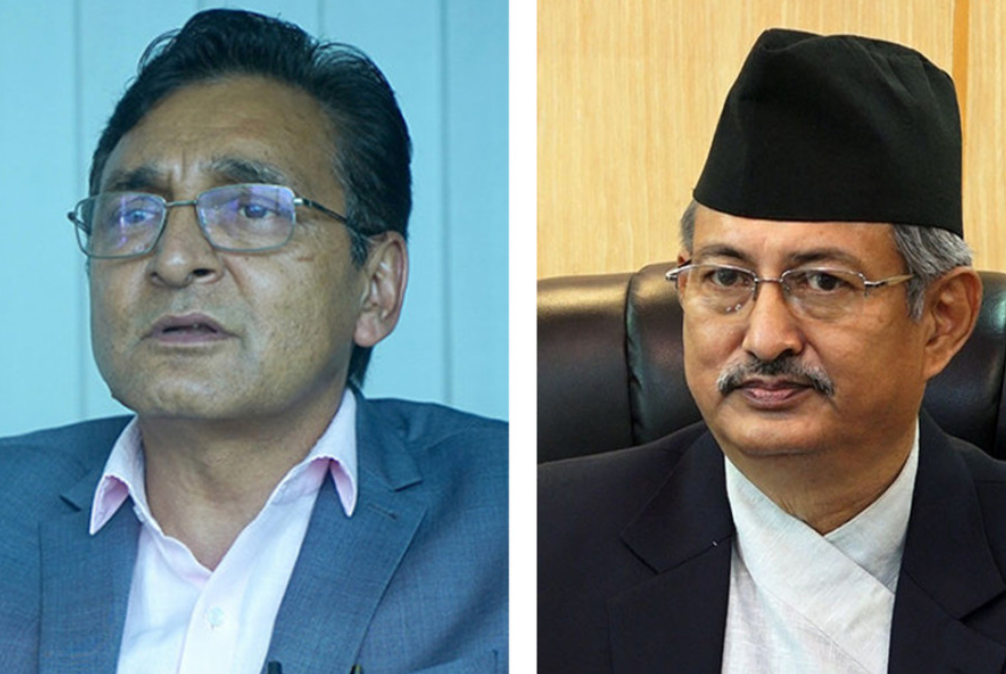
A significant corruption case in Nepal has concluded with the conviction and imprisonment of two high-ranking former government officials accused of orchestrating an elaborate fraud involving refugee resettlement programs. The Kathmandu district court found former Deputy Prime Minister and Energy Minister Top Bahadur Rayamajhi guilty of offences against the state, fraud, and participation in organised crime, sentencing him to four years behind bars. Former Home Minister Bal Krishna Khand received a two-year sentence as an accomplice to the scheme. Both men have consistently denied involvement in the scam, with their legal representatives already signalling intentions to challenge the verdicts on appeal.
The criminal enterprise centred on the falsification of documentation to permit Nepali nationals to be accepted into resettlement programmes marketed as displaced Bhutanese refugees. Such programmes, particularly those administered by Western nations including the United States, Canada, and Australia, typically prioritise individuals fleeing persecution or conflict. By fraudulently claiming Nepali identity as Bhutanese, participants in this scheme circumvented ordinary immigration procedures and eligibility requirements that govern international refugee programmes. The sophistication of the fraud suggests systematic involvement by officials with access to the administrative machinery necessary to produce convincing false documentation.
Beyond the two former ministers, fourteen additional individuals faced prosecution under the same charges, including a retired senior bureaucrat who formerly held rank within the home ministry and a prominent former leader of the Bhutanese refugee community in Nepal. These convictions carry sentences reaching four years, reflecting the judiciary's assessment that the conspiracy involved multiple layers of complicity spanning government administration, refugee administration, and community leadership. The involvement of community figures alongside state officials indicates how the scheme penetrated both official and grassroots structures.
The fraud remained undetected until 2023, well after both Rayamajhi and Khand had departed their ministerial positions. This temporal distance raises questions about the oversight mechanisms that should have identified document irregularities during the initial resettlement application process. The discovery came during a period when Nepal itself was experiencing significant political turbulence, including youth-led anti-corruption protests in September that resulted in 76 deaths and precipitated the collapse of the government at that time. These broader movements against institutional corruption likely created political space for investigating historical malfeasance that might otherwise have remained concealed.
The precise scale of the fraud remains unclear from available information. Authorities have not definitively established how many Nepali nationals actually succeeded in reaching Western countries through fraudulent refugee claims. The uncertainty itself underscores gaps in verification procedures throughout the resettlement pipeline. Given that approximately 113,000 individuals from the broader Bhutanese-Nepali refugee population have been resettled in Western nations—with roughly 100,000 accepted specifically by the United States—even a small percentage of successful fraudulent applications would represent a significant security and administrative failure.
The context for understanding this case requires appreciation of the genuine refugee crisis that provided cover for the fraud. Beginning in the early 1990s, approximately 120,000 Bhutanese nationals of Nepali ethnic origin fled the neighbouring kingdom seeking refuge in Nepal. Their displacement reflected deep communal tensions within Bhutan, where the Buddhist-majority government pursued policies perceived as marginalising the Nepali-speaking Hindu minority. Despite Bhutan's small population of less than 800,000, this outflow created one of South Asia's most significant refugee populations relative to the origin nation's size.
When Bhutan and Nepal failed to negotiate repatriation agreements, the international community intervened through third-country resettlement programmes. This humanitarian response, while addressing genuine displacement, created the administrative frameworks that the alleged fraudsters exploited. The existence of legitimate refugees with valid claims meant that document verification procedures faced challenging evidentiary questions, particularly when distinguishing between authentic claimants and those presenting forged credentials.
Several thousand individuals from this refugee population continue residing in camps throughout eastern Nepal, their futures unresolved decades after initial displacement. Many have expressed preference for eventual return to Bhutan rather than permanent resettlement in unfamiliar Western societies. Their protracted limbo reflects the stalled bilateral negotiations and broader regional complications surrounding refugee status determination. The fraud case adds another layer of complexity to already fraught relations between Nepal and Bhutan regarding the refugee question.
The new administration that assumed power in March represents a generational shift in Nepali politics. Led by Balendra Shah, a 36-year-old former musician and entertainer turned politician, the government emerged from the youth-driven anti-corruption movement that destabilised the previous regime. Shah has made combating corruption within state institutions a central policy commitment, positioning prosecutions like those of Rayamajhi and Khand as evidence of the administration's willingness to pursue high-level officials regardless of their previous status. These convictions serve as symbolic validation of anti-corruption mandates that propelled the current government into power.
For regional observers, particularly those in Southeast Asia managing their own refugee programmes and border concerns, the Nepal case illustrates vulnerabilities inherent in large-scale humanitarian resettlement operations. The simultaneous existence of genuine refugees and sophisticated document-falsification networks tests the capacity of even well-intentioned bureaucratic systems. The extended period between the alleged crimes and their discovery suggests that institutional safeguards may require reinforcement. Malaysia, hosting one of Asia's largest refugee and asylum-seeker populations, faces comparable pressures to maintain resettlement programme integrity whilst accommodating legitimate humanitarian needs, making the Nepal precedent instructive for policy considerations.

