The search for survivors has turned into a grim catalogue of loss across Nepal's capital as families confronted the horrifying aftermath of a devastating flash flood that struck the country's northern border region on August 26. Hospital gates in Kathmandu now display photographs of unidentified corpses, creating an anguished backdrop where desperate relatives gather to scan faces in hopes of finding some trace of their missing loved ones. The death toll from the disaster has surpassed 500, yet the full scale of the tragedy remains unknown as search and rescue teams continue their desperate hunt through the Bhotekoshi river system and its downstream areas.
The human cost of the calamity is measured not only in statistics but in the raw emotion of families torn from their daily lives. Dolma Tamang, a 36-year-old woman, has spent the past three days moving from one Kathmandu hospital to another, searching for her sister and brother-in-law who were crossing through Rasuwa district in a truck when the floodwaters struck. The couple, who were transporting goods from the Chinese border, have been unreachable since the morning of August 26, their phones silent and their fate unknown. Tamang's emotional toll is evident as she confronts the possibility that she may never see them alive again, describing the ordeal as so overwhelming that even her tears have begun to run dry.
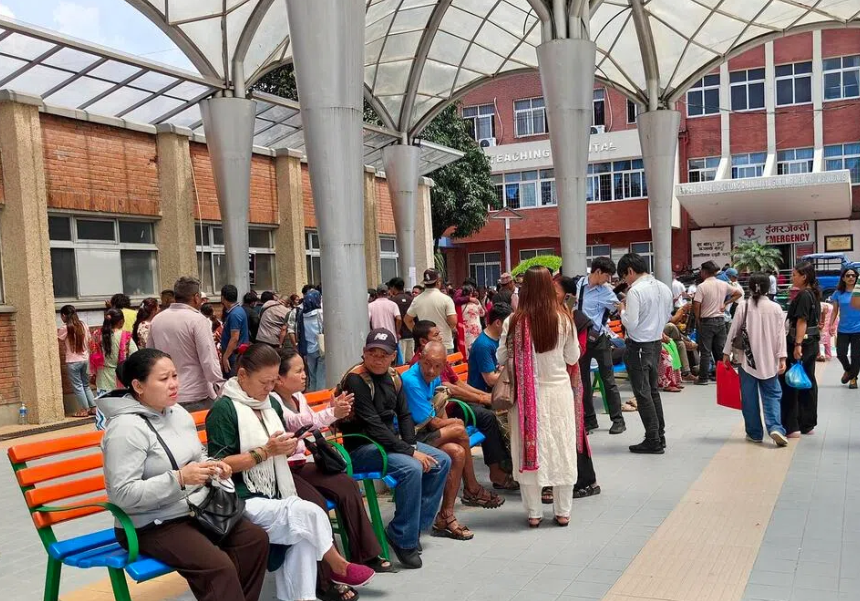
The situation has become so dire that hospitals are struggling to cope with the volume of casualties. At Tribhuvan University Teaching Hospital, one of Kathmandu's two major public hospitals, the missing persons list has ballooned to more than 1,500 names by August 28 afternoon. Hospital staff have resorted to posting photographs of unidentified bodies on the facility's walls and gates in a desperate attempt to reunite families with their loved ones. Outside these gates, hundreds of family members crowd together, clutching printed photographs and scrolling through images on their phones, their faces etched with the anguish of uncertainty and the faint hope that their loved ones might somehow still be alive.
The physical and psychological toll on those searching is visible in the faces of the bereaved. Bikesh Shrestha, a 35-year-old man looking for his cousin Rakesh, found himself unable to look directly at the photographs of decomposed bodies displayed at the hospital. His instinctive reaction to turn away from the gruesome images reflects the profound trauma that has gripped those searching through the evidence of this natural disaster. Yet despite the horror, there remains a sliver of hope that keeps families searching. Sushila Shrestha, searching for her 21-year-old brother Bir Bahadur who was driving toward the Chinese border when the flood hit, clings to the absence of confirmed information as a sign that he might still be alive somewhere, waiting to be discovered.
The disaster has claimed victims not only from Nepal but from across the region and beyond. Nine Singaporeans remain unaccounted for, while approximately 288 Indian nationals are among those reported missing. Many of these foreign nationals were part of pilgrimage groups traveling to Mount Kailash and Lake Manasarovar, or were returning from these sacred sites through the border crossing at Gyirong, which bore the brunt of the flash flood's destructive force. Video footage showing mudslides and torrents of floodwater overwhelming the Gyirong Port has shocked viewers globally, documenting the terrifying scale of nature's violence in that region. Families from India and other countries have begun arriving in Kathmandu, with groups from the southern state of Tamil Nadu reaching the capital on early morning flights to trace their missing relatives.
The rescue and recovery operations have mobilized significant resources, though they face mounting challenges. Nepal's government has deployed more than 4,400 police personnel, while the Nepali Army and Armed Police Force have been engaged in search efforts. Rescue teams have already discovered hundreds of survivors trapped under debris, inside tunnels, and beneath collapsed structures, with their names updated on a government website as operations continue. However, operations briefly paused on August 28 morning due to concerns that a barrier lake breach could trigger additional flooding, though officials later indicated that immediate danger had diminished even as uncertainty persisted.
International support has begun flowing into Nepal, though the government has made deliberate decisions about how to accept and coordinate assistance. India moved quickly to provide humanitarian aid, dispatching 47 tonnes of relief supplies via military aircraft, including temporary shelters, blankets, hygiene kits, solar lamps, medicines and food packages. New Delhi has additionally offered prefabricated truss bridges to replace the dozens of small and large bridges destroyed across the affected regions. However, Nepal's Prime Minister Balen Shah has declined offers from China, India and other nations to deploy their own search and rescue teams, a decision rooted in painful lessons from the 2015 earthquake when the arrival of multiple international rescue teams created coordination nightmares that hampered relief efforts.
Instead of accepting foreign rescue teams, Nepal's government has requested financial assistance channeled through a single centralized mechanism that will be announced soon. This strategy reflects an attempt to learn from previous disasters and maintain better control over the relief effort. International agencies and other countries will be engaged primarily for reconstruction and rehabilitation support once the immediate rescue phase concludes. This measured approach aims to prevent the duplication of efforts and confusion that marked previous international responses to Nepalese disasters.
The downstream areas are facing catastrophic conditions that threaten to worsen the humanitarian crisis. Chitwan district, located further downstream along the Bhotekoshi river and adjoining the Indian border, has been severely impacted by the flooding. Known internationally for its national parks and wildlife, Chitwan now presents a landscape transformed by disaster, with roads blocked by enormous accumulations of debris and silt. By August 28 afternoon, recovery teams had located 186 bodies in Chitwan district alone, yet the available morgue capacity at local hospitals stands at only 30 to 50 bodies. This acute shortage of storage facilities for the deceased has created a secondary crisis, as hospitals struggle to maintain dignified conditions while managing the overwhelming number of fatalities.

