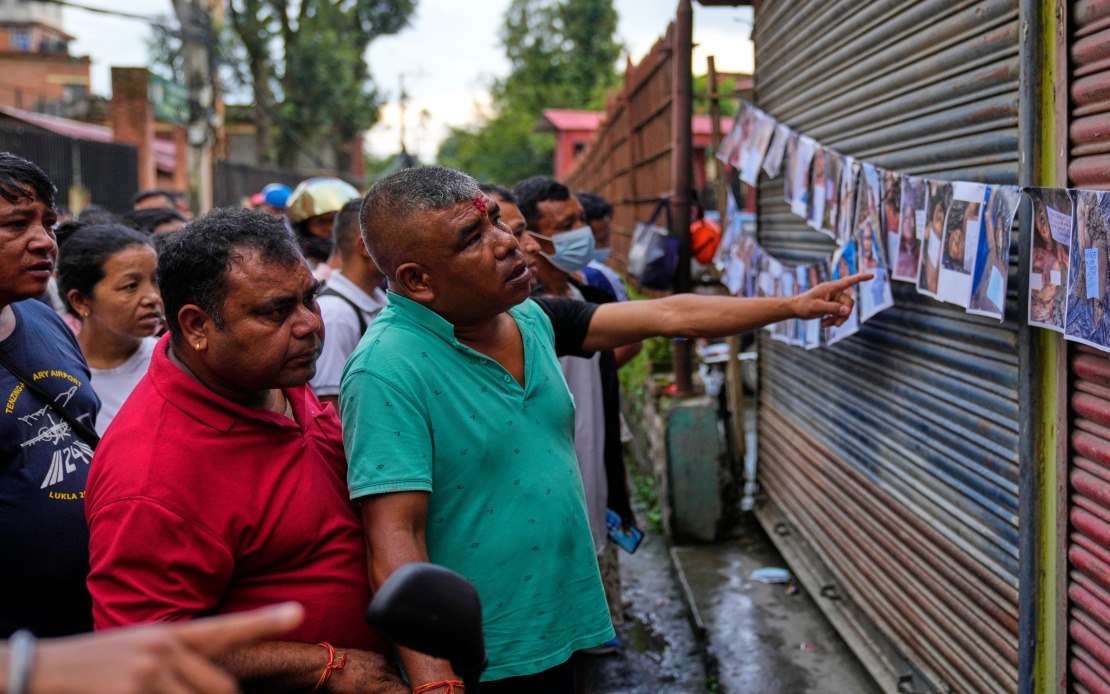
The catastrophic flooding that engulfed Nepal's northern regions continues to unfold as a humanitarian crisis of unprecedented scale, with search and rescue teams now conducting operations into their third consecutive day. The calamity, triggered when a massive Himalayan glacier suddenly collapsed and triggered a wall of water through the Bhote Koshi and Trishuli river valleys on Wednesday morning, has claimed approximately 550 lives, though Nepalese authorities acknowledge that hundreds more remain unaccounted for and that final casualty figures are still emerging.
For Malaysia, the disaster has created an urgent consular challenge. As of Friday afternoon, 57 Malaysian nationals were initially reported as untraceable following the catastrophe. By 2.22 pm on that day, however, two of these individuals had been successfully located, leaving 55 citizens whose whereabouts remain unknown. The Foreign Ministry's Deputy Secretary-General for Bilateral Affairs, Datuk Syed Mohamad Hasrin Tengku Hussin, cautioned that these figures were provisional and subject to ongoing verification as information flowed in from Nepalese authorities and coordinating agencies. This uncertainty underscores the logistical complexity of managing a disaster that has fundamentally disrupted communications and infrastructure across an entire region.
The scale of the missing persons crisis became clearer when Nepal's Department of Tourism, operating under the Ministry of Culture, Tourism, and Civil Aviation, published a comprehensive list on Thursday evening documenting 537 foreign nationals from more than 30 countries who had been reported missing. The Malaysians constituted the largest single contingent from any Southeast Asian nation on that roster. The published inventory provided names, ages, nationalities, and the travel agency affiliations of those unaccounted for—a systematic attempt to bring order to a chaotic situation and facilitate international coordination efforts. The prominence of Malaysians on this list reflects both the substantial volume of Malaysian tourists visiting Nepal during this season and the broader Southeast Asian appetite for adventure tourism in the Himalayan region.
None of the 121 foreign nationals rescued to date have been identified as Malaysian citizens, a detail that has intensified official anxiety about the scale of Malaysian casualties. The rescue operations themselves have been hampered by the unprecedented violence of the initial flood event. The surge of water descended through the Rasuwa district with such force that it obliterated roads, destroyed bridges, demolished buildings, and obliterated vast sections of local infrastructure before channeling downstream into the Trishuli River system. Entire settlements were simply swept away, along with vehicles, livestock, and countless structures, isolating numerous communities from external assistance and complicating rescue coordination.
The challenge confronting Nepalese authorities extends well beyond locating survivors. Recovery efforts have been impeded by the horrific discovery that human remains have been scattered across districts far downstream from the initial flood zone, carried for considerable distances by the torrent. Authorities are facing severe difficulties in identifying these remains, compounded by a severe shortage of morgue facilities. Several districts have exhausted their capacity to store bodies, creating a macabre backlog that threatens public health and prevents bereaved families from obtaining closure. This logistical nightmare underscores how even the most well-intentioned disaster response can be overwhelmed by the sheer magnitude of a natural catastrophe.
Malaysia's government has mobilized rapidly to support Nepal. Prime Minister Datuk Seri Anwar Ibrahim indicated that assistance could assume multiple forms, ranging from direct financial contributions to the deployment of specialized personnel. The National Security Council maintains close coordination with Nepalese government officials to determine which form of aid would prove most beneficial given current circumstances on the ground. The Malaysian Special Search and Rescue Team (SMART) has been identified as a potential asset for deployment, contingent upon Nepalese authorities formally requesting such assistance and determining that the security situation and terrain permit international rescue teams to operate effectively.
The Foreign Ministry continues systematic efforts to verify the status of every Malaysian national believed to be in the affected region, working through diplomatic channels and engaging local authorities and travel agencies that organized tours through the flooded areas. This verification process is inherently time-consuming, requiring cross-referencing of tourist records, hotel registrations, guide rosters, and emergency reports with actual outcomes on the ground. Communication infrastructure damage in Nepal means that some potential survivors may simply be unreachable for extended periods, unable to contact their families or embassy representatives until roads are restored or alternative communication methods become available.
The geological phenomenon that triggered this disaster—the sudden collapse of a Himalayan glacier—carries ominous implications for the region more broadly. Climate scientists have documented accelerating glacier retreat throughout the Himalayas, and sudden failures of the type that occurred in Nepal are predicted to become increasingly frequent as ice masses destabilize under warming conditions. For Southeast Asian nations like Malaysia whose citizens regularly visit Nepal for trekking, mountaineering, and tourism, this represents an emerging risk factor that may necessitate revised travel advisories and updated safety protocols for adventure tourism operators.
The incident also highlights vulnerabilities in how developing nations manage mass casualty disasters involving international victims. Nepal's tourism sector, while economically vital, often operates with minimal regulatory oversight of safety measures. The absence of robust tourist registration systems, limited communication infrastructure in remote areas, and inadequate emergency response capacity in mountainous regions all contributed to the difficulty in accounting for missing persons. For other Southeast Asian nations with similar geographic and economic profiles—including Indonesia, Philippines, and even Malaysia's own rural mountainous areas—the lessons from Nepal's response will prove instructive.
Meanwhile, the international humanitarian response is mobilizing gradually, constrained by the geographic isolation of the affected zone and the destruction of transportation routes. Neighboring countries including India have offered support, recognizing that disaster response in the Himalayan region requires regional cooperation given the transnational nature of the river systems that transformed ordinary Wednesday morning into a scene of unfathomable tragedy. For Malaysian officials, for Nepalese recovery planners, and for the thousands of families awaiting news of their loved ones, the focus remains intensely immediate—locating survivors and accounting for the deceased with dignity and efficiency.

