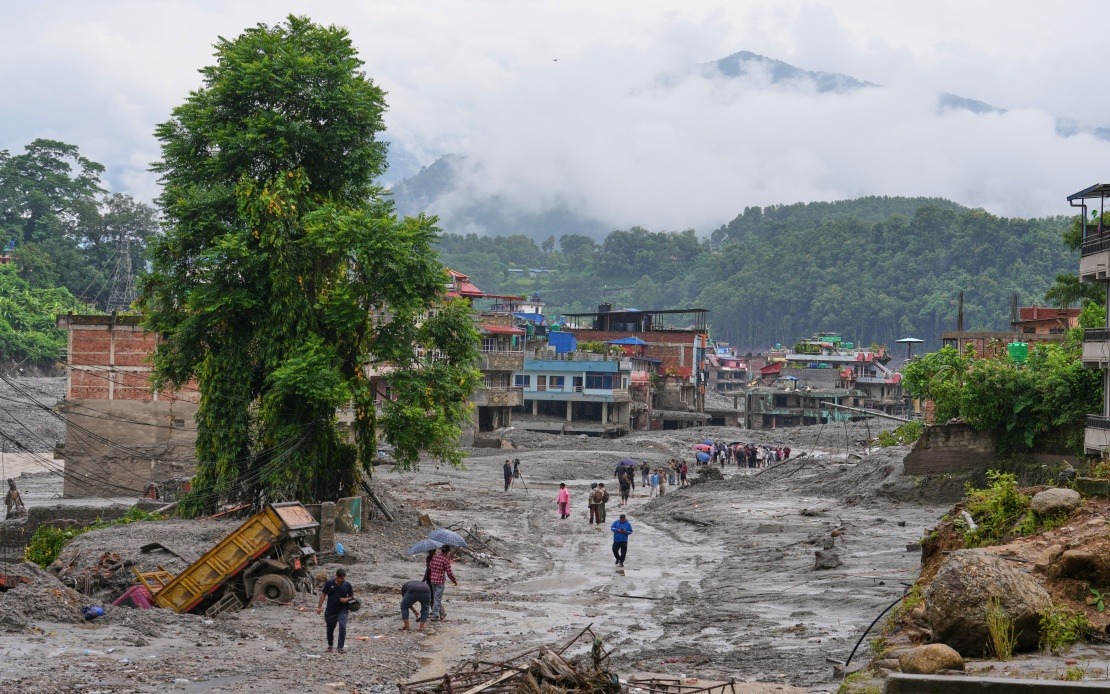
Nepal confronts a mounting humanitarian crisis following devastating mudslides that have claimed 675 lives across vulnerable mountain districts, according to the National Disaster Risk Reduction and Management Authority. The catastrophic toll, confirmed as of Saturday evening, underscores the devastating impact of the disaster on communities already grappling with monsoon season challenges. Search and rescue operations remain ongoing as authorities race against time to locate nearly 2,500 people whose whereabouts remain unknown in the aftermath of the disaster.
The geographical scope of the calamity encompasses multiple districts, with Rasuwa, Nuwakot and Dhading districts bearing the heaviest burdens. These regions, situated in challenging topographical terrain north and northwest of Kathmandu, face particular vulnerability to landslides during monsoon periods when saturated soil conditions destabilise hillsides. The distribution of casualties and missing persons across these districts reflects the indiscriminate nature of mudslide disasters, which can sweep through populated areas with little warning and devastating force.
Among those affected are substantial numbers of tourists caught in the disaster zone. Nepal's Department of Tourism reported that approximately 753 tourists had lost contact as of Saturday afternoon, comprising a significant international contingent. Of these missing visitors, 589 are foreign nationals, highlighting how the disaster has extended beyond Nepal's borders to affect global communities. The tourism sector, already facing economic pressures, now confronts the immediate challenge of locating missing visitors and reassuring international travellers about safety conditions.
The involvement of tourists in the disaster carries particular significance for Nepal's economy, which relies heavily on international visitor expenditure. Tourist destinations and trekking routes in affected districts remain closed or severely restricted as rescue operations continue. The international media attention accompanying missing foreign nationals has elevated the profile of this disaster globally, potentially influencing travel decisions and insurance claims from multiple countries.
Local authorities have mobilised emergency response mechanisms, with the Kathmandu District Administrative Office issuing urgent appeals for relief supplies. These calls target businesses, associations, institutions and individual citizens throughout Kathmandu, requesting donations of essential items to support victims in the three most severely affected districts. The relief coordination effort reflects recognition that disaster response requires mobilising resources beyond government capacity, necessitating broad-based community participation.
The supply chain for delivering assistance to mudslide-affected areas faces significant logistical challenges. Road networks serving Rasuwa, Nuwakot and Dhading districts have sustained damage from the mudslides themselves, potentially complicating delivery of food, medical supplies, temporary shelter materials and other critical items needed to sustain displaced populations. Seasonal monsoon conditions may continue to threaten further landslides, adding urgency to relief operations before additional rainfall occurs.
For Malaysia and Southeast Asian nations, this disaster serves as a sobering reminder of vulnerability to landslide-related catastrophes during monsoon seasons. Malaysia's own mountainous regions, particularly in Peninsular Malaysia and East Malaysia, experience comparable geological and hydrological conditions that can trigger similar disasters. The mudslide season in Nepal parallels seasonal patterns affecting other South and Southeast Asian nations, suggesting heightened alert levels across the region during monsoon periods.
The scale of missing persons suggests considerable numbers may remain trapped in debris fields, buried under massive volumes of earth and rock displaced by mudslides. Each day without contact increases concerns about survival prospects, as access to shelter, water and medical care becomes critical for anyone trapped in affected areas. Recovery teams utilise both manual excavation and machinery, though the unstable terrain requires careful operation to avoid triggering additional collapses.
International assistance coordination will likely follow established patterns for regional disasters, with neighbouring countries and development partners offering technical expertise, rescue equipment and personnel. Nepal's experience managing this crisis, particularly regarding international tourist assistance, may inform protocols for future disasters affecting the broader Himalayan region. The incident underscores interconnected vulnerabilities linking environmental hazards, infrastructure resilience and emergency preparedness systems across South Asia.

