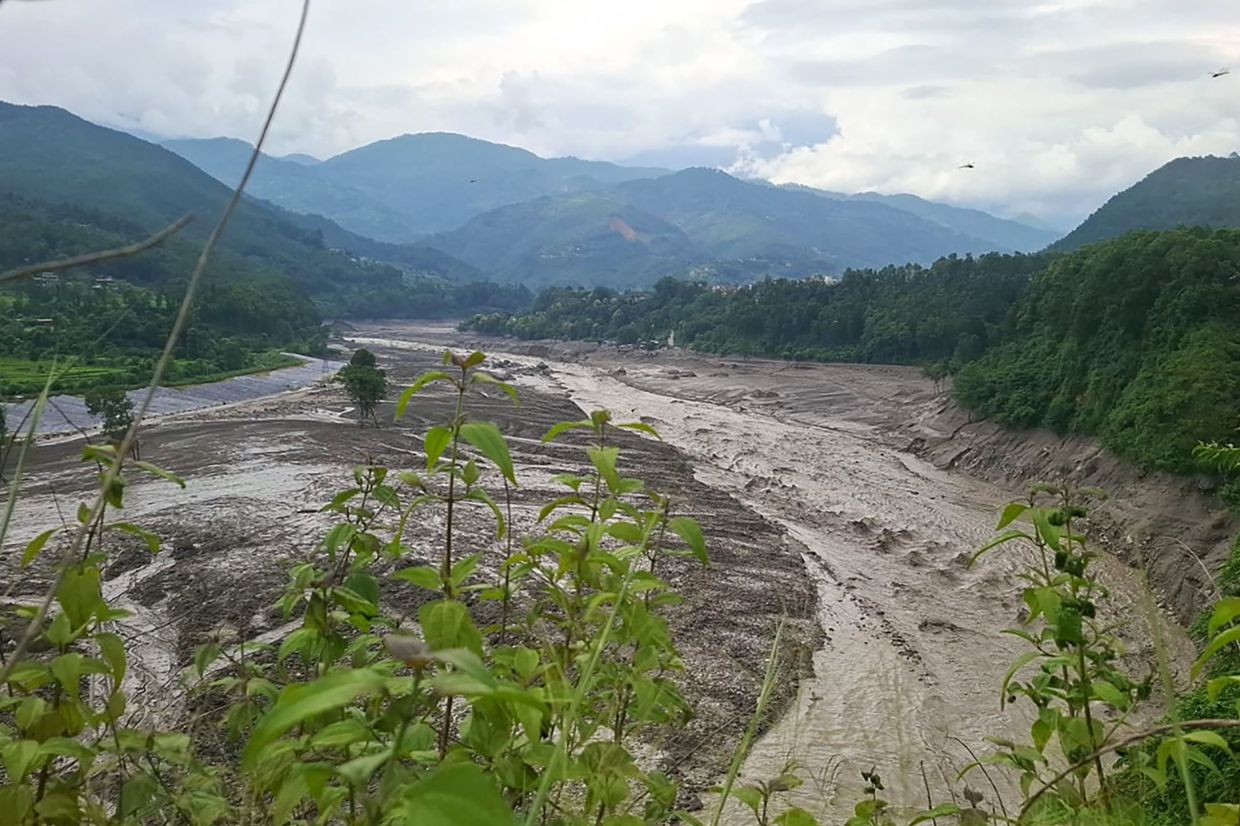
A catastrophic avalanche-triggered mudslide and flash flood swept through Nepal on Wednesday, claiming at least 22 lives and leaving hundreds of tourists, workers and residents unaccounted for across multiple districts. The disaster, which struck around 9am local time, marked one of the deadliest weather events to hit the Himalayan nation in recent months, raising urgent questions about climate vulnerability in one of Asia's most mountainous regions and the mounting dangers faced by visitors and workers in remote areas.
Among those missing are 384 tourists from around the world, with officials noting that approximately 291 came from countries including India, the United States, the United Kingdom and Malaysia. Malaysia's Foreign Ministry confirmed that its embassy in Kathmandu has received reports from travel agencies indicating contact has been lost with 11 Malaysians believed to be stranded in the Rasuwa district, one of the areas most severely impacted by the flooding. The majority of missing tourists are believed to be Indian nationals or members of the Indian diaspora who were making pilgrimage journeys to Mount Kailash, located in Tibet's Chinese autonomous region and considered a sacred site in Hindu tradition. Additionally, South Korean government officials reported that their citizens employed in the construction of a hydropower plant in Nepal are among those unaccounted for.
The Bhotekoshi River burst its banks with devastating force, destroying numerous villages, critical road networks and multiple hydropower projects in the district of Nuwakot and surrounding areas. Rescue teams found evidence of widespread destruction, with dozens of multistoried buildings, trucks and vans buried beneath enormous volumes of mud and debris. Nepal's government immediately issued warnings to residents across several districts, urging them to avoid the banks of the Bhotekoshi, Trishuli and Narayani rivers as secondary flooding remained a serious risk in the hours following the initial surge.
Nepal's government has appealed to both India and China for assistance with rescue and relief operations. Chinese President Xi Jinping issued directives to authorities to intensify search and rescue efforts, particularly in the Gyirong area along the Tibetan border, where Chinese rescue teams were conducting large-scale operations. State broadcaster CCTV reported on the Chinese response, though officials have not yet released casualty figures from the Chinese side. India's Prime Minister Narendra Modi, meanwhile, telephoned Nepal's Prime Minister Balendra Shah to offer humanitarian assistance, pledging that India would provide all available forms of aid and emphasising close coordination between the two nations' rescue and relief teams.
Climate scientists and disaster experts point to a rapidly warming Himalayan environment as the underlying cause of Wednesday's catastrophe. Researchers at the Kathmandu-based International Centre for Integrated Mountain Development determined that an ice and rock avalanche from a glacier likely triggered the mudslide, with the event occurring along the Lhende Khola River, a tributary of the Bhotekoshi. According to Saswata Sanyal, a disaster risk reduction specialist at the centre, the avalanche blocked the river channel before releasing a sudden and violent surge of water downstream, a sequence of events that mirrors an earlier flooding incident in the same tributary barely fourteen months prior.
The recurrence of severe flooding in identical locations underscores the accelerating pace of environmental instability across the Himalayan range. The Hindu Kush Himalaya region, which encompasses Nepal and extends into surrounding countries including India, faces disproportionate climate impacts as it warms substantially faster than global average rates, a phenomenon directly attributable to human-caused climate change. Research conducted earlier this year by scientists in Kathmandu revealed that glaciers across the Hindu Kush Himalaya have entered a period of rapid and accelerating melting, with ice loss rates having doubled since the year 2000. Rising global temperatures remain the primary driver of this phenomenon, creating cascading effects throughout mountain ecosystems and downstream communities.
The Himalayan region's inherent geological vulnerability compounds climate-driven hazards. The terrain's steep slopes, combined with heavy precipitation and destabilised glacial systems, creates ideal conditions for flash floods, landslides and debris flows. Extreme weather events, ranging from intense rainfall to prolonged heat waves, have become increasingly frequent across the region in recent years. When paired with accelerating glacier melt, these climatic shifts generate unprecedented volumes of water that overwhelm traditional drainage systems and overwhelm communities that have historically occupied these valleys.
For Malaysia and other Southeast Asian nations, the Nepal disaster carries significant implications. The region sends considerable numbers of tourists to the Himalayan region annually, and the incident demonstrates the growing peril facing travellers in mountain environments undergoing rapid environmental change. Malaysian travel agencies and tour operators will likely need to reassess safety protocols and risk assessments for Himalayan destinations, particularly routes to sacred pilgrimage sites. Furthermore, the disaster illustrates how climate change in one region directly affects citizens and livelihoods across Asia, creating transnational humanitarian challenges that demand coordinated regional responses.
Scientists and policymakers emphasise that early warning systems represent the most viable immediate adaptation measure in the warming Himalaya. Saswata Sanyal stressed that in a region experiencing accelerating change, establishing robust early warning infrastructure is essential for protecting lives and livelihoods. This imperative applies not only to Nepal but to downstream countries including India and Bangladesh, where Himalayan rivers deliver both water resources and, increasingly, disaster risks. Investment in glacial lake outburst flood monitoring, weather surveillance and community alert systems has become critical infrastructure for the region's security and resilience.
The August 2023 disaster, which killed nine people and damaged critical infrastructure including the Nepal-China bridge, demonstrated that such events are no longer anomalies but rather harbingers of a new climatic reality. The return of severe flooding to identical locations within fourteen months suggests that communities and governments must fundamentally reconceptualise disaster preparedness and land use planning in mountain regions. For Nepal's tourism sector, which remains economically vital despite its hazards, balancing economic development with climate-driven risk management presents an increasingly urgent challenge requiring international cooperation and substantial investment in adaptation measures.

