Nepal's rescue authorities have successfully extracted 121 foreign nationals from regions devastated by catastrophic flooding, though the scale of the unfolding humanitarian crisis continues to overwhelm response capabilities across both Nepal and neighboring China. The rescue tally, compiled by Nepal's tourism authorities as of Friday evening, underscores the international dimensions of what has become a major regional disaster triggered by an unexpected glacial failure high in the Himalayas.
The rescued foreigners represent a striking geographic diversity. Indian nationals comprise the largest contingent at 85 individuals, while 16 Chinese citizens were also brought to safety. The remaining rescued tourists include nine South Koreans alongside smaller groups from developed nations including two Americans, two Russians, two Italians, and single citizens from Belgium, Bulgaria, Portugal, Spain, and Switzerland. This multinational presence reflects Nepal's significance as a major tourism hub in South Asia, where trekking expeditions and pilgrimage routes attract thousands of international visitors throughout the year.
The initial flooding event occurred when the Bhote Koshi and Trishuli rivers overflowed their banks on Wednesday following an unexpected collapse of glacial formations in the high Himalayan ranges. The resulting deluge swept through downstream communities with devastating force, leaving approximately 550 confirmed dead across both nations. The scale of fatalities positions this among the region's most significant recent natural disasters, with implications extending well beyond Nepal's borders into China's Xizang region and generating humanitarian concerns across South Asia.
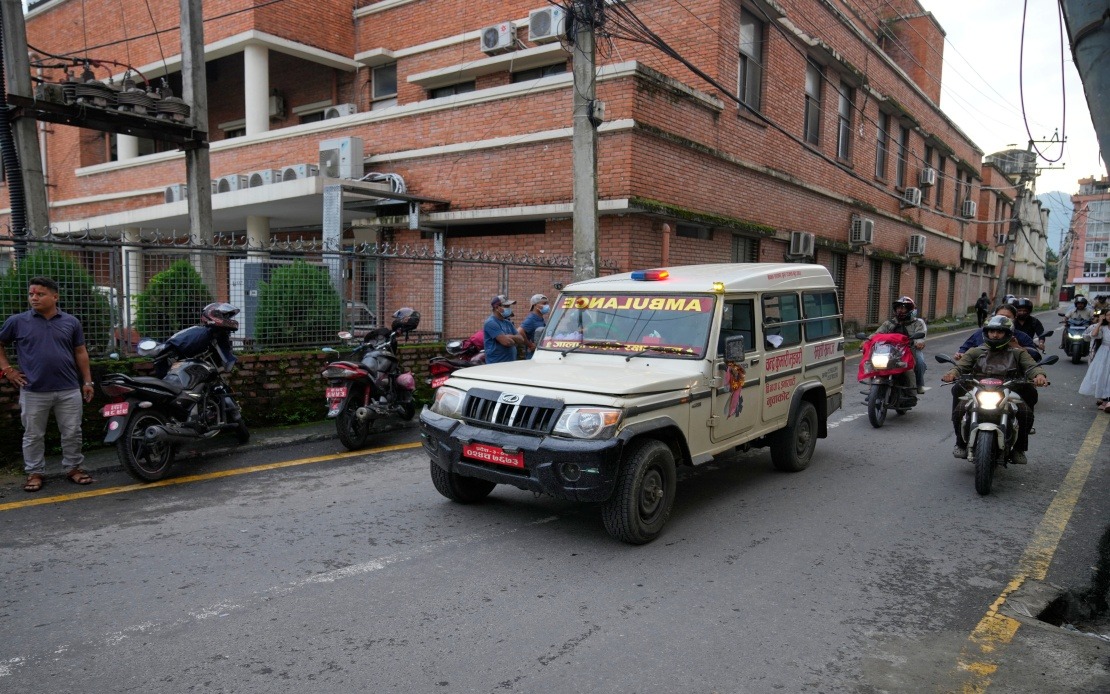
Nepalese authorities are confronting severe logistical challenges in managing the disaster's aftermath. Hospitals in major population centers including Chitwan and Pokhara have exhausted their capacity to store and process recovered bodies, according to reports from local media outlets. This capacity crisis has created urgent pressure on government agencies tasked with victim identification while simultaneously coordinating ongoing search and rescue operations in multiple downstream areas where survivors and deceased persons continue to be discovered.
India's foreign ministry has provided significant detail regarding the status of Indian nationals affected by the disaster. Ministry spokesman Randhir Jaiswal disclosed that approximately 320 Indian citizens remain unaccounted for and presumed to be among those caught in the flooding. However, authorities confirmed that 63 Indian workers employed on the Trishuli hydropower project have been confirmed safe, while another 21 rescued individuals have already been transported back to Indian territory. The situation is further complicated by the presence of roughly 100 individuals of Indian origin who hold foreign passports and were unaccounted for, potentially having ventured into the Kailash Mansarovar pilgrimage region in China's Xizang territory at the time of the disaster.
The Indian response has been swift and substantial. New Delhi has dispatched two humanitarian assistance shipments to Nepal, together totaling 47.5 tonnes of relief supplies including emergency provisions and medical materials. A third transport aircraft was scheduled to depart India on Friday carrying additional support materials. This coordinated assistance reflects India's strategic interest in Nepal's stability and the historically close humanitarian ties binding the two nations, with India viewing rapid relief provision as both a moral imperative and an opportunity to reinforce regional relationships.
Nepal's political leadership has mobilized governmental resources to address the crisis. Prime Minister Balendra Shah convened his Cabinet on Friday to comprehensively review the disaster's immediate aftermath and coordinate federal response mechanisms. As a symbolic gesture of commitment to relief efforts, Shah announced that he and his Cabinet colleagues would each contribute one month's salary to the Prime Minister's Natural Disaster Relief Fund, channeling resources directly toward on-the-ground recovery operations and victim assistance programs.
Regional solidarity has extended beyond India's borders. Pakistani Prime Minister Shehbaz Sharif placed a telephone call to his Nepalese counterpart to convey formal condolences regarding the loss of life while articulating Pakistan's commitment to stand alongside Nepal during this crisis period. Pakistan's government announced it would dispatch emergency relief assistance to the affected nation, demonstrating how major regional powers recognize their shared interest in supporting Nepal through natural disasters that transcend bilateral boundaries.
The disaster carries broader implications for Southeast Asian travelers and the region's tourism infrastructure. Millions of visitors from Malaysia, Singapore, Thailand, and other regional nations annually travel to Nepal for trekking expeditions, religious pilgrimages, and mountaineering activities. The Kailash Mansarovar pilgrimage route, which attracts considerable numbers from Muslim-majority Southeast Asian nations and other Asian countries, represents a particular vulnerability point given its remoteness and the challenges of rapid evacuation from high-altitude regions. This incident will likely prompt heightened scrutiny of safety protocols and emergency preparedness along popular trekking and pilgrimage corridors throughout the Himalayan region.
Search and rescue teams continue operations across multiple downstream locations as authorities work to locate additional survivors and recover remaining bodies. The ongoing search reflects the extraordinary scope of the disaster, with rescue personnel confronting challenging terrain, inclement weather conditions, and the sheer scale of the affected area. Hundreds of individuals remain unaccounted for, suggesting that the final casualty toll may yet rise as search operations penetrate more remote communities previously cut off by flooding.
The glacial collapse that triggered this disaster highlights growing concerns about climate-related instability in Himalayan regions. Rapidly changing mountain environments, accelerated glacier melt, and destabilization of high-altitude geological formations have prompted increasing international attention to disaster preparedness in this sensitive zone. For Malaysia and other Southeast Asian nations with citizens regularly traveling through the region, the incident underscores the importance of maintaining updated travel advisories and ensuring comprehensive travel insurance coverage for activities in geologically active mountain environments.

