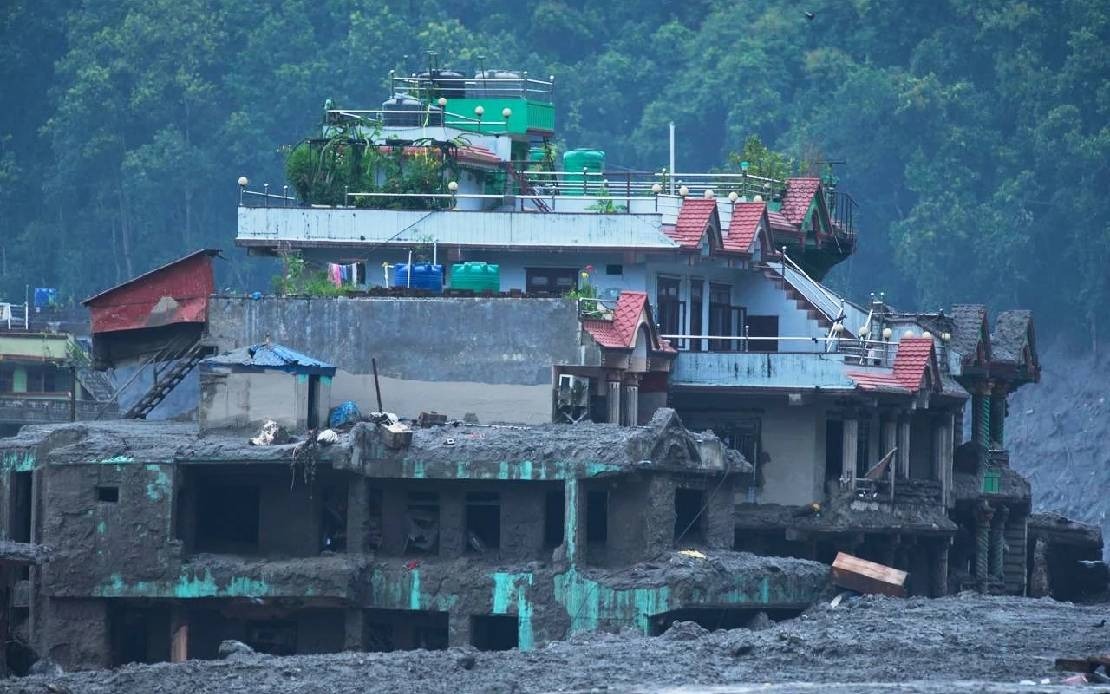
The Himalayan nation of Nepal is mobilising international support as it grapples with the aftermath of a devastating flood that struck on Wednesday, originating from a glacier collapse in the mountains bordering Tibet. The authorities have suspended search and rescue operations temporarily due to inclement weather conditions, shifting their immediate focus to coordinating logistics for transporting survivors to Kathmandu and managing the complex challenge of identifying and handling the deceased. The scale of the disaster underscores the vulnerability of Nepal's mountainous terrain and the compounding challenges posed by climate-related natural hazards in a region where infrastructure remains fragile.
The death toll from the catastrophic flood has reached at least 626 people in Nepal and seven in China's Tibet region, with nearly 3,000 individuals still missing. In Nepal specifically, approximately 2,426 people remain unaccounted for, whilst Tibet's Gyirong County reports at least 554 missing persons, including a significant number of foreign nationals—primarily Hindu pilgrims from India undertaking religious journeys through the region. The humanitarian dimension of the disaster extends beyond Nepal's borders, presenting a multinational challenge that demands coordinated diplomatic and rescue responses. The large proportion of Indian pilgrims among the missing highlights how natural disasters in the Himalayan region can have ramifications across South Asia's religious and cultural networks.
The glacier collapse released an enormous torrent comprising rock, ice, mud and debris that swept through mountain river systems with tremendous destructive force. This natural phenomenon obliterated buildings, bridges, and power stations, fundamentally disrupting the region's basic infrastructure and communication networks. The scale of physical destruction reflects the sheer velocity and volume of material that descended through valleys and river channels, creating cascading environmental impacts that authorities continue to assess. Such events, whilst naturally occurring, are increasingly frequent in high-altitude regions where glacial retreat has accelerated due to warming temperatures, raising broader questions about climate adaptation strategies for vulnerable mountain communities.
Weather conditions have emerged as a critical constraint on rescue and recovery operations. On Saturday, search and rescue activities were halted due to rainfall and heavy fog that obscured visibility across the disaster zone. Narendra Pariyar, the chief district officer for the severely impacted Rasuwa district, confirmed that adverse meteorological conditions necessitated the temporary suspension of active rescue efforts. The focus has consequently shifted toward establishing land-based transportation corridors to evacuate survivors and move rescued pilgrims toward Kathmandu, where medical facilities and administrative infrastructure can process and assist the displaced population.
The identification of deceased victims presents an acute humanitarian and administrative challenge. Authorities have reported that certain bodies recovered three days after the initial flood have undergone significant decomposition, rendering visual identification impossible. In response, district administrations have implemented protocols requiring DNA collection and mass burial procedures to mitigate public health risks and prevent potential disease outbreaks. At Maharajgunj Medical Campus in Kathmandu, where bodies have been transported, families of missing persons have gathered attempting to identify relatives through photographs displayed at the facility's perimeter. Of 49 bodies delivered to this hospital, officials have successfully identified only seven, illustrating the scale of the identification backlog and the emotional burden facing bereaved families.
A secondary hazard emerged when a large lake formed across the Nepal-China border following the flood, threatening to overflow into Nepal's river systems. This glacial lake created immediate anxiety among disaster management officials on Friday when the water level began rising dangerously. By Saturday, Chinese authorities reported that reservoir overflow risks had diminished, with satellite imagery indicating that water was gradually draining through natural channels. However, officials have warned that flood risks will continue until two upstream lakes in the region—both of which are being actively monitored—fully drain their accumulated waters, potentially prolonging the recovery phase over several additional weeks.
Nepal's Foreign Minister Shisir Khanal articulated the nation's specific technical requirements rather than broadly requesting rescue personnel. The government has determined that whilst domestic search and rescue capacity requires supplementation, critical shortages exist in specialised domains including tunnel rescue operations, restoration of transport links in areas where bridges have been destroyed, mass victim identification through advanced forensic techniques, DNA testing capabilities, and secure body storage facilities for extended durations. These targeted requests reflect a nuanced assessment of Nepal's institutional strengths and weaknesses, directing international assistance toward areas where domestic expertise and technical infrastructure are genuinely deficient rather than seeking wholesale replacement of national capacity.
India has emerged as the most substantial bilateral contributor to Nepal's relief and reconstruction efforts. New Delhi has dispatched three aircraft carrying approximately 60 tonnes of relief material, including blankets, pharmaceutical supplies, food products, and water purification equipment. Beyond immediate humanitarian assistance, India has committed to deploying a specialised tunnel rescue team and a medical deployment team to address two of Nepal's explicitly identified needs. Additionally, India's disaster response force is positioned to support operations, whilst the Indian government has offered prefabricated bridge structures and technical teams to restore transportation connectivity across damaged waterways and terrain. These contributions represent a carefully calibrated response matching India's substantial resources with Nepal's articulated requirements.
China, whilst acknowledging the disaster and calling for emergency international aid and cooperative rescue operations, has not yet publicly detailed specific assistance packages or technical deployments to Nepal. The diplomatic communications from Beijing emphasise solidarity and the principle of international cooperation, though concrete material contributions remain undisclosed at this stage. This diplomatic posture may reflect the complexity of the China-Nepal relationship and differing priorities within China's own disaster response mechanisms, as Chinese authorities are simultaneously managing the loss of seven lives and the search for over 500 missing persons in Tibet's Gyirong County.
Finance Minister Swarnim Wagle has indicated that preliminary assessments estimate reconstruction costs between US$4 billion and US$5 billion, a substantial sum for an impoverished nation with a population of 30 million people. This financial requirement encompasses not merely emergency relief and humanitarian response but comprehensive reconstruction of damaged infrastructure, livelihoods, housing, and economic capacity across affected regions. The minister acknowledged that this constitutes an initial estimate pending more thorough damage assessments, suggesting the ultimate financial requirement could exceed current projections. For Malaysia and other Southeast Asian nations, Nepal's reconstruction experience provides instructive lessons about disaster financing mechanisms and the importance of establishing regional mutual assistance frameworks before catastrophic events occur.
The disaster highlights the interconnectedness of South Asian nations and the necessity for coordinated regional responses to transboundary natural hazards. Nepal's mountainous terrain makes it particularly vulnerable to glacier-related disasters, whilst its limited economic resources constrain unilateral disaster management capacity. The response from India and the international community underscores how disasters transcend political boundaries and activate humanitarian obligations. For Malaysian policymakers observing this event, the Nepalese experience demonstrates the critical importance of infrastructure resilience, early warning systems, and pre-positioned international assistance mechanisms in regions prone to natural disasters.
The underlying cause of this disaster—glacial collapse—warrants examination within the context of climate change and environmental degradation in the Hindu Kush-Himalayan region. Rising temperatures are accelerating glacier retreat and increasing the frequency of sudden ice and snow avalanches, phenomena that are expected to intensify over coming decades. Nepal and other mountain nations face a compound challenge: managing immediate humanitarian crises whilst simultaneously building adaptive capacity for increasingly frequent similar events. This requires international climate finance, technology transfer, and capacity building support from developed economies. The Nepalese situation thus transcends a single disaster response to represent a broader development and climate justice issue affecting vulnerable mountain communities across Asia.

