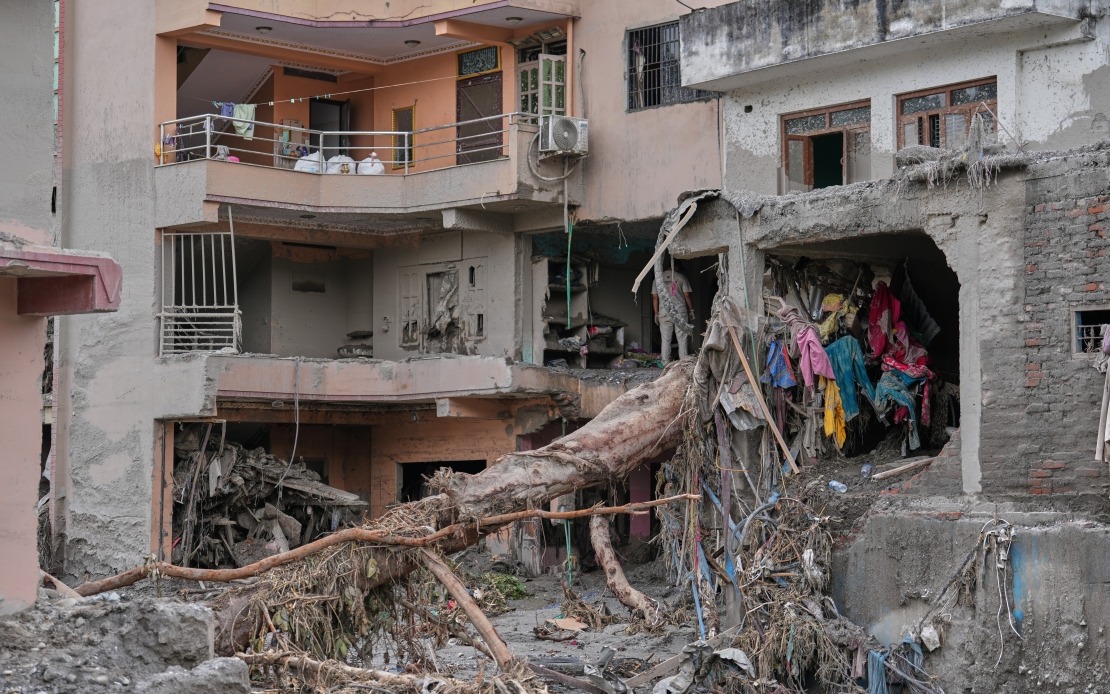
Nepal has announced a systematic approach to managing the hundreds of unidentified bodies recovered from catastrophic flooding that struck the country on August 26, establishing protocols to preserve genetic and other identifying evidence before final disposition of remains. The disaster, triggered by severe flooding along the Bhotekoshi River, has emerged as one of the region's deadliest natural calamities in recent memory, with recovery operations extending across eight districts and claiming at least 675 confirmed lives.
Prime Minister Balendra Shah's statement, distributed through social media channels on Saturday evening, outlined the government's strategy for handling the massive humanitarian challenge posed by mass casualties across multiple locations. The approach reflects international best practices in disaster victim management, where preservation of biological evidence becomes critical when families cannot immediately identify their deceased relatives or when bodies remain unclaimed after initial identification attempts.
The flooding devastated a corridor stretching through Rasuwa, Nuwakot, and Dhading—districts positioned along the course of the swollen Bhotekoshi River—destroying homes, washing away livestock, and obliterating crucial infrastructure including roads and bridges that connect remote communities to regional centres. The disaster unfolded with particular severity in these mountainous terrain areas where heavy rainfall turned streams into torrents that cascaded through valleys with little warning, catching residents and travellers unprepared.
Recovery operations have extended far beyond the initial flood zone, with bodies discovered in Chitwan, Tanahun, Gorkha, Nawalparasi East, and Nawalparasi West as the swollen river carried remains downstream over successive days. This geographic dispersal of victims complicates identification efforts, as bodies may be found far from their communities of origin, separated from personal belongings or documentation that might assist recognition.
The government's commitment to DNA preservation addresses a critical gap in disaster response protocols commonly seen across South Asian countries, where resource constraints and limited laboratory capacity often result in mass burials without comprehensive documentation. By maintaining biological samples and other identifying materials, Nepal creates opportunities for future identification should families later submit DNA profiles or additional evidence emerges to establish identities of currently unknown victims.
This protocol carries particular significance for Malaysian and Southeast Asian observers, as the region faces increasing vulnerability to extreme weather events amplified by climate change. Countries including Malaysia, Thailand, and Indonesia have experienced similar mass casualty disasters from flooding and landslides, frequently struggling with identification of remains when families are dispersed or when bodies decompose rapidly in tropical conditions. Nepal's approach offers a potential model for improved disaster victim management across the region.
The massive casualty toll reflects the intensity and speed of the flooding event, which overwhelmed warning systems and evacuation procedures in areas where many residents live in flood-prone lowlands with limited alternative shelter. The Bhotekoshi River, which drains water from glaciated Himalayan peaks, can swell dramatically during monsoon season or following cloudbursts that deposit extraordinary rainfall volumes in compressed timeframes.
The announcement suggests Nepal's government recognizes that final resolution of remains cannot wait indefinitely for identification to occur, particularly in climates where decomposition accelerates and space in temporary morgues becomes exhausted. However, by establishing that unidentified bodies will be managed with evidence preserved, the authorities signal commitment to eventually reuniting remains with families and providing closure to grieving households searching for lost members.
International disaster management experts often recommend such protocols as part of comprehensive victim identification processes, particularly when dealing with hundreds or thousands of deceased requiring processing. The DNA preservation approach also supports criminal investigations should flooding have been exacerbated by infrastructure failure, dam rupture, or other circumstances requiring accountability determinations.
For regional countries monitoring Nepal's response, the implementation of these procedures demonstrates the practical challenges confronting governments when natural disasters produce casualties on this scale. The coordination required across eight districts, the logistics of securing and cataloguing evidence, and the provision of temporary storage facilities represent substantial organizational and financial burdens that strain resources even in countries with more developed disaster response infrastructure.
As Nepal continues recovery operations and begins the longer process of reconstruction, the families of the 675 confirmed deceased face weeks or months of uncertainty while authorities work through identification procedures. The preservation of DNA and identifying evidence represents both a humanitarian commitment and a recognition that closure for bereaved families may depend on maintaining these materials through seasons to come.

