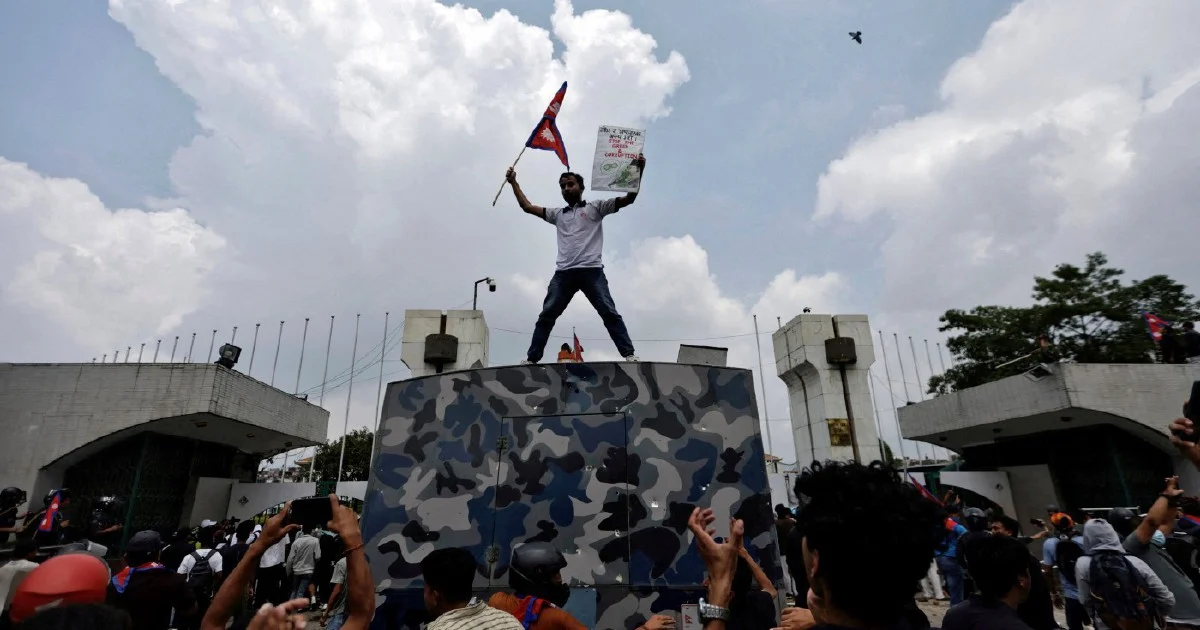
Kathmandu authorities detained Bishnu Prasad Paudel, who previously served as Nepal's finance minister, on Monday evening following allegations of money laundering, according to police statements. The arrest marks a significant escalation in the country's anti-corruption campaign, which has become increasingly visible since the emergence of a Generation Z-influenced government pushing for systematic accountability across state institutions.
Paudel's detention represents part of a broader pattern emerging in Nepal's governance landscape. The younger leadership now holding significant political power has made tackling financial crime and recovering allegedly misappropriated state assets a central policy objective. Unlike previous administrations that often overlooked or downplayed such matters, the current political configuration appears willing to pursue high-profile cases involving former senior officials, regardless of their previous standing in national politics.
Money laundering investigations targeting individuals at Paudel's level carry substantial implications for Nepal's international standing. The country has faced consistent scrutiny from global financial watchdogs and anti-corruption bodies monitoring compliance with international standards. By demonstrating tangible action against prominent figures accused of financial crimes, Nepal's government seeks to improve its standing with organisations like the Financial Action Task Force and international development partners who condition assistance on demonstrated governance improvements.
The arrest also signals potential vulnerabilities within Nepal's historical institutional practices. For years, critics have documented how financial irregularities persisted within government systems, often shielded by political connections and institutional opacity. The willingness to prosecute someone from a previous administration suggests that generational change in political leadership may finally be creating sufficient distance between current decision-makers and those who benefited from past arrangements, enabling action that earlier governments would have resisted.
Regional observers across South Asia are monitoring Nepal's anti-corruption trajectory closely. Countries including Bangladesh and Pakistan have experienced their own cycles of pursuing former officials through the courts, with mixed results regarding genuine institutional reform versus political revenge. The difference in Nepal's case appears to be the generational composition of the prosecuting authorities themselves, potentially indicating a genuine commitment to rules-based governance rather than cyclical score-settling among rival factions.
For Malaysian readers, Nepal's experience offers instructive parallels regarding how institutional change can accelerate accountability for financial crimes. Malaysia's own experiences with investigating former government officials demonstrate that political will from leadership remains essential, even when robust legal frameworks technically exist. The question facing Nepal—whether this crackdown represents genuine systemic reform or temporary political momentum—remains unresolved but will likely influence regional discussions about anti-corruption effectiveness.
The timing of Paudel's arrest during a period of relative political consolidation by Gen Z-influenced movements suggests that the government feels sufficiently secure to pursue controversial cases without immediate fear of retaliation through street protests or institutional sabotage. This contrasts with earlier periods when Nepal's fragile political equilibrium made aggressive prosecution of former power-holders too destabilising for ruling coalitions to contemplate.
International legal cooperation will likely feature prominently in developing investigations against Paudel, particularly if evidence suggests money movement across borders. Nepal's banking sector, like much of South Asia, has seen persistent concerns about weak money laundering detection mechanisms and limited capacity for tracking transnational financial flows. Strengthening these capacities represents a longer-term challenge that single arrests alone cannot resolve, though they provide tangible evidence that authorities are beginning to take such matters seriously.
The political economy underlying Paudel's arrest also reflects Nepal's evolving relationship with accountability mechanisms. Previous administrations often maintained that prosecuting former officials would destabilise governance or encourage endless cycles of revenge-based investigations. The current leadership appears to reject this logic, betting instead that demonstrating impartial application of anti-corruption laws will ultimately strengthen rather than weaken institutional legitimacy.
Paudel's case will unfold within Nepal's contested judicial system, which has faced ongoing criticism regarding independence and political influence. How comprehensively investigators pursue the allegations, whether evidence withstands judicial scrutiny, and whether the case results in conviction will reveal much about whether Nepal's anti-corruption campaign reflects genuine institutional reform or represents temporary political theatre.

