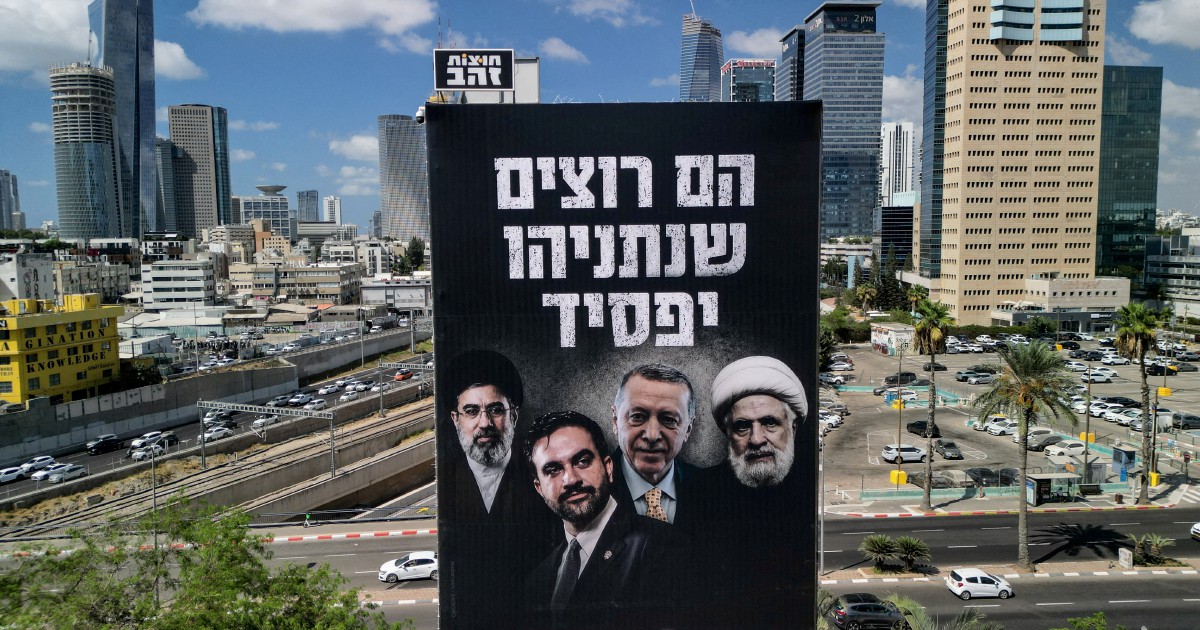
Benjamin Netanyahu's Likud party held an internal selection process Monday to determine which candidates would carry the banner into Israel's October 27 general election, a contest that has become far more precarious for the incumbent prime minister than many observers anticipated only months ago. The exercise took on heightened significance precisely because the party's political standing has eroded considerably, forcing Likud strategists to recalibrate their expectations and messaging as polling data consistently shows a tighter race than the right-wing establishment once commanded.
The weakening of Likud's position reflects a complex constellation of challenges confronting Netanyahu and his coalition government. Public discontent over economic management, security concerns, and the prolonged conflict dynamics have combined to shift voter sentiment in ways that complicate the party's path to maintaining its dominant parliamentary position. For Malaysian observers, this internal party mechanics story illustrates how even entrenched political movements must respond to shifting public opinion, a dynamic relevant across democracies wrestling with polarization and voter volatility.
The candidate selection process itself carries procedural weight within Israeli politics, as Likud members—representing the grassroots of the party—exercise direct influence over their party's electoral prospects. This democratic mechanism differs fundamentally from top-down appointment systems, meaning that Netanyahu cannot entirely control which personalities and policy positions are represented under the Likud umbrella. The membership's choices therefore signal internal party dynamics and the priority issues that motivate the broader conservative electorate.
Israel's electoral system, based on proportional representation with a 3.25 percent threshold for parliamentary entry, means that even losing major vote share does not necessarily translate into dramatic seat reductions. However, the psychological and political impact of declining support carries tangible consequences for coalition-building calculations. Netanyahu must now consider whether his current governing partners will maintain their parliamentary seats and whether new coalition configurations might prove necessary if election results narrow Likud's dominance.
For Southeast Asian readers, the Israeli election carries indirect but meaningful implications for regional stability and international diplomatic patterns. Israel's positioning within Middle Eastern geopolitics influences broader patterns of international relations that eventually ripple through global trade, security arrangements, and diplomatic alignments that touch the region. Understanding how established parties in established democracies adapt to electoral pressure provides comparative insight into political dynamics closer to home.
The October election has emerged as a referendum on Netanyahu's leadership precisely when his government faces multiple simultaneous pressures. The tightened electoral race suggests that voter fatigue with long-serving leaders transcends specific national contexts, a pattern evident across Asia, Europe, and the Middle East. Likud's internal reorganization reflects management's attempt to recapture momentum through careful candidate positioning and messaging refinement designed to reconnect with voters who have drifted toward alternatives.
Economic factors weighing on Israeli voters include inflation concerns, housing affordability crises, and broader questions about fiscal management during periods of elevated security expenditure. These bread-and-butter issues frequently override other political considerations in voter calculations, suggesting that Likud's challenge extends beyond personality or security questions to fundamental concerns about governmental competence in managing national resources. This economic dimension resonates with Malaysian political dynamics, where voter dissatisfaction often crystallizes around cost-of-living pressures and perceived mismanagement of public finances.
The candidate selection process also reveals generational tensions within the party, as newer politicians compete with established figures for prominent placement. How Likud balances continuity with fresh perspectives may influence whether the party successfully rebuilds momentum or continues its current downward trajectory. The composition of candidates selected Monday essentially determines whether the party embraces transformation or consolidation, a strategic choice with implications extending well beyond October's voting.
Regional geopolitical considerations add another layer to understanding this election's significance. Israel's international relationships, defense spending, and regional security posture all flow from domestic political decisions influenced by electoral cycles. The Middle East's fragile equilibrium means that shifts in Israeli government composition can trigger broader regional recalibrations affecting neighboring states and international powers maintaining interests in the area.
Opposition parties have clearly sensed vulnerability in Likud's weakened position, with multiple factions working to capitalize on voter dissatisfaction and presenting alternative visions for governance. The October election will essentially test whether Netanyahu's extensive political experience and institutional advantages prove sufficient to overcome the headwinds generated by prolonged incumbency and public frustration with his administration's record across multiple policy domains.
Likud's candidate selections represent the party's calculated response to electoral pressure, effectively the opening gambit in what promises to be a highly contested campaign. Whether these choices successfully reset the party's political narrative or merely represent organizational shuffling amid deeper structural decline remains a central question as Israel moves toward October's general election.

