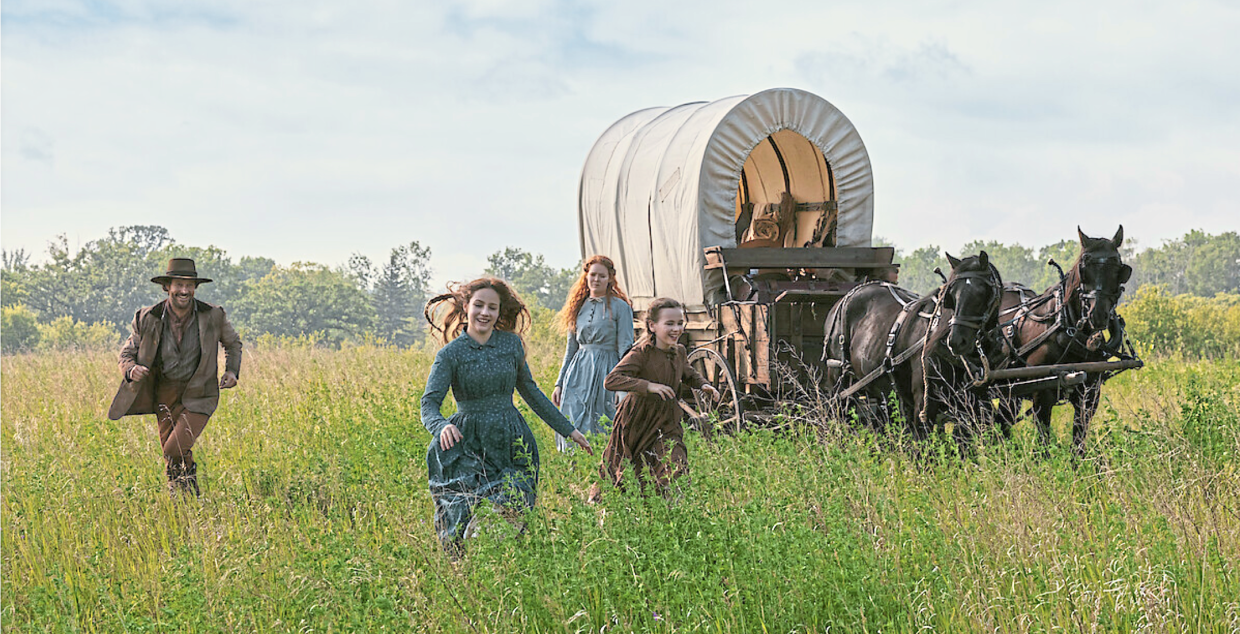
Netflix's forthcoming adaptation of 'Little House on the Prairie' arrives next year with a fresh creative vision, tapping Australian actor Luke Bracey to anchor the ensemble cast as Charles Ingalls, the pioneering father whose steady moral compass guides his family through the uncertainties of frontier life. The reboot represents a significant investment in bringing Laura Ingalls Wilder's 1935 novel to a generation largely unfamiliar with the story beyond cultural memory and the iconic 1970s television series, a move that reflects streaming platforms' broader strategy of reviving canonical American literature for global audiences increasingly shaped by digital media consumption.
The narrative foundation that has sustained the Ingalls family's appeal across nearly a century remains fundamentally compelling: a household navigating hardship on the American frontier, bound together by authentic affection rather than circumstance or obligation alone. Bracey underscores this timeless appeal, noting that the story's enduring resonance across generations and demographics is neither coincidental nor arbitrary. He suggests instead that something intrinsic to the family dynamic—their capacity to weather adversity whilst maintaining emotional connection—speaks to universal human experience. This consistency in audience affection across radically different cultural moments and technologies suggests the narrative contains archetypal elements that transcend its specific historical setting.
Creator and showrunner Rebecca Sonnenshine steers the production, with Alice Halsey embodying Laura Ingalls, the novel's protagonist whose perspective anchors readers' engagement with frontier society. Crosby Fitzgerald portrays Caroline Ingalls, the mother figure whose quiet strength often goes unrecognised in histories celebrating masculine pioneering mythology. Skywalker Hughes takes on Mary Ingalls, the elder sister whose presence complicates Laura's coming-of-age arc. The casting choices reflect contemporary television's commitment to ensemble storytelling rather than singular heroic focus, distributing narrative weight across family relationships rather than concentrating it on one protagonist.
The 1970s NBC adaptation, which maintained broadcast primetime presence from its debut through 1983, established particular visual and narrative conventions that contemporary viewers associate with the source material. That series achieved significant cultural penetration, shaping popular understanding of frontier life and establishing the Ingalls family as recognisable American icons. Netflix's version exists partly in dialogue with that earlier adaptation, but also positions itself as a fresh interpretation unburdened by competing with nostalgia-inflected memories of the original programme. The gap between those broadcasts and this reboot encompasses profound shifts in television aesthetics, narrative complexity, and audience expectations regarding thematic depth.
Crucially, Sonnenshine's adaptation incorporates dimensions largely marginalised in previous versions: the show engages directly with settler-colonial frameworks and Indigenous narratives, acknowledging the complicated histories underlying westward expansion narratives. This interpretive choice reflects contemporary scholarly understanding that frontier stories inherently entangle settler and Native American perspectives, that celebrating pioneers requires simultaneously reckoning with displacement and cultural destruction. By integrating these narratives rather than treating Indigenous presence as peripheral, the adaptation positions itself within ongoing cultural conversations about historical accountability.
Halsey's observations regarding gender constraints in nineteenth-century America illuminate the production's attention to women's lived experience within patriarchal systems. She notes that boys possessed greater privileges, more expansive learning opportunities, and broader social permissions than their sisters faced. The actress suggests that contemporary audiences, particularly younger women accustomed to educational and professional parity, may struggle to imaginatively inhabit the constrained possibilities available to girls in Laura's era. This reflection indicates the adaptation interrogates rather than romanticises historical gender arrangements, inviting viewers to recognise how recent women's expansion of social roles actually is.
Halsey extends this analysis by contemplating how her own aspirations and freedoms would prove impossible had she lived during Laura's lifetime. The observation carries particular weight in Malaysian and Southeast Asian contexts, where women's education access and professional participation have expanded dramatically within recent decades yet remain unevenly distributed across regions and social classes. The historical comparison potentially prompts regional audiences to assess their own societies' progress regarding gender equity, recognising both advances and remaining disparities through the comparative lens of nineteenth-century American constraints.
The decision to greenlight a second season before the debut episode airs demonstrates Netflix's confidence in the creative team and properties' commercial viability. This commitment also indicates lengthy production schedules and international location shooting—the visible commitment to multi-season storytelling grants Sonnenshine and her writers greater narrative runway, permitting character development across extended arcs rather than condensing complex family dynamics into truncated storylines. Hughes's comments about the experience of filming the first season suggest genuine ensemble camaraderie and creative satisfaction, emotional foundations that translate into on-screen authenticity.
For Malaysian audiences specifically, 'Little House on the Prairie' occupies intriguing cultural terrain. The narrative centres frontier American mythology, yet its universal family themes, gender dynamics, and explorations of economic struggle and community resilience possess cross-cultural resonance. The adaptation's decision to forefront Indigenous perspectives and settler-colonial complication potentially invites Southeast Asian viewers to consider parallels in regional history—how colonial narratives have been constructed, contested, and revised through contemporary reinterpretation.
The reboot arrives within Netflix's broader strategy of adapting literary classics for contemporary platforms, following successful iterations of authors including Jane Austen and Sherlock Holmes. 'Little House on the Prairie' differs from those precedents by maintaining closer historical specificity rather than modernising its setting, suggesting Netflix recognises audiences' appetite for immersive historical storytelling when narratively sophisticated and thematically engaged. The 2026 premiere will reveal whether Sonnenshine's creative vision successfully bridges generational expectations and contemporary storytelling conventions, bringing Wilder's nineteenth-century American frontier into twenty-first-century global consciousness.

