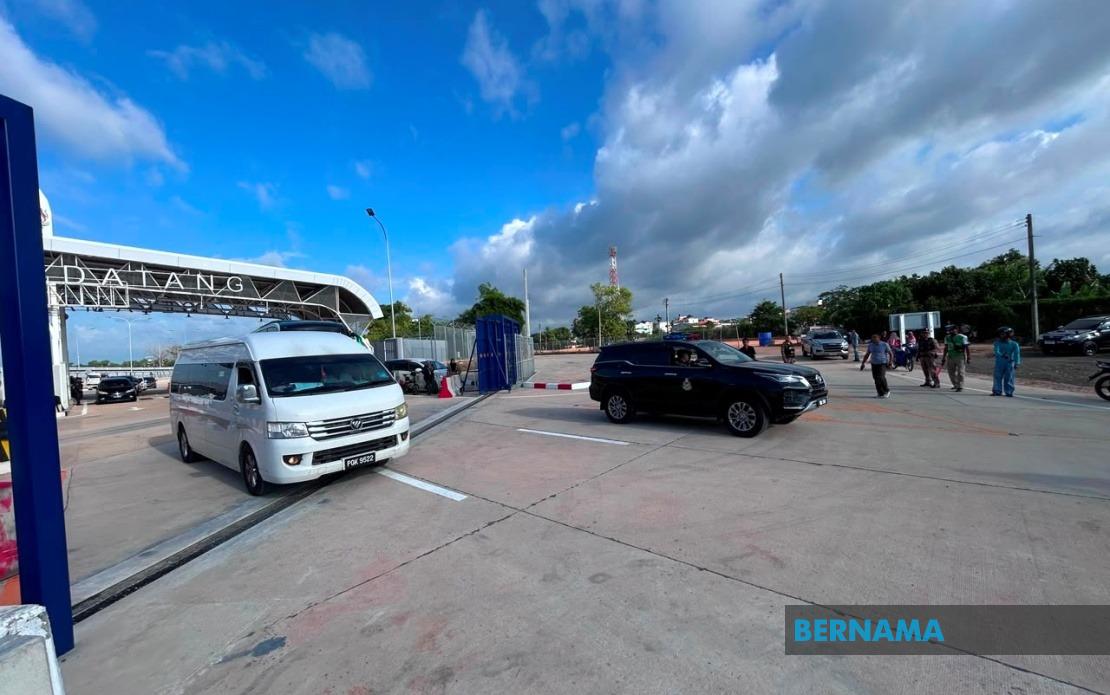
A freshly constructed highway linking the Bukit Kayu Hitam Immigration, Customs, Quarantine and Security (ICQS) Complex in Kedah to Thailand's Sadao Customs, Immigration and Quarantine (CIQ) Complex commenced operations this morning, marking a significant milestone in regional connectivity. The route, which began accepting traffic at 6 am, represents a collaborative infrastructure project designed to streamline movement across one of Southeast Asia's busiest land borders. Prime Minister Datuk Seri Anwar Ibrahim and Thai counterpart Anutin Charnvirakul jointly inaugurated the project yesterday, underscoring the strategic importance both governments place on facilitating bilateral commerce and tourism.
The undertaking addresses long-standing bottlenecks that have plagued travellers and commercial operators navigating the Malaysia-Thailand border, particularly during peak travel seasons when congestion becomes severe. Early observations indicate smooth traffic flow along the new corridor, with initial users reporting an improved border-crossing experience compared to previous arrangements. The development reflects broader regional cooperation efforts aimed at enhancing infrastructure connectivity and reducing friction in cross-border transactions, concerns that resonate throughout Southeast Asia as nations seek to deepen economic integration.
Motorised traffic handling has been reorganised under the new system, with dedicated lanes created to separate light and heavy vehicles through the Sadao checkpoint. This separation represents a fundamental change from the previous arrangement, where lorries shared congested routes with passenger vehicles, creating cascading delays. The distinction proves particularly beneficial for commercial operators who transport goods between the two countries, as smoother flows translate directly to reduced transit times and lower operational costs. Such efficiency gains compound across supply chains, potentially benefiting Malaysian consumers through more competitive pricing on Thai imports.
Passengers transiting the border have reported noticeable improvements in both physical infrastructure and procedural efficiency. Mohd Faizal Ahmad, a Penang-based motorist aged 42, noted that the new route offers superior organisation and markedly greater convenience for Malaysian citizens travelling northward into Thailand. He specifically highlighted how the corridor should alleviate the particularly acute congestion problems experienced during school holiday periods, when family holiday travel typically surges. His observations reflect the practical impact infrastructure upgrades have on ordinary citizens rather than merely statistics in government reports.
Lorry driver Wan Muhammad Shahid Wan Mohd Desa, 28, emphasised the structural improvements that benefit heavy commercial traffic most acutely. The widened road design accommodates larger vehicles without the bottleneck constraints that previously affected the Danok corridor, where mixed traffic categories created systematic gridlock. For freight operators, such improvements directly impact competitiveness and profitability, making this project particularly valuable for Malaysian and Thai logistics companies relying on cross-border supply chains. The separation of vehicle categories also enhances safety by reducing conflict points between vehicles of vastly different sizes and manoeuvrability characteristics.
The physical facilities at the new Sadao CIQ checkpoint itself have undergone substantial expansion and modernisation. Thai national Mat Li Daman, 59, who regularly crosses into Malaysia, praised the expanded building's greater spatial capacity and improved amenities. The enhanced documentation processing areas, including dedicated sections for vehicle entry declarations, signify recognition that border facilities must accommodate rapidly growing bilateral traffic volumes. Such facility improvements particularly matter for frequent crossers, whose cumulative inconvenience across many trips justifies infrastructure investment from a humanitarian and economic standpoint.
From a regional economic perspective, the improved border infrastructure carries significance extending beyond immediate convenience gains. Malaysia and Thailand maintain substantial trade relationships, with cross-border commerce encompassing manufactured goods, agricultural products, and increasingly, high-value electronics and components. Reducing friction at land borders lowers effective transaction costs for businesses, potentially redirecting trade flows that might otherwise route through maritime channels or alternative border crossings. For Malaysian manufacturing firms sourcing inputs from Thailand or exporting finished goods northward, such improvements enhance competitive positioning versus regional competitors.
Tourism dynamics also shift with enhanced border accessibility. Thai visitors to Malaysia's Peninsular heartland and beach destinations increasingly rely on overland routes, as do Malaysian travellers exploring Thailand's northern provinces. Previous congestion made these journeys arduous, discouraging spontaneous cross-border leisure travel and shortening typical stay durations. The improved corridor should stimulate tourism spending in both directions, supporting hospitality and retail sectors that depend on regional leisure traffic. Both countries recognise this potential, as evidenced by their joint commitment to the project's development and ceremonial opening.
The infrastructure undertaking also reflects broader geopolitical recognition of Malaysia-Thailand bilateral ties. Despite occasional diplomatic tensions, both nations consistently reinvest in connectivity improvements, signalling that economic interdependence remains foundational to their relationship. For Malaysia specifically, strengthened land transport links to Thailand enhance overall regional integration, supporting the nation's positioning as a Southeast Asian economic hub. Efficient connectivity to Thailand's markets and production centres strengthens Malaysia's role in regional value chains centring on automotive, electronics, and petrochemical manufacturing.
Looking forward, the corridor's success metrics will largely depend on sustained traffic volumes and congestion reduction during traditional peak periods. Authorities will likely monitor border crossing times, vehicle throughput rates, and user satisfaction to assess whether infrastructure improvements translate into anticipated operational efficiency gains. Early reports suggest positive reception, though maintaining quality and responsiveness as traffic volumes potentially grow presents ongoing management challenges. Both governments' commitment to this project signals intent to continue enhancing border infrastructure as regional trade and tourism expand.
The opening also carries implications for broader Southeast Asian connectivity aspirations. Regional transport corridors like the ASEAN Highway network depend critically on functioning border infrastructure that minimises delays and paperwork complications. Malaysia's investment in the Bukit Kayu Hitam-Sadao corridor contributes incrementally to building the seamless transport networks that underpin regional economic integration. Other ASEAN nations observe such developments with interest, as successful models often inspire similar investments at alternative border crossings, gradually knitting the region together through improved physical connectivity.

