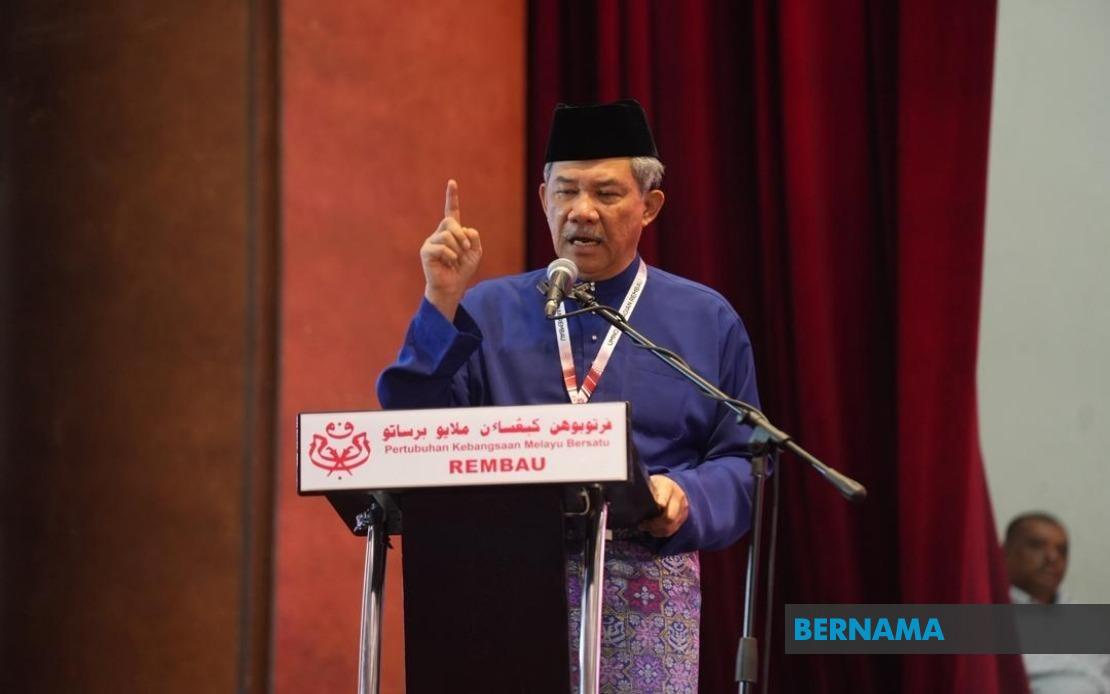
Barisan Nasional Deputy Chairman Datuk Seri Mohamad Hasan has thrown his weight behind the newly constituted Negeri Sembilan State Executive Council, affirming that the 10 freshly appointed members possess the competence and commitment required to execute their portfolios with distinction and render valuable service alongside the Menteri Besar. The confidence expressed by the Rantau State Assemblyman comes immediately after the complete cohort concluded their oath-taking proceedings before Tuanku Muhriz Tuanku Munawir, the Yang Dipertuan Besar of Negeri Sembilan, at Istana Besar Seri Menanti in Seremban on Wednesday.
In articulating the broader mandate of state executive council members, Mohamad characterised the exco position as fundamentally a conduit between administration and citizenry, necessitating a dual responsibility in communicating governmental directives downward whilst channelling public sentiment and grassroots concerns upward through established administrative channels. This conceptualisation underscores the intermediary role that exco members must perform to maintain responsive governance. He elaborated that the primary obligation involves translating and disseminating government policies to the populace in language and context that resonates, thereby building informed consent and understanding for implementation.
Equally critical, Mohamad stressed, is the inverse function: exco members must actively solicit feedback, grievances, creative suggestions, and community perspectives from their respective constituencies and convey these systematically to decision-making authorities. This bidirectional flow of information and advocacy becomes essential for refining administrative approaches and directing resources toward genuine community needs. By framing exco responsibilities in this fashion, Mohamad articulated a democratic governance philosophy that emphasises responsiveness and accountability, particularly important in Malaysian federalism where state governments retain considerable autonomy in social and economic policy.
The Deputy Chairman further stipulated that newly appointed exco members should prioritise obtaining comprehensive briefings from the departments and agencies falling within their assigned portfolios. Such orientation sessions prove indispensable for ensuring that members understand the technical scope, existing programmes, financial allocations, and administrative frameworks that govern their respective domains. Without this foundational knowledge, newly appointed officials risk ineffectual tenure and continuity disruptions. The recommendation reflects best practice in bureaucratic transitions and demonstrates administrative prudence.
Moreover, Mohamad underscored the imperative of maintaining constructive working relationships between exco members and the civil service divisions answering to them. Strong institutional relations facilitate policy implementation and administrative efficiency. When political appointees and career officials develop mutual respect and clear communication protocols, the machinery of state government functions more effectively. This relational dimension often receives insufficient attention in political discourse but remains crucial for governance outcomes, particularly in federal systems where coordination between elected representatives and permanent bureaucracy determines policy success.
The swearing-in ceremony itself marked a significant constitutional moment for Negeri Sembilan, formalising the transfer of authority to these officials and binding them through oath to discharge their duties faithfully according to law and to the Yang Dipertuan Besar. In Malaysian constitutional monarchy, such ceremonies carry substantial symbolic weight beyond their ceremonial function, signifying the legitimacy of executive authority derived from the sovereign.
When pressed by reporters regarding the possibility of a Melaka State Election, Mohamad deferred to institutional procedure, noting that any dissolution of the Melaka State Legislative Assembly remains contingent upon a decision by the Melaka Chief Minister to petition the Yang Dipertua Negeri for formal dissolution. This response exemplifies constitutional propriety; despite BN's interest in state elections, the prerogative belongs to elected leadership operating within constitutional constraints. Such adherence to procedural norms, though sometimes constraining for political actors, reinforces institutional legitimacy and rule-of-law principles essential for long-term democratic stability across Malaysian federalism.
For Malaysian and Southeast Asian observers, the formation of a new state exco carries implications beyond Negeri Sembilan's borders. State governments throughout Malaysia serve as experimental laboratories for policy innovation and administrative practices that frequently cascade upward to federal consideration. Personnel appointments and structural reorganisations at state level often presage shifts in national political dynamics and coalition management. The confidence expressed by senior BN figures in these new appointees signals organisational stability within the ruling coalition and suggests continuity in state-level governance despite broader political contestations.
The emphasis on bridging functions and public consultation also resonates with evolving expectations for performance among Malaysian voters, particularly younger and urban constituencies demanding greater responsiveness and transparency from elected officials. Exco members who effectively operationalise the intermediary role that Mohamad articulated will enhance public confidence in state institutions and reinforce the legitimacy of governance structures. Conversely, appointees who neglect constituency engagement or fail to translate public concerns into policy advocacy will invite criticisms of elite remoteness and administrative unresponsiveness.
The appointment of these 10 exco members also reflects considerations regarding demographic representation, factional balance within BN, and reward distribution among political allies. State-level executive appointments serve multiple functions simultaneously: they place qualified administrators into positions of responsibility whilst cementing factional relationships and signalling political advancement pathways to ambitious politicians. Understanding these subterranean dynamics proves essential for interpreting state-level political manoeuvres and predicting future coalition stability.
Negeri Sembilan, situated strategically between Kuala Lumpur and southern regions, occupies significance disproportionate to its population size. The state government's performance in managing infrastructure, education, and economic development affects broader national narratives regarding governance competence and BN's continued viability as a ruling coalition. These newly sworn exco members will face scrutiny not merely from their immediate constituents but from political commentators and rival coalitions seeking evidence of administrative efficacy or failure. The stakes attending their tenure thus extend beyond Negeri Sembilan's borders, contributing to assessments of coalition governance and federalism's functionality within Malaysia's complex polity.

