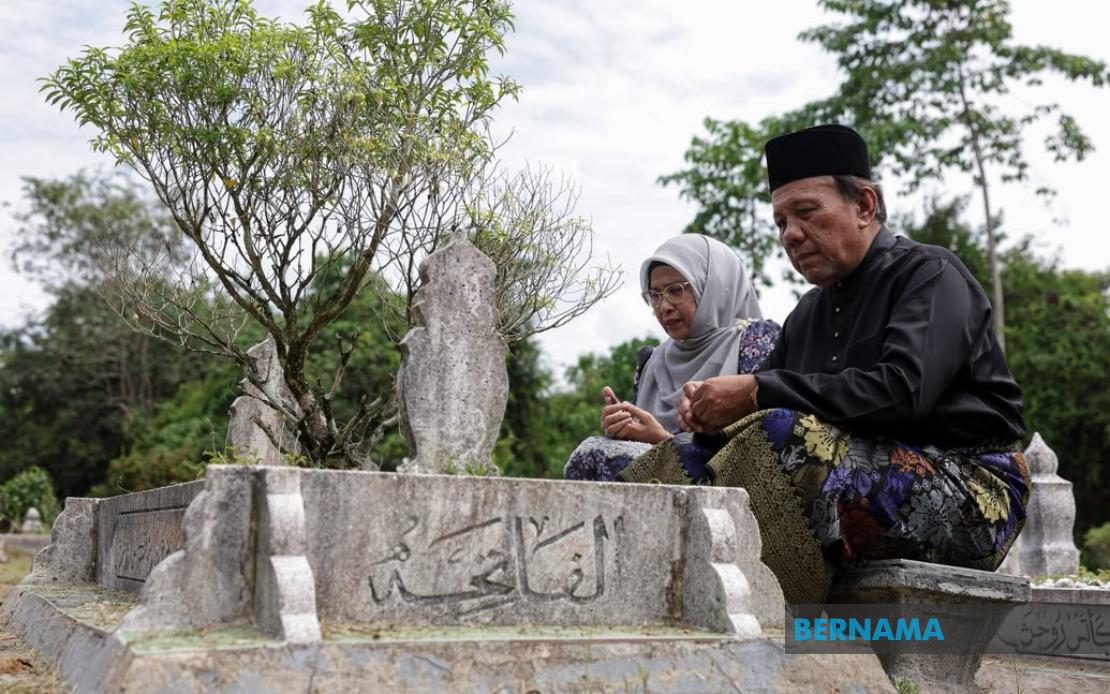
Negeri Sembilan's newly appointed Menteri Besar Datuk Ismail Lasim observed a deeply personal tradition on August 2 by visiting his parents' graves mere hours after being sworn into office. Accompanied by his wife, Datin Noraishah Othman, and dressed in traditional black Malay formal wear, Lasim journeyed to the Tebing Tinggi Muslim cemetery in Kuala Pilah to pay his respects at the burial site of his late parents, a symbolic act that signaled both gratitude and spiritual grounding as he assumed one of the state's highest positions.
The visit occurred immediately following Lasim's formal oath-taking ceremony before Tuanku Muhriz Tuanku Munawir, the Yang di-Pertuan Besar of Negeri Sembilan, at Istana Besar Seri Menanti. This timing reveals a deliberate choice to honor familial bonds and acknowledge the foundation upon which his life and career have been built, even as the demands of high office commenced. The gesture carries particular weight in Malaysian political culture, where such acts of filial piety resonate deeply with constituents and reflect personal values that leaders project publicly.
Lasim's father, the late Lasim Yaman, had lived to the age of 97 before his death on March 5, 2020. His mother, the late Bedah Othman, had passed away earlier on September 16, 2014, having therefore been unable to witness her son's elevation to the Menteri Besar position. By visiting both grave sites in quick succession, the newly appointed leader demonstrated continuity with family history and an acknowledgment of the long shadow his parents cast over his personal development and public service trajectory.
The swearing-in marked the culmination of electoral proceedings held on August 1, during which Lasim successfully contested and won the Juasseh state seat. This victory provided the electoral mandate necessary for his appointment to the chief minister role, positioning him as the political leader charged with steering Negeri Sembilan through the next chapter of state governance. His win in Juasseh contributed to the broader outcome that saw Barisan Nasional emerge as the dominant force in the state assembly.
The 16th Negeri Sembilan state election delivered decisive results that would shape the political landscape for years to come. Barisan Nasional secured 18 of the available state seats, while Perikatan Nasional won seven, creating a combined tally that provided both coalitions with a comfortable two-thirds majority in the state assembly. This supermajority grants the government substantial legislative flexibility, enabling it to pursue its agenda with reduced constraints from the opposition and providing greater stability for medium-term policy implementation.
The formation of a Barisan Nasional-Perikatan Nasional coalition government in Negeri Sembilan reflects broader national political trends following previous election cycles. Rather than governing in isolation, the two coalitions determined that partnership would serve the state's interests more effectively. This collaborative arrangement requires careful management of internal dynamics, as the two blocs maintain distinct organizational structures, memberships, and policy orientations. The success of such partnerships often depends on the political acumen and diplomatic skills of the chief minister, who must navigate the expectations and interests of multiple stakeholder groups.
For Lasim, the challenge ahead involves translating electoral victory into concrete governance outcomes that benefit Negeri Sembilan residents. The state faces typical Malaysian state-level concerns including economic development, infrastructure investment, education quality, and healthcare delivery. Additionally, as part of a coalition government, Lasim must manage relationships with Perikatan Nasional partners while maintaining unity within Barisan Nasional's component parties. The two-thirds majority theoretically provides sufficient votes to pass legislation without opposition support, but maintaining coalition cohesion internally remains essential for stable governance.
The symbolic act of visiting his parents' graves hours into his tenure suggests that Lasim intends to ground his leadership in personal values and family heritage rather than viewing the office as divorced from deeper life commitments. This approach may resonate with voters who appreciate leaders displaying traditional Malaysian values alongside contemporary political sophistication. The public nature of the cemetery visit, documented through official channels, transforms a private act into a political statement about leadership character and priorities.
Negeri Sembilan occupies an important position within Malaysia's political geography, situated strategically between the Klang Valley and southern Perak. As a relatively developed state with economic links to Selangor and Kuala Lumpur, it faces pressures to maintain competitiveness while managing its distinct identity. The incoming government, backed by a two-thirds majority, possesses the mandate and numerical strength to pursue development initiatives, though the coalition structure requires consensus-building across different political traditions and organizational cultures.
Lasim's elevation to the Menteri Besar position represents a culmination of his political journey within Barisan Nasional structures. His background and the circumstances of his appointment suggest a leader cognizant of both traditional values and modern governance requirements. The visible connection he maintained to his parents' memory, even as he assumed high office, provides a glimpse into how he may approach leadership—balancing institutional responsibilities with personal grounding.
Looking forward, the success of this new administration will be measured through tangible improvements in residents' lives and effective coalition management. The two-thirds majority removes certain legislative obstacles but does not guarantee policy success or public satisfaction. Lasim must leverage this advantage to deliver on campaign promises while maintaining the delicate balance required in a multi-party government. The symbolism of his first official act—honoring his parents—establishes a baseline narrative about his values, though words and gestures must eventually translate into substantive policy outcomes to validate this opening statement.

