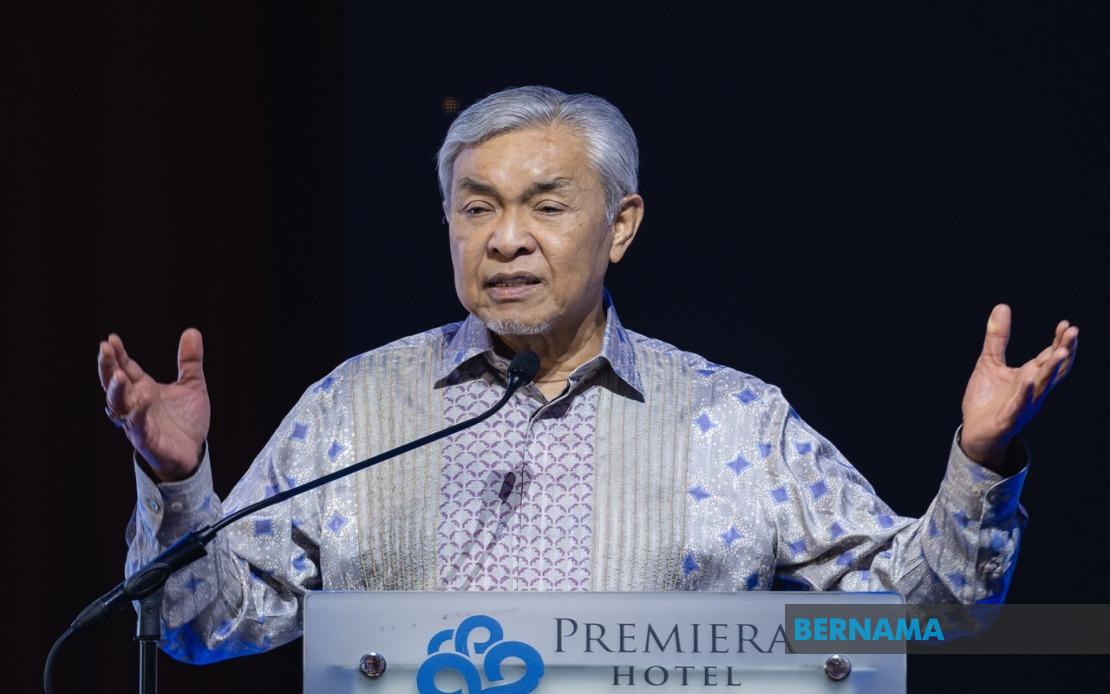
Deputy Prime Minister Datuk Seri Dr Ahmad Zahid Hamidi has signalled that Budget 2027 will give consideration to rural road construction projects across Sabah and Sarawak, particularly in communities currently isolated from major urban centres. Speaking after attending the Ministry of Rural and Regional Development's 2025 Excellent Service and Appreciation Awards ceremony in Kuala Lumpur, Ahmad Zahid, who holds the concurrent portfolio of Minister of Rural and Regional Development, underscored the ministry's commitment to extending connectivity to remote settlements as part of its core mandate.
The deputy premier clarified that the ministry will evaluate all requests for new rural road infrastructure based on existing connectivity gaps. Areas without adequate access to major towns and established settlements will form the priority basis for evaluations ahead of the 2027 budget cycle. However, Ahmad Zahid cautioned that while the Rural and Regional Development Ministry champions these proposals, final approval and resource allocation will ultimately depend on the customary regulatory frameworks and procedures administered by the Ministry of Finance and the Public Works Department. This bureaucratic layering reflects Malaysia's typical budgetary approval process, where sectoral ministry recommendations must navigate additional gatekeeping mechanisms before funding becomes available.
The ministry intends to refine and elaborate on specific proposals once comprehensive consultations with all stakeholders conclude. This phased approach suggests that while the political will exists to address rural connectivity, groundwork remains necessary to establish project specifications, cost estimates, and implementation timelines. For Sabah and Sarawak residents in underserved areas, this announcement represents a potential pathway to infrastructure development, though the journey from consideration to actual construction will likely extend well beyond the budget's passage.
During his address, Ahmad Zahid articulated a broader philosophical reorientation for the Rural and Regional Development Ministry, one that moves beyond traditional infrastructure delivery towards what he termed a "new discipline." The deputy premier called for termination of programmes that fail to generate tangible community benefits, acceleration of initiatives demonstrating genuine impact, and systemic improvement or discontinuation of underperforming projects. This approach reflects frustration with inefficient resource deployment and underutilisation across the rural development portfolio.
Crucially, Ahmad Zahid repositioned rural development beyond the construction paradigm that has historically dominated government messaging. Building roads, he suggested, represents only part of the solution. The broader strategic objective must centre on cultivating an enabling ecosystem that stimulates income generation and employment creation within rural communities. This conceptual shift acknowledges that physical infrastructure alone cannot lift populations from poverty; concurrent attention to economic opportunity development proves equally essential. For East Malaysian states particularly, where geographic dispersion and limited industrial bases constrain economic diversification, this ecosystem approach carries significant implications for how development resources should be deployed.
The deputy premier's emphasis on selective programme termination and performance-based expansion indicates potential resource reallocation within existing budgets. Projects consuming substantial funds while delivering marginal outcomes face scrutiny, whereas demonstrably effective initiatives will receive enhanced support. This could mean that some longstanding programmes, however politically entrenched, may face discontinuation if evidence suggests limited community impact. The implicit message to ministry staff and implementing agencies emphasises results-based governance over incremental funding increases.
Ahmad Zahid's remarks also highlighted the transformative demands of public service modernisation. He characterised the transition from manual to digital operations not as an end point but rather as a prerequisite enabling deeper organisational change. More fundamentally, he insisted that reform requires attitudinal shifts among public servants, encompassing willingness to make consequential decisions and capacity to embrace change. These soft factors often determine whether technological investments yield meaningful improvement or merely replicate existing inefficiencies in digital form.
The minister further emphasised lifelong learning as essential for ministry personnel, positioning continuous skill development and innovation as institutional imperatives rather than optional enhancements. Combined with explicit expectations regarding integrity and accountability in all actions, this constitutes a comprehensive personnel development agenda. For civil servants accustomed to hierarchical, procedure-focused work environments, such exhortations suggest pressure to adopt more adaptive, outcome-oriented operating modes.
For Sabah and Sarawak, this budgetary consideration arrives amid broader national discussions regarding equitable development distribution between peninsular Malaysia and the eastern states. Rural road connectivity directly affects economic productivity, educational access, and healthcare delivery in dispersed communities. Improved transportation infrastructure can facilitate market access for agricultural producers, support tourism development in remote areas, and enable more efficient service delivery by government agencies. The budget consideration therefore carries implications extending beyond simple connectivity enhancement.
The procedural pathway Ahmad Zahid outlined—initial consideration, stakeholder consultation, regulatory compliance, and eventual budgetary allocation—will likely consume considerable time and administrative resources. Communities and state governments must submit comprehensive proposals meeting ministry specifications, demonstrating genuine connectivity gaps and anticipated community benefits. This requires capacity at state and local levels to formulate competitive applications amid multiple competing project proposals.
The announcement also reflects political calculus regarding East Malaysian representation within the federal coalition. Sabah and Sarawak command significant parliamentary seats, and infrastructure investment in these states carries electoral importance for the ruling coalition. Ahmad Zahid's explicit mention of both states suggests sensitivity to regional development equity perceptions.
Ultimately, while the prospect of Budget 2027 consideration provides a concrete timeline for decisions, communities remain dependent on successful navigation of consultative processes and approval mechanisms. The deputy premier's statement represents political commitment rather than guaranteed allocation, representing the first step in a lengthy development pathway.

