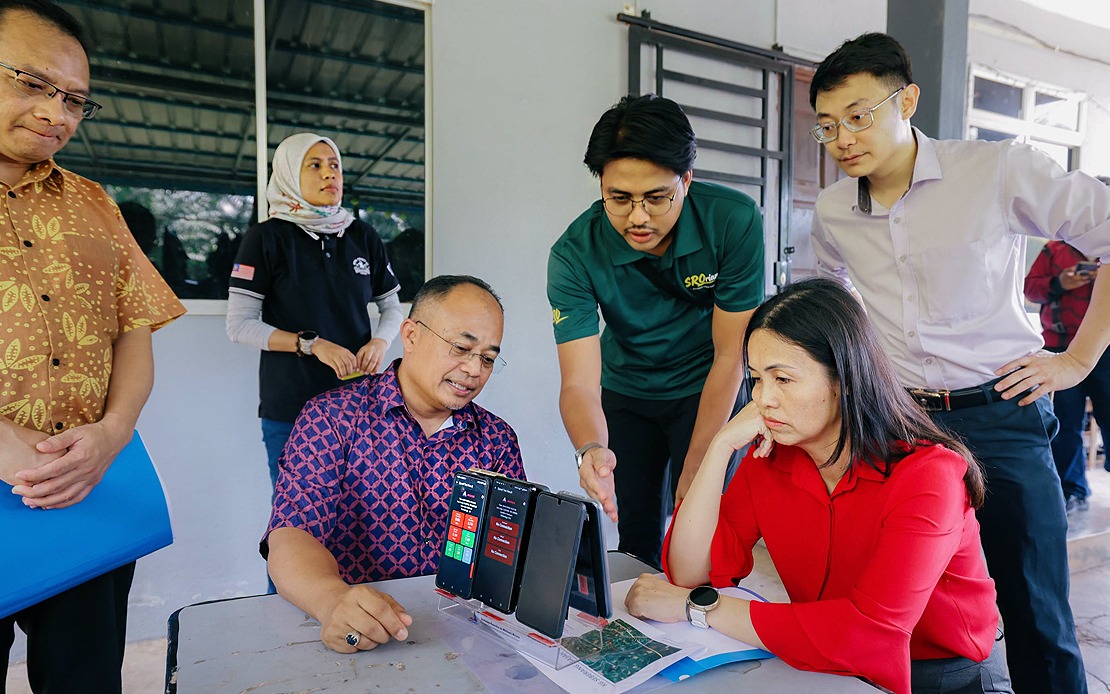
Residents in the rural settlement of Kampung Seberang Gajah in Tangkak will soon gain access to improved internet connectivity following a government-backed initiative to erect a dedicated telecommunications tower in their locality. The announcement came during an on-site assessment conducted by Deputy Communications Minister Teo Nie Ching, who acknowledged the longstanding service challenges that have constrained digital access for the community.
The connectivity shortfall represents a common challenge across Malaysia's less densely populated regions, where existing infrastructure often proves inadequate to serve surrounding populations effectively. Although two telecommunications towers already operate in proximity to Kampung Seberang Gajah, their combined coverage footprint fails to deliver the signal strength and reliability that residents require for consistent broadband access. This gap between theoretical service availability and actual on-the-ground performance remains a persistent issue in bridging Malaysia's digital divide.
Responding to these deficiencies, the Malaysian Communications and Multimedia Commission (MCMC) has directed telecommunications service providers to develop additional tower capacity specifically designed to enhance coverage in the underserved zone. The decision reflects a strategic approach to infrastructure development, where regulatory intervention addresses market gaps that commercial incentives alone have failed to resolve. Such interventions prove especially critical in rural areas where customer density and revenue potential may not immediately justify private-sector investment without coordinated government guidance.
Teo disclosed that the engineering specifications and site planning for the new tower have reached completion, establishing the foundation for rapid implementation once administrative clearances materialise. The project currently awaits formal approval from relevant local authorities—a procedural requirement that, while necessary for regulatory compliance and land-use coordination, can sometimes create bottlenecks in the deployment timeline. The minister stressed the importance of accelerating this permitting phase to minimise delays between planning and construction.
The deputy minister's public call for expedited approvals signals executive-level commitment to resolving rural connectivity gaps, potentially applying informal pressure on bureaucratic processes to prioritise such applications. Her presence during the site survey, accompanied by MCMC's Southern Region director Rizal Abd Malek and representatives from multiple telecommunications operators, underscores the institutional weight behind the initiative. Such high-profile engagement typically correlates with elevated implementation urgency within the civil service ecosystem.
The gathering also included Bukhari Yahya, the Head of the State Affairs Sector, whose participation suggests coordination across different government portfolio areas—a necessary approach when telecommunications infrastructure development intersects with local development planning, land administration, and state-level governance priorities. The presence of multiple stakeholders reflects the genuinely collaborative nature required to resolve regional connectivity challenges, particularly in jurisdictions where state and federal responsibilities overlap.
For Malaysian policymakers and industry observers, this initiative illustrates a broader pattern of government intervention in digital infrastructure provision, particularly where market forces have proven insufficient. The telecommunications sector in Malaysia has undergone substantial liberalisation over the past two decades, yet rural service provision remains a persistent challenge that hybrid models—combining regulatory direction with private-sector execution—seek to address. Kampung Seberang Gajah exemplifies thousands of similar settlements across the nation where geography, population density, and economic factors create persistent connectivity gaps.
The initiative carries implications beyond immediate local benefits. Improved rural broadband access directly enables educational opportunities for schoolchildren in remote areas, facilitates small-business digitisation, and supports government service delivery through online platforms. Communities with robust internet connectivity experience measurable improvements in economic participation, health-information access, and educational outcomes. These broader socioeconomic benefits justify the public resources devoted to closing connectivity gaps in settlements like Kampung Seberang Gajah.
From a regional perspective, Malaysia's efforts to systematically address rural digital exclusion align with Southeast Asian development priorities. Across the region, governments increasingly recognise that digital infrastructure forms a foundational layer for achieving broader economic and social development objectives. The Malaysian approach—combining regulatory oversight through MCMC with private-sector implementation and political attention to timeline adherence—offers a model potentially applicable across the wider region where similar connectivity disparities persist.
The financial mechanisms supporting such infrastructure deployment merit consideration. While Teo's statement does not explicitly address funding arrangements, typical telecommunications tower projects in Malaysia involve cost-sharing frameworks where service providers distribute investment across their networks, with government potentially offering tax incentives or regulatory certainty as inducements. Understanding these financing structures proves important for assessing project sustainability and ensuring that rural communities do not subsidise development through elevated service charges.
Looking forward, the successful completion of this Tangkak project could serve as a reference case for addressing connectivity deficits elsewhere. If the MCMC-directed approach yields timely results, it may become a template for intervention in other underserved areas, establishing a clearer pathway for communities facing similar circumstances to petition government support. The demonstration effect of this initiative thus extends beyond Kampung Seberang Gajah alone, potentially influencing how Malaysia approaches rural digital infrastructure planning more broadly.

