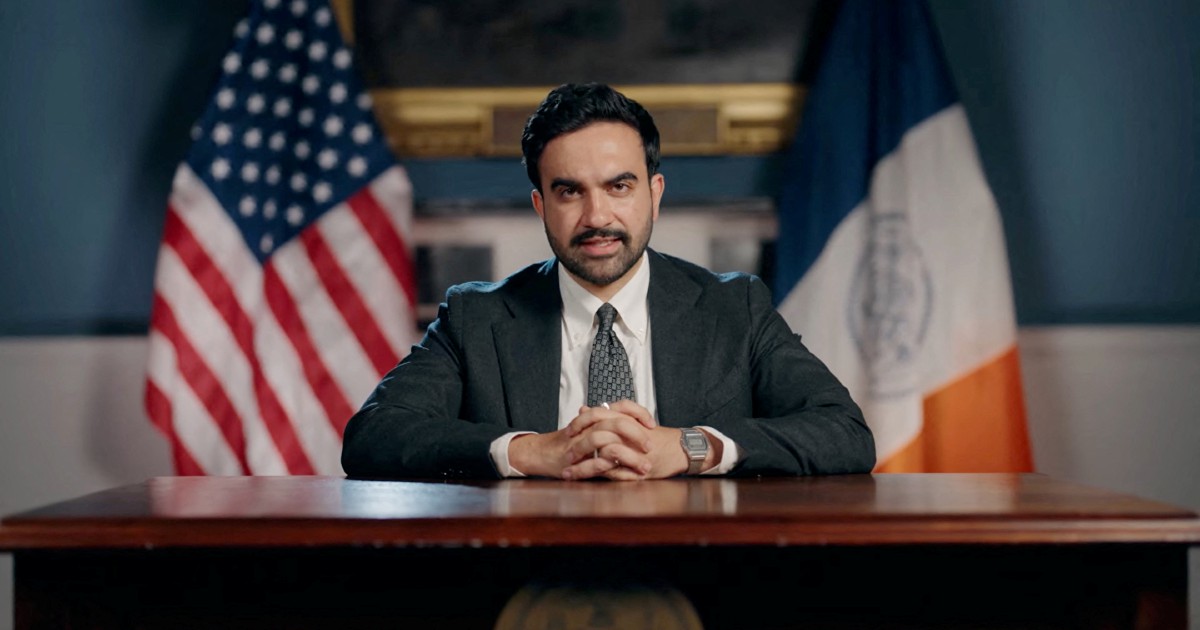
New York Mayor Zohran Mamdani stated on Tuesday that his administration lacks the legal authority to execute the International Criminal Court's arrest warrant against Israeli Prime Minister Benjamin Netanyahu, while urging American federal officials to take responsibility for resolving the diplomatic and legal complexity.
The position taken by Mamdani reflects the intricate layers of jurisdiction that emerge when international legal mechanisms intersect with American sovereignty and local governance. The mayor's statement suggests that while the ICC, as an independent international institution, has issued the warrant, enforcement falls outside the scope of municipal authority in New York City. This distinction carries significant implications for how cities and states within the United States approach their obligations under international law versus federal constitutional powers.
The issue became acute given Netanyahu's historical participation in meetings and events held at the United Nations headquarters in Manhattan, which sits on international territory but remains geographically within New York City's boundaries. The mayor's clarification preemptively addressed potential public expectations that city police or local law enforcement could apprehend the Israeli leader, a scenario that would have created an unprecedented constitutional crisis between local, national, and international authorities.
Mamdani's call for federal intervention recognizes that such matters must be resolved at the highest levels of American government, where treaties, diplomatic negotiations, and constitutional law converge. The US federal government maintains exclusive authority over international relations and treaty obligations, though the United States has not ratified the Rome Statute that established the ICC. This non-ratification status creates a fundamental complication: America is not technically bound to enforce ICC warrants, yet the presence of such a warrant on American soil generates complex legal questions.
The Netanyahu warrant, issued by the ICC's prosecutor, relates to allegations concerning Israeli military operations and civilian casualties in Gaza. The accusation has generated passionate responses across the political spectrum globally, with strong supporters and detractors on both sides. For Malaysian readers, this situation underscores how international justice mechanisms struggle to command universal enforcement when powerful nations decline to participate in the ICC framework.
New York City's explicit disavowal of enforcement authority also protects the city from being caught in the crossfire of international diplomacy. Should local police have attempted an arrest, the consequences could have extended far beyond the immediate incident, potentially damaging America's relationship with Israel, complicating the Biden and now Trump administrations' Middle East policies, and exposing the city to legal challenges from multiple directions.
The mayor's position implicitly acknowledges that municipal governments in America operate within a federal structure where foreign policy decisions remain strictly federal matters. Cities do not have the capacity to make binding decisions about international obligations, even when foreign nationals physically enter their jurisdictions. This principle protects consistency in American foreign policy and prevents a chaotic situation where different cities might pursue different approaches to international warrants.
For Southeast Asia, this case illustrates broader questions about how regional nations should interact with international justice institutions. Nations like Malaysia, which have supported the ICC's work, must consider how they would handle similar situations if circumstances arose involving their own leaders or those of allied nations. The American example demonstrates the friction points between universal justice principles and national sovereignty that many countries navigate.
The statement also reflects growing internal American debate about the role of international institutions and whether the United States should modify its relationship with bodies like the ICC. Advocates for international justice argue that major powers should participate fully, while critics contend that American courts and soldiers should not be subject to external judgment. This tension plays out differently in every nation, but particularly acutely in countries that maintain extensive international engagement.
Mamdani's invocation of federal responsibility places the onus on Washington to determine how America will respond diplomatically to the ICC warrant. This could range from negotiating with the ICC, issuing a legal opinion regarding American obligations, or taking diplomatic steps with Israel to address the underlying allegations. Each approach carries different implications for American credibility on international justice issues.
The practical effect of the mayor's statement is to prevent a scenario where local officials become unwilling participants in international legal proceedings. By clearly delineating boundaries between municipal and federal authority, New York's leadership has insulated itself from pressure to take actions that properly belong to the federal government. This protects local governance structures while channeling the matter toward appropriate authorities.
As these questions develop, they will likely influence how other democracies approach similar situations. Countries throughout the Asia-Pacific region watch carefully how established democracies manage tensions between international law and national interest, using these precedents to inform their own policies on judicial independence, sovereignty, and international cooperation.

