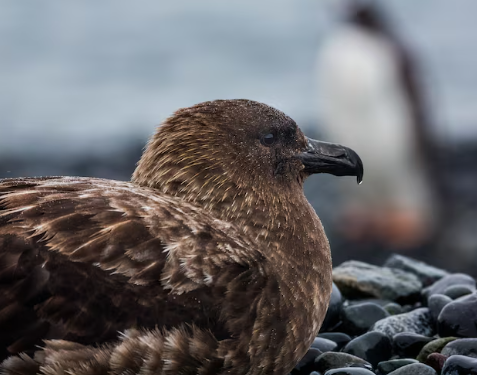
New Zealand has joined the list of countries grappling with the H5N1 bird flu crisis after a migratory seabird tested positive for the virus, marking the first confirmed case in the island nation. The infected brown skua was discovered on a Wellington beach, with Biosecurity Minister Andrew Hoggard announcing the detection on Wednesday, July 15. The discovery underscores how the highly contagious pathogen continues its relentless spread across the globe, having reached every continent except Antarctica within the past three years.
The H5N1 virus emerged as a major zoonotic threat beginning in 2021, when it began circulating among wild bird populations with devastating effect. Since then, the outbreak has evolved from an avian health crisis into a broader agricultural and public health concern, with documented infections in poultry operations, dairy farms, and at least some farmworkers in affected countries. The virus's ability to jump between species and across geographic regions has made containment extraordinarily difficult, despite coordinated biosecurity efforts across multiple nations. New Zealand's case arrives approximately one month after Australia, the Southern Hemisphere's largest nation, detected its own H5N1 cluster, suggesting the virus has become established in the Oceania region.
Although the initial detection appears contained, with no widespread die-offs reported among wild bird populations and no cases identified in New Zealand's poultry industry so far, officials acknowledge the situation demands vigilance. Minister Hoggard indicated that the country may experience a trajectory similar to Australia's, where fourteen confirmed or presumed positive detections have been documented among wild birds. This modest but persistent pattern in Australia suggests that while explosive die-offs have not yet occurred, the virus continues to circulate among migratory species that could introduce new cases across the Tasman Sea and beyond.
New Zealand's preparations for such a scenario have been methodical but necessarily accelerated by the virus's arrival. Working collaboratively with domestic poultry producers, government agencies have established biosecurity protocols and industry resilience frameworks designed to minimize transmission risks to commercial and backyard flocks. However, the most acute concern centres on the country's globally unique and exceptionally fragile native avifauna. During millions of years of evolutionary isolation, New Zealand's birds adapted to an environment devoid of indigenous land mammals, resulting in numerous flightless or weakly flying species that nest on or near the ground. This evolutionary trajectory produced extraordinary biodiversity marvels but also left these creatures extraordinarily vulnerable to novel pathogens.
The endemic species now at risk from H5N1 have already endured centuries of pressure from introduced predators—including stoats, rats, and feral cats—that arrived with European settlement. Habitat destruction and climate change have further compressed the surviving populations of many iconic species into precarious numbers. For creatures like the takahe and kakapo, both flightless and critically endangered, the arrival of a highly lethal virus represents an existential threat of unprecedented magnitude. A rapid outbreak could push species that exist only in small, geographically isolated populations to the brink of or into extinction within months.
In response to these dangers, New Zealand authorities have launched a vaccination initiative targeting approximately three hundred core breeding individuals from five of the country's most endangered bird species. This programme represents one of the first large-scale wildlife vaccination efforts against avian influenza globally, reflecting both the severity of the threat and the irreplaceable nature of New Zealand's endemic fauna. The vaccination strategy prioritizes the foundational breeding stock from which population recovery might eventually proceed, should broader outbreaks occur. By protecting these genetic reservoirs, officials aim to preserve the biological basis for long-term species survival and restoration.
Yet experts caution that vaccination alone may prove insufficient if the virus establishes itself rapidly in wild populations. Brett Gartrell, professor of wildlife health at Massey University, has highlighted the profound uncertainty facing New Zealand's native birds. The species targeted for protection have never encountered a pathogen of this severity or transmission characteristics, and their evolutionary history provides no immunological precedent. Gartrell emphasized that the vaccinated core populations might not achieve sufficient immunity if viral spread accelerates beyond the point at which the vaccine programme can provide comprehensive protection, effectively creating a race against an invisible adversary.
The H5N1 situation for New Zealand carries broader implications for Southeast Asia and the Indo-Pacific region. The virus's presence in the Southern Hemisphere confirms its establishment in migratory bird pathways that connect to Asian breeding and wintering grounds. Australia's proximity to Southeast Asia and the extensive migratory patterns of seabirds mean that future detections in the region are not a matter of if but when. Nations across ASEAN have strengthened poultry surveillance and biosecurity in recent months, yet the lesson from New Zealand and Australia is that even well-prepared countries face challenges in detecting and containing avian influenza among wild populations.
For Malaysia and its neighbours, the New Zealand case underscores the importance of maintaining robust wild bird monitoring networks and rapid diagnostic capacity. Southeast Asian countries host some of the world's most biodiverse tropical ecosystems, with millions of migratory birds arriving each year from breeding grounds in central Asia and the Arctic. The region's poultry industry, central to food security for nearly 700 million people, remains vulnerable despite years of investment in disease control. The convergence of high human and animal density, intensive agricultural practices, and the region's role as a global wildlife trade hub creates conditions in which novel pathogens can establish and amplify rapidly.
New Zealand's experience offers both cautionary and instructive lessons. The country's early detection systems, though they revealed a case, also demonstrate how surveillance networks can identify incursions before widespread damage occurs. However, the impossibility of preventing occasional virus introduction into wild bird populations suggests that Southeast Asian governments must shift focus toward rapid response capacity and protecting the most vulnerable agricultural and wildlife assets. For New Zealand itself, the coming months will determine whether the vaccination programme and natural barriers can prevent H5N1 from becoming an endemic presence, a scenario that would constitute an unprecedented conservation catastrophe for the country's irreplaceable bird species.

