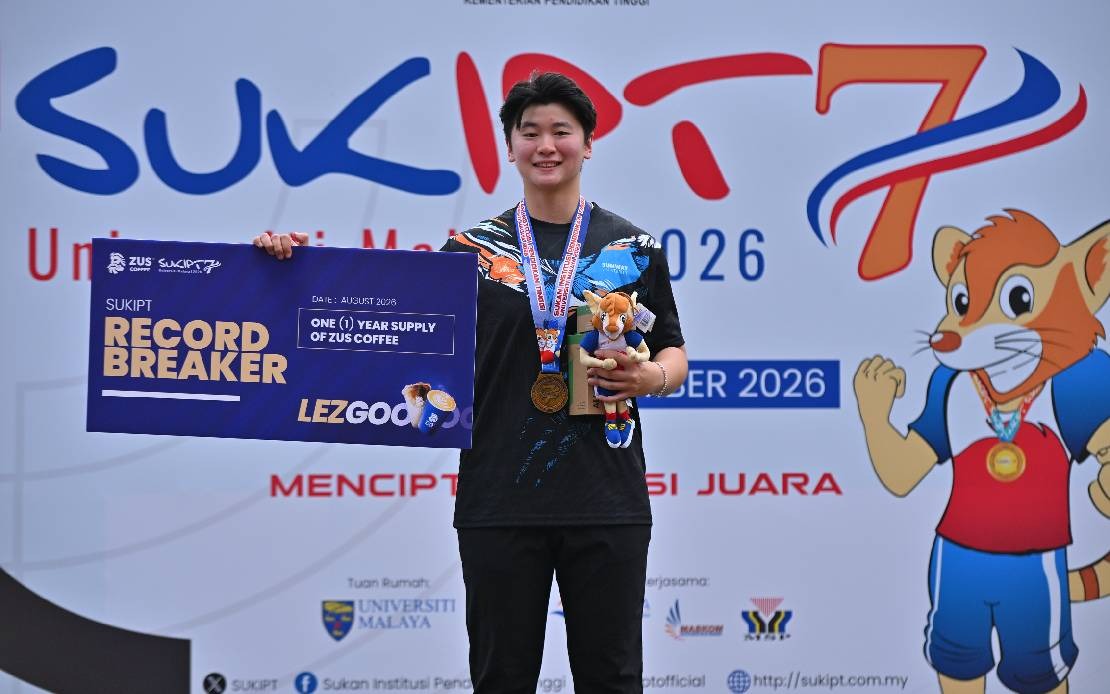
Malaysian javelin thrower Ng Jing Xuan delivered a symbolic gift to Sunway University during the National Day festivities by shattering the Higher Education Institutions Sports Games (SUKIPT) championship record, demonstrating the caliber of athletic talent emerging from the nation's universities. The 22-year-old athlete's performance at the UM Arena, Universiti Malaya, saw her register a commanding throw of 46.92 metres, decisively overtaking the previous mark of 44.41 metres established by Nur Fatin Adibah Suharman of Universiti Malaysia Perlis during the 2016 competition. The achievement underscores the trajectory of improvement within Malaysia's university sports ecosystem and signals growing competitive standards in field events traditionally less prominent in Southeast Asia's athletic calendar.
While securing the gold medal represented an unambiguous success, Jing Xuan displayed the mindset characteristic of elite performers by acknowledging a measure of frustration at missing her primary objective. Her national record stands at 52.17 metres, a mark she had hoped to eclipse during this appearance. The discrepancy between her highest performance and her institutional record achievement—a gap of approximately 5.25 metres—reflects the significant demands of competing consistently at personal best levels, particularly under the variable conditions encountered during domestic championships. Her measured response to this outcome, balancing legitimate disappointment with recognition of a tangible accomplishment, illustrates maturity in managing competitive expectations.
The athlete attributed her slightly subdued performance to several compounding factors that collectively influenced her technical execution. Immediately preceding the SUKIPT games, she had completed an intense month-long training block following her return from the Asian U23 Athletics Championships, a schedule that demanded considerable physical and mental investment. The conditioning phase, while necessary for championship preparation, evidently left some residual fatigue or adjustment period that prevented her from accessing the peak mechanical efficiency required for record-breaking distances. Additionally, a last-minute modification to the competition schedule—shifting from an afternoon slot to a morning session—disrupted the temporal rhythm to which she had adapted during preparation, rendering her initial throws somewhat sluggish and requiring mid-competition recalibration.
These circumstances warrant consideration beyond the immediate results, as they illustrate the complex demands confronting elite university athletes in Malaysia who must navigate compressed competition schedules while maintaining advancement toward higher competitive objectives. The transition between major international youth championships and domestic institutional competitions, compressed within weeks, demands exceptional physiological recovery and psychological flexibility. Such pressures are particularly acute in field events where technique, force production, and proprioceptive consistency cannot tolerate extended periods of detraining or rhythm disruption. Jing Xuan's experience thus provides valuable insight into the structural challenges facing Malaysian athletes attempting to sustain progression across multiple competitive tiers throughout a single calendar year.
Despite her primary target remaining unachieved, Jing Xuan's dominance over her university-level competitors proved emphatic. The silver medal position went to Farisha Athirah Wai from Universiti Pendidikan Sultan Idris, whose throw of 36.21 metres placed her substantially behind the champion. The bronze medal, secured by Tai Yu Tian of Universiti Putra Malaysia with a distance of 32.74 metres, further evidenced the significant margin separating Jing Xuan's capabilities from the broader field of university javelin throwers. This performance differential—approximately 10.7 metres separating first and third place—indicates either concentration of talent within specific institutions or disparities in coaching infrastructure and training resources across Malaysia's higher education sector.
Looking forward, Jing Xuan has redirected her competitive focus toward two significant milestones that will define her trajectory over the coming eighteen months. The ASEAN University Games scheduled for December represents the immediate target, offering an international platform against regional peers from Brunei, Cambodia, Indonesia, Laos, the Philippines, Singapore, Thailand, and Vietnam. Success at this tier would consolidate her standing within Southeast Asian university athletics while providing valuable experience under the heightened pressure accompanying multinational competition. Following this benchmark, the SEA Games constitute the paramount objective, with Malaysia traditionally playing a central role in regional athletics governance and medal accumulation.
The strategic focus on these two competitions reflects the calendar structure of Malaysian sports development, wherein university championships serve as developmental platforms rather than ultimate career destinations. For field event specialists, the progression from institutional competition through regional university games to continental or global senior championships follows a well-established pathway. Jing Xuan's deliberate compartmentalization of her season—using SUKIPT as a mid-preparation checkpoint rather than a culminating event—suggests coaching guidance aligned with long-term development principles. This approach prioritizes the acquisition of experience, technical refinement, and consistency at progressively elevated competitive levels over the accumulation of medals at any single tier.
The National Day timing of her record-breaking performance carries symbolic resonance within Malaysian sports discourse, connecting individual athletic achievement to broader narratives of national aspiration and collective achievement. Sporting success has consistently occupied an elevated position within Malaysian national identity, particularly following successes in badminton, squash, and diving on the world stage. The emphasis in media coverage on the Merdeka Day context, rather than treating the achievement as a standalone athletic milestone, reflects this cultural inclination to frame sporting excellence as expressions of national capability and pride. Whether this framing enhances or constrains athlete performance remains contested among sports psychologists, though the practice remains entrenched in Malaysian sports journalism.
The records set within university competitions occupy an intermediate space within athletics' hierarchical structure. A SUKIPT record represents genuine significance within the university sports ecosystem, establishing benchmarks that may influence recruitment, training methodology evaluation, and resource allocation decisions across higher education institutions. However, such records exist substantially below national records, which themselves differ from continental or international marks. Understanding Jing Xuan's achievement requires contextualizing it within this framework: a noteworthy accomplishment that validates her training approach and competitive standing among university athletes, yet simultaneously highlighting the distance remaining before national record aspirations become consistently achievable. This nuanced positioning characterizes the developmental stage in which emerging Malaysian field event specialists typically operate.
The broader implications for Malaysian athletics extend beyond individual performance, touching on questions of sustainable talent development through the university system. The presence of competitive javelin throwers distributed across multiple institutions—Sunway University, UPSI, UPM, and others—suggests growing institutional commitment to field events. Whether this represents genuine diversification of athletic investment or temporary allocation patterns remains uncertain. Consistent progression by athletes such as Jing Xuan toward senior national and regional success depends partly on whether these institutional programs maintain funding and coaching continuity through economic cycles and administrative changes. The SUKIPT competition provides valuable data on this talent pipeline's health, though longitudinal tracking of athlete progression from university competition through senior achievement remains underdeveloped in Malaysian sports administration.
Jing Xuan's trajectory now enters a critical phase where maintaining momentum across multiple tiers demands careful calibration of competition selection, training periodization, and recovery protocols. The ASEAN University Games in December will arrive merely four months after SUKIPT, requiring a sustained training foundation without excessive depletion. The subsequent preparation for the SEA Games extends across approximately fourteen months, a timeframe that demands both near-term tactical success and long-term strategic development. Her demonstrated capacity to process setbacks constructively and identify learning opportunities from suboptimal performances suggests psychological foundations adequate to these demands, though repeated disappointment if technical or physiological factors continue obstructing national record breakthroughs could eventually erode motivation. Malaysian athletics will benefit substantially if Jing Xuan translates her evident talent and work ethic into sustained progression toward continental and international competitiveness.

