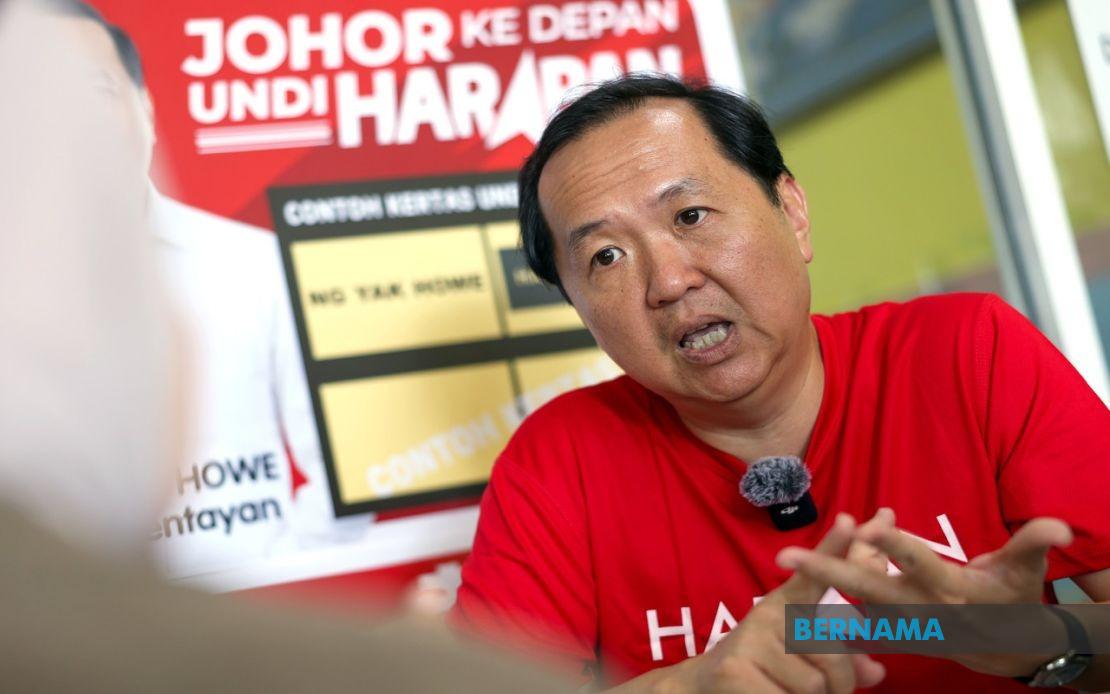
Pakatan Harapan candidate Ng Yak Howe is banking on urban renewal as his cornerstone campaign platform in the Bentayan state seat contest, aiming to reverse the demographic shift that has hollowed out Muar's historic town centre. The incumbent assemblyman has identified the gradual exodus of residents to outlying suburban developments as the primary threat to the commercial vitality of the area he represents, which encompasses more than half of Muar town's footprint.
The challenge confronting Muar's core district reflects a broader pattern visible across Malaysian towns, where the pull of modern suburban living complexes draws families away from older established areas. What was once a bustling commercial hub now experiences a pronounced rhythm of activity during business hours followed by marked quietness once offices close and workers depart for residential areas elsewhere. This cycle undermines the ecosystem that traditionally sustained local businesses, restaurants, and entertainment venues that relied on evening foot traffic and weekend patronage.
Ng's proposed solution centres on intentional strategies to make the town centre a destination again, particularly for younger residents who might otherwise view it as outdated or inconvenient. He has articulated a vision that goes beyond passive hope, instead focusing on concrete interventions designed to stimulate spending and create reasons for people to frequent the area during off-peak hours. The approach recognises that urban revitalisation requires more than infrastructure investment; it demands an active campaign to shift perceptions and consumer behaviour.
Working in tandem with Bakri Member of Parliament Tan Hong Pin, Ng has already implemented consumer incentive schemes including cash vouchers and lucky draw campaigns aimed at channelling spending toward local businesses. These initiatives, while modest in scale, represent an attempt to address the immediate concern of vacant premises that currently comprise 18 per cent of the town centre's retail space. Each empty shopfront signals lost opportunity and contributes to an atmosphere of decline that further discourages both businesses and shoppers.
Ng's background as a quality assurance engineer with over a decade of industry experience suggests a methodical approach to problem-solving, while his quarter-century involvement in politics has given him institutional knowledge of constituency needs and government processes. His position as a Johor DAP committee member further embeds him within party structures, potentially enhancing his ability to secure resources and support from higher levels of governance. This combination of technical background and political experience positions him to translate electoral promises into actionable programmes.
The Bentayan seat features 34,205 registered voters and presents itself as a closely watched contest within the broader Johor electoral landscape. Ng faces a straight fight against Barisan Nasional candidate Chua Lee Huat, eliminating the fragmentation that sometimes occurs in three-way or multi-candidate races. This direct confrontation means that campaign messaging and voter mobilisation become particularly consequential, with limited room for split votes to determine outcomes.
The timing of the Bentayan contest coincides with the 16th Johor state election scheduled for July 11, with early voting set for July 7. The election will see 172 candidates compete across the state's constituencies, creating a competitive environment where local issues must resonate against broader state and national political narratives. Muar town centre revitalisation, while locally significant, competes for voter attention alongside concerns about economic management, service delivery, and political representation.
Ng's emphasis on attracting the younger generation specifically acknowledges a demographic reality in many Malaysian towns where youth migration to larger cities or better-developed suburban areas represents an ongoing challenge. Retaining young professionals, families, and entrepreneurs requires not merely nostalgia for a town's former glory but genuine improvements to amenities, employment opportunities, and quality of life. The town centre revival he proposes implicitly promises better conditions for younger residents who might otherwise see no compelling reason to remain.
The revival strategy also touches on broader economic considerations relevant to Johor's regional development. Historic town centres often function as cultural anchors and commercial nodes within larger municipal systems. Their decline affects property values, municipal revenue from business activities, and the vibrancy of civic spaces. A successful revitalisation in Muar could serve as a model for other Johor towns facing similar pressures, potentially influencing state-level urban development policies.
For voters evaluating the Bentayan choice, Ng's track record as an incumbent provides tangible evidence of his capacity to deliver on commitments. His continuation of the incumbent assemblyman role signals consistency and the ability to maintain government relationships necessary for securing resources. However, voters must assess whether the voucher and lucky draw initiatives represent adequate responses to structural economic shifts, or whether more ambitious interventions—such as mixed-use development, cultural programming, or transportation improvements—would be necessary for meaningful revival.
The contest between Ng and Chua Lee Huat will ultimately reflect broader voter sentiment regarding urban development, economic management, and the balance between tradition and progress. Ng's focus on incremental commercial stimulus through consumer incentives contrasts with whatever approaches the Barisan Nasional candidate may propose. Both candidates must convince voters that their vision genuinely addresses the legitimate concern that Muar's town centre requires active intervention to remain economically viable and socially relevant.

