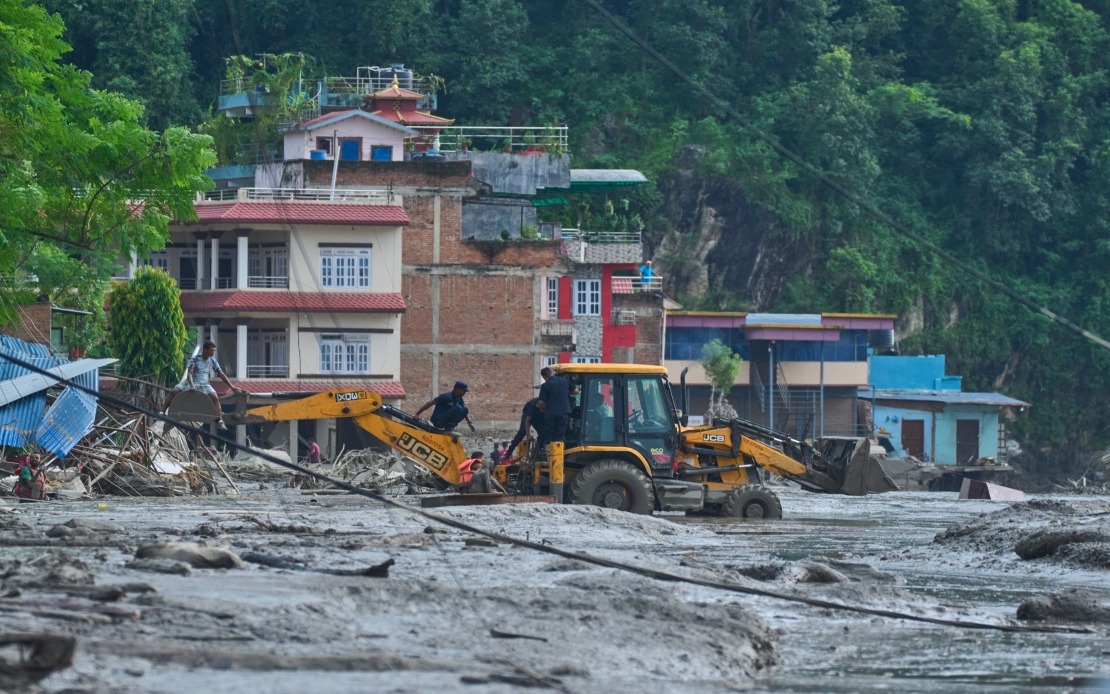
Nine South Korean nationals remain unaccounted for following catastrophic flooding that struck Nepal's Rasuwa district on Wednesday, triggering an urgent government response from Seoul. The missing workers comprise six employees from Doosan Enerbility Co., an engineering and construction firm specialising in power infrastructure, alongside three personnel from Korea South-East Power Co., a state-owned electricity generation enterprise. All were engaged in hydropower plant construction when the disaster struck, according to announcements from South Korea's foreign ministry. The scale of the crisis prompted Seoul to announce plans to deploy a coordinated emergency response team comprising officials from the ministry, national police, and fire services, with the unit expected to arrive in Kathmandu later on Thursday to coordinate rescue operations and provide on-ground support.
President Lee Jae Myung moved swiftly to mobilise national resources in response to the emergency, instructing government departments to deploy all available means to locate and rescue the stranded workers. Foreign Minister Cho Hyun, speaking during an emergency coordination meeting on Wednesday, outlined a comprehensive strategy that extends beyond immediate rescue operations. The minister emphasised the importance of establishing direct communication channels with the Nepalese government and local authorities, providing psychological and material assistance to families of the missing, ensuring the security of other South Korean citizens remaining in the affected region, and implementing preventive measures to avoid additional losses. The ministry indicated it would initiate direct diplomatic contact with Nepal's foreign affairs counterpart to formally request collaboration and technical support from local authorities familiar with the treacherous terrain.
The situation carries particular complexity given that approximately 200 foreign workers were initially evacuated from the construction site during the initial emergency response. Among these evacuees were ten additional Doosan Enerbility personnel who had initially been reported stranded but were subsequently confirmed to be safe. However, their continued presence in the affected region necessitates ongoing coordination between Seoul and Kathmandu to ensure their eventual safe passage from Nepal. Both Doosan Enerbility and Korea South-East Power have independently established crisis management structures and begun assembling their own field teams to support rescue efforts, indicating that corporate resources are being marshalled alongside government efforts.
The Nepal catastrophe represents one of the most severe hydrometeorological events to strike the country's mountainous regions in recent years. The massive flash flooding that devastated areas near the Nepal-Tibet border has claimed more than 160 lives and left hundreds unaccounted for, with the majority of missing persons reported to be foreign nationals working on various infrastructure and development projects. Such flood events in the Himalayan region, where hydropower projects are increasingly common due to Nepal's renewable energy ambitions, highlight the environmental and occupational hazards faced by construction workers in geologically volatile areas. The monsoon season, which typically extends through September, creates particularly dangerous conditions in high-altitude valleys where rapid water accumulation can occur with minimal warning.
For Malaysia and broader Southeast Asia, the incident underscores important considerations regarding worker safety standards and disaster preparedness protocols on major infrastructure projects. Many Malaysian and Southeast Asian companies operate hydropower and dam construction projects throughout the Himalayan region and similar high-risk geological zones. The Nepal disaster serves as a sobering reminder of the necessity for comprehensive pre-disaster planning, particularly in regions where natural hazards such as flooding, landslides, and glacial outburst floods pose persistent threats. Construction firms operating in such environments must establish robust communication systems, clear evacuation protocols, and adequate emergency response capabilities that account for the geographical isolation and limited accessibility of remote mountain work sites.
The Korean government's rapid diplomatic and logistical response demonstrates a model approach to managing transnational crisis situations. Seoul's decision to deploy coordinated teams comprising multiple government agencies reflects recognition that effective disaster response requires integration of diplomatic, law enforcement, and emergency management expertise. For Malaysian stakeholders with personnel or corporate interests in comparable high-risk regions, the Korean example highlights the value of maintaining strong communication channels with both host country governments and diplomatic missions. The involvement of career diplomats, emergency professionals, and senior policy advisers in real-time decision-making during the acute crisis phase can substantially improve outcomes for stranded citizens.
The corporate dimension of this disaster also merits attention from Malaysian business leaders and managers. Both Doosan Enerbility and Korea South-East Power activated internal emergency response mechanisms simultaneously with government activation, demonstrating that major corporations operating in hazardous environments must maintain parallel crisis management structures. These corporate teams provide essential institutional knowledge about personnel locations, project logistics, and site-specific risks that government agencies might not initially possess. For Malaysian enterprises engaged in similar infrastructure work, particularly those with hydropower, dam, or large-scale construction projects in vulnerable regions, the Korean firms' approach suggests the necessity of pre-established corporate emergency protocols that integrate seamlessly with government responses.
The geographical context of the flooding—occurring near the Nepal-Tibet border in the Rasuwa district—indicates that the disaster affected a region characterised by extreme topography and limited infrastructure. Mountain valleys in this area can experience sudden and catastrophic water flows during monsoon events, particularly when high-altitude glaciers or accumulated snow contribute runoff to already-swollen river systems. The presence of a hydropower plant under construction in this zone reflects Nepal's strategic commitment to harnessing renewable energy resources from its abundant water supplies. However, such projects inherently involve construction activities in high-risk zones where multiple natural hazards converge, necessitating exceptional safety protocols and emergency response capabilities that sometimes exceed what developing countries can independently provide.
The involvement of international workers from South Korea in Nepalese hydropower development reflects the internationalisation of Southeast and South Asian energy infrastructure projects. Korean firms possess substantial expertise in hydroelectric engineering and have secured contracts throughout the region. The presence of substantial Korean personnel in Nepal, working alongside companies from multiple other nations, illustrates how energy transition initiatives create complex, multinational work environments in geographically remote locations. This internationalisation creates diplomatic obligations for governments like South Korea to engage with host countries regarding worker protection and emergency response, while simultaneously imposing responsibilities on corporations to maintain safety standards that reflect both international best practices and local conditions.
The humanitarian dimension extends beyond the immediate question of locating nine missing workers to encompass broader considerations of worker welfare in demanding occupations. Construction workers on hydropower projects accept substantial occupational hazards in exchange for employment opportunities. When natural disasters strike, these individuals often lack the resources or social connections available to workers in developed nations. The South Korean government's commitment to provide comprehensive support—including family assistance and preventive measures for remaining personnel—reflects an emerging international norm that governments should actively protect and advocate for their citizens working abroad, particularly in situations where natural disasters strike.
The incident also carries implications for how South Korea manages its broader relationship with Nepal and engages within development cooperation frameworks. Natural disasters frequently create opportunities for humanitarian diplomacy, allowing donor nations to strengthen bilateral relationships through assistance programmes. South Korea's mobilisation of resources to support rescue efforts and provide support will likely reinforce bilateral ties and demonstrate Seoul's commitment to collaborative problem-solving with Nepalese authorities. Such demonstrations of solidarity during crises can produce longer-term diplomatic benefits and strengthen the foundation for future cooperation on development, trade, and security matters.

