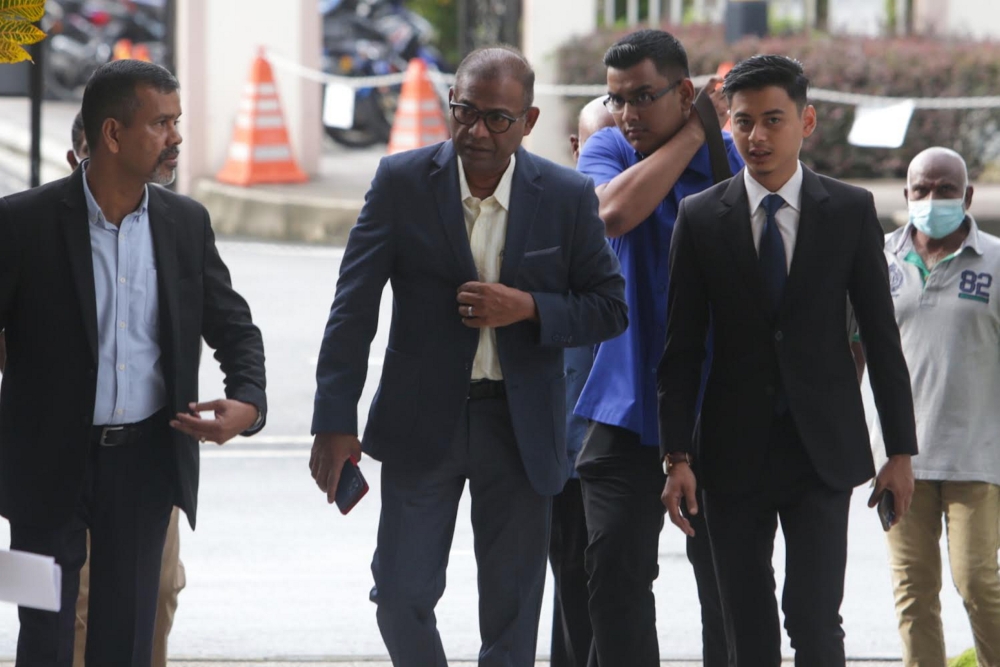
Datuk Seri Abdul Azeez Abdul Rahim's family has moved swiftly to counter viral social media claims suggesting the former Baling Member of Parliament was about to face arrest by the Malaysian Anti-Corruption Commission in connection with the Tabung Haji Royal Commission of Inquiry investigation. His son issued a public statement rejecting the allegations as baseless rumours without factual foundation, emphasising that no arrest warrant or notice had been issued against his father by any government agency.
The emergence of these unverified claims on digital platforms underscores a recurring challenge in Malaysian political discourse: the rapid proliferation of unconfirmed information through WhatsApp, Facebook, and Twitter before official channels can address them. Such rumours, particularly those involving allegations of financial impropriety tied to pilgrim fund governance, carry substantial reputational weight and can influence public perception regardless of their accuracy. The family's immediate denial represents a common defensive strategy adopted by figures at the centre of high-profile investigations, though it also reflects the real anxiety that accompanies informal accusations in the social media age.
The Tabung Haji Royal Commission of Inquiry has been examining the administration and management of the pilgrimage savings institution, an organisation that holds billions of ringgit in funds belonging to millions of Malaysians preparing for the hajj. Any allegations touching on the handling of these assets resonate deeply within a community already sensitised to institutional governance failures and mismanagement scandals that have dominated Malaysian headlines over the past decade. The involvement of a former parliamentarian in such scrutiny inevitably attracts intense public interest.
Abdul Azeez, who represented Baling in Kedah for multiple parliamentary terms, has held various government positions throughout his political career. His entry into the orbit of the Tabung Haji investigation reflects the broad scope of the Royal Commission's mandate to scrutinise past decisions and administrative practices at the institution. Such inquiries often implicate multiple stakeholders across different administrations and timeframes, making public figures potentially vulnerable to speculation and hearsay until formal allegations are filed.
The circulation of arrest rumours without official confirmation demonstrates how social media amplifies uncertainty during ongoing investigations. In Malaysia's political context, where factional disputes frequently spill into public discourse and allegations carry immediate political currency, such unverified claims can damage credibility and create public anxiety disproportionate to their substantive basis. The swift family response suggests awareness of this reputational risk.
Official MACC procedures require formal investigation, evidence gathering, and legal threshold-testing before arrest warrants are issued. These processes take considerable time and involve multiple bureaucratic stages, each of which provides opportunity for information to leak, be misinterpreted, or be deliberately distorted. The gap between investigative activity and formal action creates space for speculation, particularly when political observers or rival factions seek to influence public narrative around sensitive matters.
For Tabung Haji contributors and their families, questions about institutional integrity remain paramount. The pilgrimage fund operates as a quasi-religious and financial institution intertwined with Islamic affairs governance and personal aspirations of millions. Any perception that assets have been mishandled or that oversight mechanisms failed carries implications beyond ordinary financial scandal, touching on community trust in institutions managing sacred obligations and life savings simultaneously.
The son's statement emphasising the absence of formal legal action represents a crucial distinction that sometimes becomes blurred in social media discourse. Rumour, investigation, and prosecution exist on a spectrum; conflating investigation with imminent arrest misleads the public and potentially violates the presumption of innocence that underpins legitimate legal systems. His clarification that no warrant exists represents an attempt to inject factual precision into speculation-driven narratives.
For Malaysian readers closely monitoring governance accountability and institutional reform, this episode illustrates the ongoing tension between transparency demands and the risks of premature public judgment. The Tabung Haji investigation serves legitimate accountability purposes; simultaneously, unfounded arrest rumours can undermine public confidence in both the investigative process and the institutions seeking to restore faith in pilgrim fund administration. The family's response, whether ultimately vindicated or not, reflects recognition that institutional integrity investigations demand careful handling of information to preserve both individual rights and public trust.
As the Royal Commission continues its work, clarity from official sources regarding investigation status and timeline would better serve Malaysian public interest than the vacuum filled by social media speculation. The distinction between inquiry, evidence, allegation, and formal legal action remains critical to maintaining confidence in institutional accountability mechanisms themselves.

