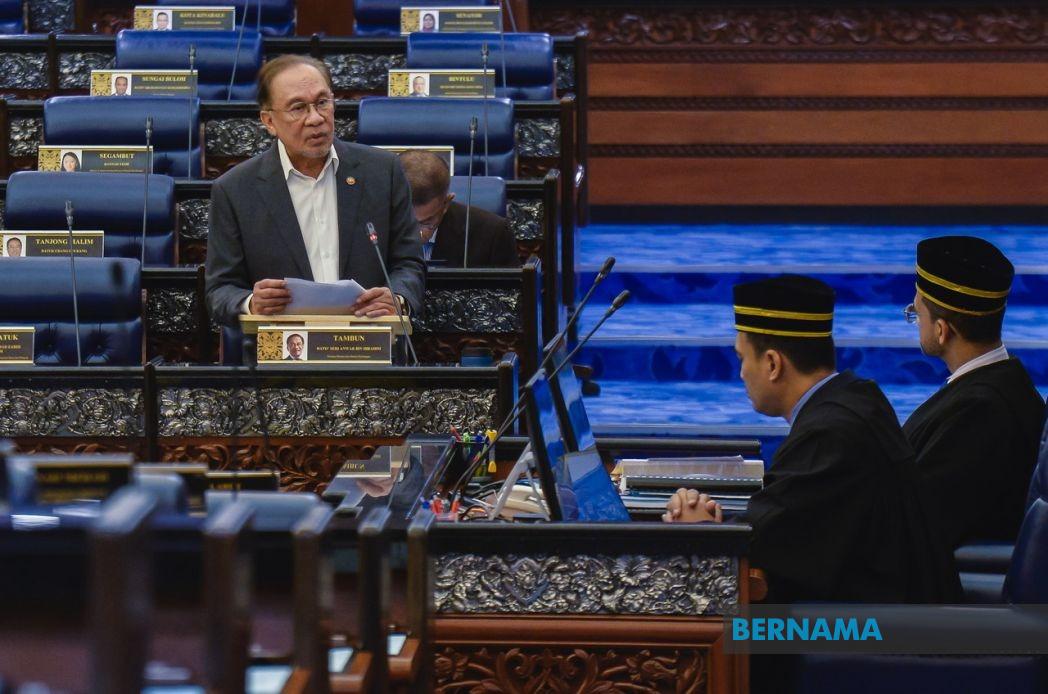
Prime Minister Datuk Seri Anwar Ibrahim moved to dispel what he characterised as misunderstandings regarding government restrictions on activities within Federal Land Development Authority settlements, emphasising that the administration has imposed no blanket prohibition on events held in these communities. His remarks, delivered during Question Time in the Dewan Rakyat on June 30, addressed concerns raised by opposition lawmakers who questioned whether state-level programming faced federal impediments. The clarification underscores a critical distinction between government restrictions on administrative activity and the legal frameworks governing electoral conduct that apply uniformly across federal and state jurisdictions.
The Prime Minister articulated the government's position with precision, noting that while state administrations retain autonomy to organise events, distribute land titles, or launch development initiatives within FELDA areas, such activities must comply with established electoral regulations. The crux of the constraint lies not in barring state governments or other entities from conducting legitimate programmes, but rather in preventing the co-option of federal institutional apparatus for partisan political purposes. This distinction carries particular weight in Malaysia's context, where electoral legislation explicitly delineates boundaries between administrative function and campaign activity to preserve the integrity of democratic processes.
Anwar directly addressed allegations that he had issued directives cancelling the FELDA Settlers' Day programme scheduled for Kluang, Johor, on June 20 and 21, categorically denying any such instruction emanated from his office. The controversy surrounding this event, which had generated considerable attention particularly among opposition figures, appears to have stemmed from confusion or deliberate mischaracterisation regarding the distinction between programme cancellation and adherence to electoral conduct rules. By publicly refuting the cancellation claim, the Prime Minister sought to reestablish credibility on an issue that had attracted scrutiny from political opponents.
The government's broader strategic pivot toward FELDA communities represents a notable shift in prioritisation compared to preceding administrations. Anwar framed current initiatives as corrective measures addressing what he characterised as decades of systemic neglect during earlier governance periods, when numerous FELDA settlements allegedly languished without adequate infrastructure or development attention. This rhetorical framing carries implications beyond immediate policy discourse, as it positions the current MADANI administration as attentive to rural constituencies that have historically occupied ambiguous status within both national development hierarchies and political calculations.
Concrete welfare enhancement measures announced by the administration include the establishment of dialysis centres within FELDA settlements, signalling an explicit focus on healthcare accessibility in these communities. Such targeted interventions address genuine gaps in service provision, particularly for chronic disease management in rural populations where specialist facilities remain geographically distant. The expansion of development infrastructure through federal agencies likewise demonstrates commitment to breaking historical patterns of underinvestment. These programmes should be understood within the broader context of rural development strategy, where FELDA communities represent significant population concentrations requiring proportionate resource allocation.
Deputy Prime Minister Datuk Seri Dr Ahmad Zahid Hamidi emerges as a co-architect of this FELDA-focused agenda, suggesting institutional alignment within the cabinet on prioritising these constituencies. The explicit partnership invocation between Malaysia's two highest executive officers underscores the political salience of FELDA affairs, indicating that neglect of settler welfare would carry reputational costs for the administration. This coordination also reflects recognition that FELDA communities possess collective electoral influence and occupy symbolic importance within Malaysian consciousness as remnants of earlier nation-building efforts focused on rural economic participation.
The electoral law framework that the Prime Minister referenced deserves closer examination for Malaysian readers, as it reflects constitutional principles regarding separation between state machinery and partisan activity. Under prevailing legislation, federal resources including FELDA administrative structures cannot be deployed for election campaigning without violating statutory provisions. This prohibition extends to state governments utilising federal institutions within their territories for state-level electoral campaigns. The distinction becomes crucial when state leaders undertake development activities or organise public programmes—such activities themselves remain lawful, but cannot commandeer government offices, vehicles, or personnel for directly supporting electoral objectives.
The political subtext of this parliamentary exchange involves opposition allegations that the federal government under Anwar's leadership has begun restricting state-level activity, particularly in states under opposition control. Such accusations, if successfully framed, could damage the administration's credibility regarding democratic governance and federalism principles. By publicly clarifying that no blanket prohibitions exist and that state governments retain broad discretion in organising programmes, Anwar inoculated himself against charges of authoritarian behaviour while maintaining that legitimate electoral regulations remain operative. This rhetorical strategy attempts to occupy middle ground between defending institutional autonomy and respecting federalism.
For FELDA settlers themselves, the announced development initiatives carry tangible implications regarding quality of life improvements. Healthcare infrastructure expansion addresses long-standing access challenges, while broader facility development may unlock economic opportunities within settlements that have experienced relative stagnation. However, the sustainability and adequacy of these interventions depend upon consistent funding allocation and effective implementation by relevant federal agencies—a practical challenge distinct from policy announcement. Settlers' experiences with previous development promises, some of which failed to materialise or delivered substandard results, likely generates cautious optimism rather than enthusiastic endorsement.
The Prime Minister's remarks also reflect broader governance messaging regarding the MADANI administration's approach to rural constituencies and federal-state relations. By emphasising commitment to FELDA welfare while simultaneously invoking electoral law frameworks, Anwar attempted to present a government simultaneously attentive to rural needs and respectful of constitutional constraints. This positioning carries importance for the administration's broader political coalition, which encompasses constituencies with varying interests regarding federal-state power distribution and development resource allocation. How effectively the government delivers on announced FELDA initiatives will significantly influence rural political dynamics heading toward subsequent electoral contests.

