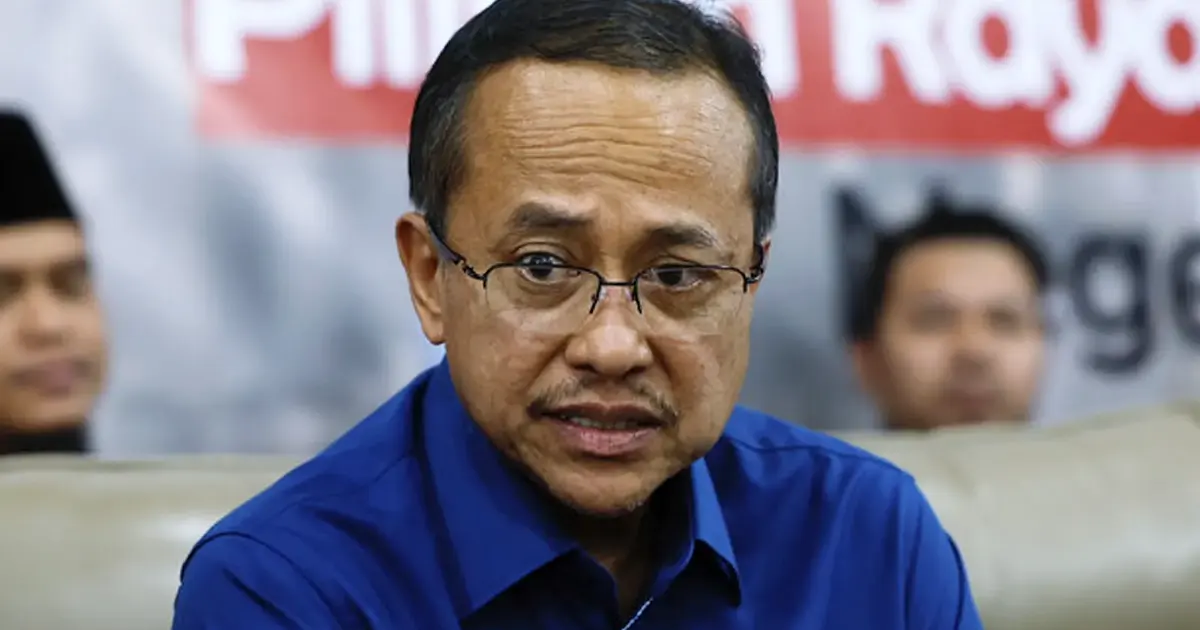
Perikatan Nasional chairman Samsuri has moved to calm anxieties about potential voter bewilderment stemming from the fact that both PAS and Bersatu—the coalition's two primary constituent parties—are permitted to utilise the PN logo in their campaigns. Despite the apparent risk of conflating the parties' distinct identities, the coalition leader expressed confidence that the electorate would navigate ballot papers without significant confusion, anchoring his assurance on a fundamental structural safeguard: the two parties are not fielding candidates in the same constituencies.
This arrangement reflects a pragmatic accommodation within Perikatan Nasional's operational framework. Rather than consolidate under a single electoral banner, the coalition has opted to allow component parties to maintain their organisational independence while sharing branding infrastructure. The decision underscores how Malaysian coalition politics often involve complex negotiations over resource allocation and electoral positioning, particularly when larger parties like PAS seek to preserve their grassroots machinery and ideological identity while benefiting from broader alliance visibility.
Samsuri's clarification arrives amid broader speculation about the mechanics of coalition unity in contemporary Malaysian politics. The ability of PAS and Bersatu to each deploy PN branding without direct competition suggests a meticulously negotiated division of electoral territory, presumably established during preliminary coalition architecture discussions. Such arrangements are not uncommon in multi-party alliances, where competition within the alliance itself could dilute voting strength against common opponents. For Malaysian voters, this means encountering PN-branded candidates exclusively from either PAS or Bersatu depending on their parliamentary district, rather than facing rival PN-affiliated contenders.
The transparency surrounding seat allocation assumes particular significance in Malaysia's political context, where coalition stability frequently hinges on equitable distribution of electoral opportunities. Previous alignments have fractured precisely when partners perceived unfair seat divisions or felt marginalised within shared frameworks. By publicly reaffirming that territorial boundaries prevent direct intra-coalition clashes, Samsuri effectively emphasises that Perikatan Nasional has learnt from past coalition experiences and constructed mechanisms promoting internal harmony and resource protection.
From a voter perspective, the arrangement carries both advantages and complexities. Supporters of either PAS or Bersatu can reasonably assume that a PN-badged candidate in their area represents their preferred party, though this requires voters to possess sufficient electoral literacy to distinguish between parties operating under common symbols. This creates an implicit expectation that party machinery will effectively communicate which party PN-branded candidates belong to, particularly during campaign periods when information density heightens and voter attention becomes fragmented across multiple platforms and messages.
The coalition's confidence in avoiding confusion may also reflect confidence in party-specific mobilisation networks. Both PAS and Bersatu maintain entrenched grassroots organisations capable of directing supporters toward designated candidates without relying exclusively on ballot paper symbolism. Religious communities targeted by PAS campaigns and Bumiputera-focused constituencies where Bersatu maintains influence often respond to localised party messaging rather than abstract coalition branding alone. These existing communication channels potentially insulate the coalition from the worst confusion scenarios, particularly among core partisan voters who form election-defining demographic blocs.
However, the reliance on seat separation as a confusion-prevention mechanism does introduce vulnerabilities for less politically engaged voters or those new to electoral participation. Younger voters, first-time participants, and constituencies experiencing high electoral volatility may lack the contextual knowledge to automatically connect PN logos with specific parties. Education campaigns and clear ballot guidance become correspondingly crucial, requiring both PAS and Bersatu to invest substantially in voter orientation messaging rather than assuming symbol recognition translates directly into intended voting behaviour.
The broader context of Malaysian coalition dynamics adds another dimension to Samsuri's assurances. Previous experiments with shared branding in Malaysian politics have produced mixed results, with some alliances successfully maintaining public clarity while others descended into inter-party tensions over branding ownership and electoral credit allocation. Perikatan Nasional's apparent success in establishing clear territorial divisions suggests institutional maturity and cooperative discipline, though these arrangements require constant maintenance and periodic recalibration as electoral landscapes shift.
For regional observers, the PN approach exemplifies how Southeast Asian coalition partnerships navigate the tension between maintaining party autonomy and projecting unified opposition. The arrangement allows PAS and Bersatu to preserve distinct organisational identities and appeal separately to their respective constituencies—religious conservatives versus Bumiputera-centric populations—while pooling visibility and resources through coalition branding. This hybrid model reflects sophisticated political architecture designed to maximise alliance benefits whilst minimising intra-coalition friction.
Looking forward, sustaining voter clarity depends significantly on campaign discipline and consistent messaging from both parties. Any deviation from agreed territorial boundaries, ambiguous campaign communications, or public disputes over credit and representation could rapidly erode the confidence that Samsuri has expressed. The coalition's credibility in this regard will likely become an important measure of its actual operational cohesion, with voter reaction to any confusion incidents potentially influencing broader perceptions of Perikatan Nasional's organisational capacity and political maturity moving into subsequent electoral cycles.

