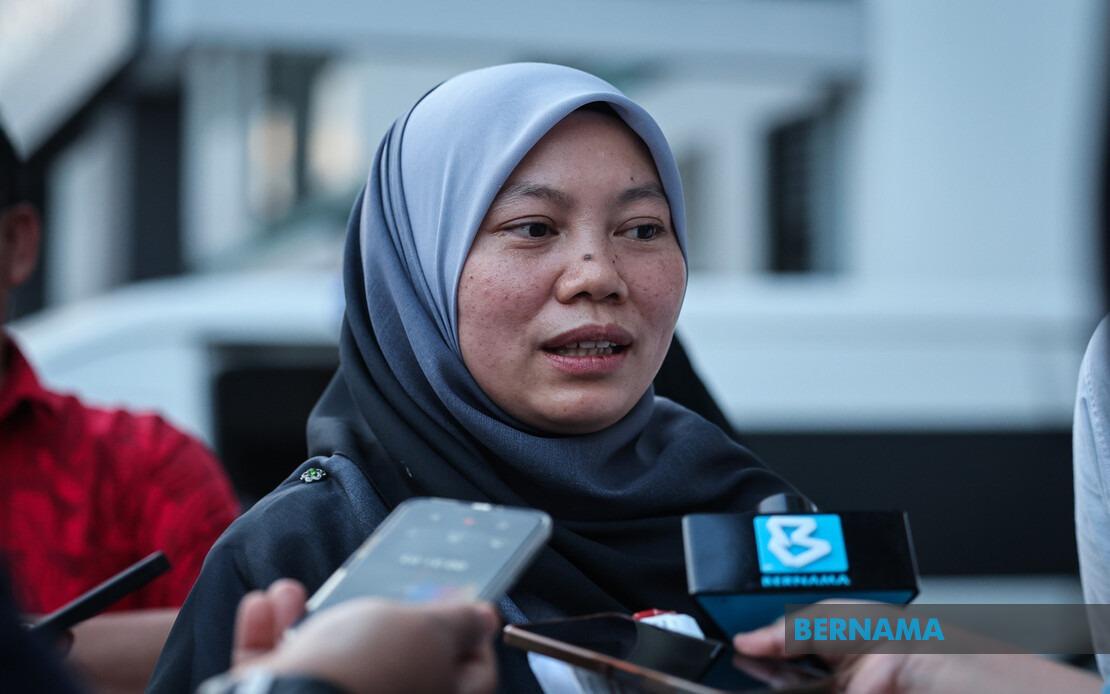
Pakatan Harapan's candidate for the Tiram state seat in Johor, Nor Zulaila Abd Ghani, is heading into the final stretch of campaigning with considerable optimism, bolstered by what she describes as consistently encouraging interactions with constituents throughout her ground operations. Speaking at a community engagement session in Kota Masai, she attributed her confidence to the depth of positive feedback gathered during her canvassing efforts, which she believes signals a reservoir of support for the coalition at the grassroots level across the electoral division.
The reception Nor Zulaila has encountered during her door-to-door visits and public appearances stands in marked contrast to the digital hostility that has characterised some online political discourse. Whilst she acknowledged that disparaging comments and criticism have surfaced on social media platforms such as Facebook, she emphasised that such negativity has remained largely confined to the virtual sphere. The critical distinction, in her assessment, is that face-to-face interactions with voters have been noticeably free from confrontation or aggressive positioning, suggesting that community sentiment differs significantly from the polarised tone often visible on digital channels.
Recognising that youth engagement represents a crucial battleground in contemporary electoral politics, Nor Zulaila has adopted an unconventional campaign methodology centred on participatory recreation and sport. Rather than relying solely on formal rallies and political speeches, she has deliberately positioned herself alongside young voters through sepak takraw tournaments, futsal matches, and snooker competitions, creating informal environments where political messaging can be woven into genuine community interaction. This strategy reflects an understanding that younger demographics in Malaysia frequently exhibit detachment from traditional political narratives and may respond more productively to grassroots connection than top-down messaging.
The underlying rationale behind this recreational engagement approach addresses a fundamental challenge facing electoral participation among Malaysia's youth: widespread scepticism regarding the relevance and efficacy of political involvement. Nor Zulaila has used these informal settings to underscore a basic civic imperative that transcends partisan affiliation. She consistently reinforces the argument that voting represents more than a political right—it constitutes a responsibility with tangible consequences, given that government policies and lifestyle implications are determined through electoral choices. This messaging seeks to reframe voter participation as a practical necessity rather than an optional civic duty.
The campaign has not proceeded entirely without incident. Nor Zulaila expressed frustration regarding recent vandalism targeting her campaign billboard, characterising the act as a regrettable departure from mature political conduct. Her public disappointment with this destruction reflects broader concerns about the tenor of electoral campaigns, signalling an expectation that competing candidates and their supporters should maintain decorum and restraint throughout the campaigning period. She has called upon all contesting parties to conduct their campaigns harmoniously and professionally, positioning mutual respect as essential to the integrity of the democratic process.
The timing of Nor Zulaila's optimistic assessment arrives as Johor voters prepare for ballots scheduled for July 11, with early voting permitted on July 7. The 16th Johor state election occurs against a backdrop of evolving political dynamics within Malaysia's most populous peninsular state, where electoral outcomes carry implications extending well beyond local governance. The state has historically served as a significant political bellwether, with contests in Johor constituencies often providing indicators of broader national sentiment and coalition performance.
Nor Zulaila's campaign strategy reflects contemporary understanding of how electoral messaging must adapt to heterogeneous voter bases with divergent information sources and engagement patterns. By targeting youth through activity-based platforms rather than traditional political venues, she attempts to bridge the engagement gap that has characterised younger voter participation in recent Malaysian elections. The emphasis on informal settings acknowledges that political persuasion operates differently across generational lines, requiring tailored approaches rather than uniform messaging.
The positional advantage Nor Zulaila describes—strong ground support coupled with minimal organised opposition at the constituency level—suggests that Tiram may not represent a highly contested battleground within the broader Johor electoral landscape. However, the significance of even reportedly secure seats should not be underestimated, as they contribute to overall coalition performance metrics and parliamentary majorities. Her confidence in acceptance by voters reflects not merely personal optimism but an assessment of the political terrain that PH strategists are likely monitoring closely.
Looking forward, the remaining campaign period will test whether the positive reception Nor Zulaila has characterised translates into actual voting behaviour on July 11. The gap between expressed support during casual interactions and actual ballot-box outcomes remains a persistent variable in Malaysian electoral politics, making claims of voter confidence necessarily provisional until results are counted. Her campaign's emphasis on youth mobilisation may prove particularly influential if younger voters turn out at levels exceeding recent historical patterns, potentially expanding the constituency base that Nor Zulaila can mobilise.
The Johor state election itself represents an important democratic exercise within Malaysia's federal system, where state-level contests carry implications for coalition stability at both state and national levels. Nor Zulaila's campaign in Tiram, whilst focused on local constituencies and immediate voter concerns, participates in this broader political calculus that determines governance capacity and coalition longevity.

